
Tapestry
3 articles
Tapestry, an ancient and enduring textile art form, transcends mere decoration to serve as a profound medium for historical narrative, symbolic expression, and assertions of power. Originating in antiquity with examples from ancient Egypt and the Andean cultures, its practice flourished in medieval Europe, where grand, hand-woven textiles became indispensable for both insulation and visual storytelling within aristocratic and ecclesiastical settings. Defined by its weft-faced plain weave, wherein discontinuous colored weft threads entirely conceal the warp to create intricate pictorial designs, tapestry evolved from monumental narrative cycles, such as the Apocalypse Tapestry and The Lady and the Unicorn, to embrace the sophisticated painterly qualities of Renaissance designs by artists like Raphael. Its enduring presence, even through periods of artistic redefinition and into modern revivals led by figures like William Morris and artists of the Bauhaus, solidifies its distinguished place within the broader canon of art history.
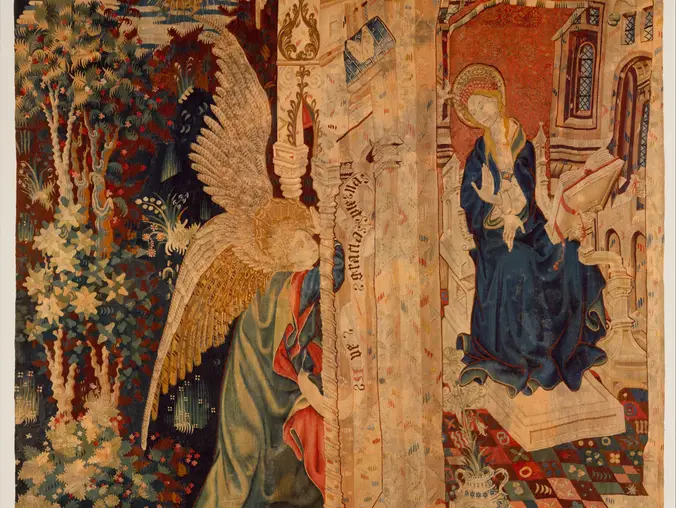
Tapestry in 15th-Century Rome: The Papal Collections and Workshops
While it is known that Renaissance Romans admired and displayed Flemish tapestries, or 'arazzi,' during solemn occasions…
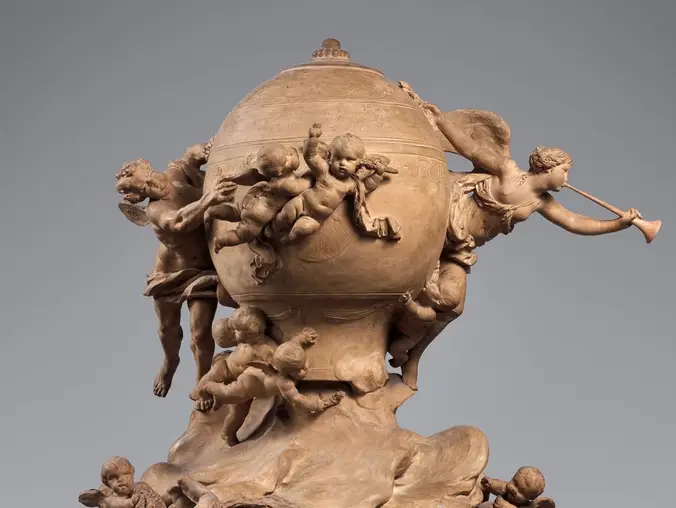
French Art of the 17th and 18th Centuries: The 1889 Trocadéro Retrospective
This review covers the retrospective exhibition of 17th and 18th-century French art at the Trocadéro, part of the 1889 E…
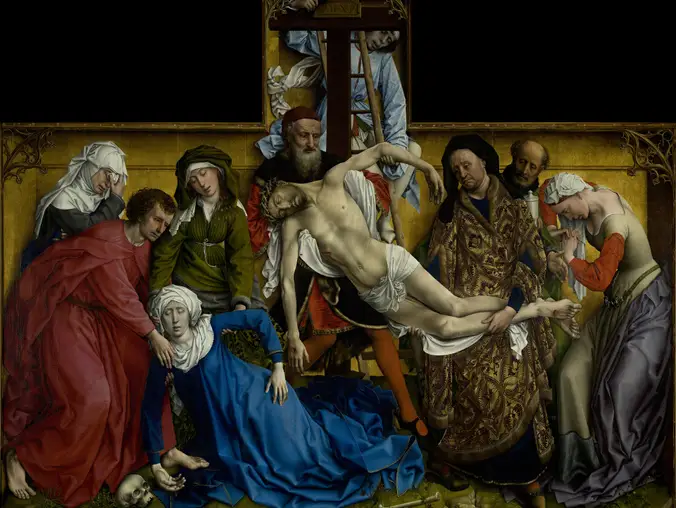
Rogier van der Weyden: An In-Depth Study of His Oeuvre
Rogier van der Weyden, a pivotal figure in 15th-century Flemish art, presents numerous challenges to the art historian. …