
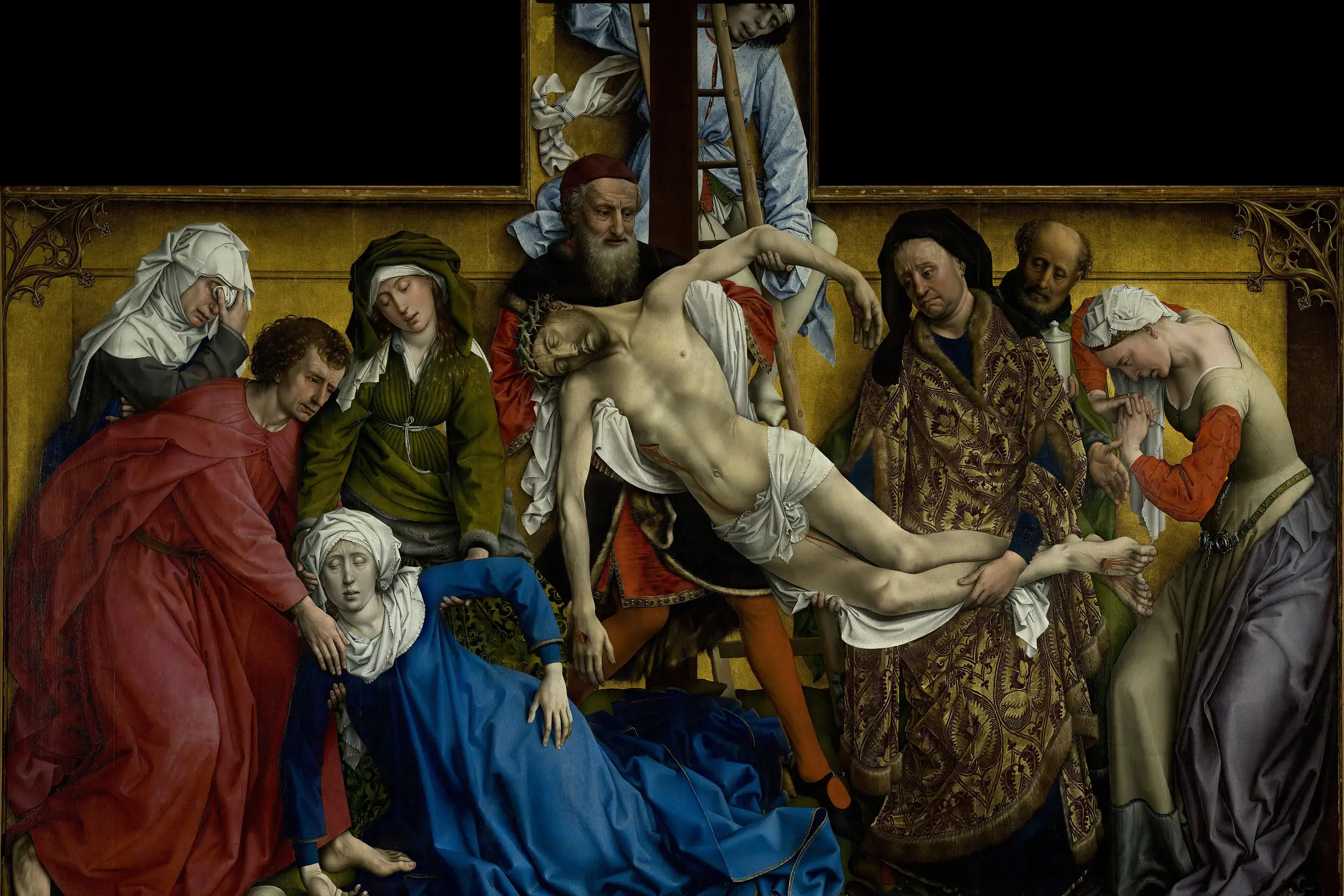

While the biography of Rogier van der Weyden is fraught with obscurities that torment the historian, his works do not offer a bed of roses either. They raise embarrassing questions from which even the most stubborn reflection struggles to find an answer. We will describe his principal works, then we will address the difficult problems connected with them.
The Bridge Between Masters
Van der Weyden holds a dual interest for us; on one hand, he was the best disciple of Jan van Eyck, and on the other, he shaped the talent of Hans Memling. Vasari mentions an "Ausse" as a student of Rogier; Guichardin calls him "Hausse," and Baldinucci refers to him as "Ans di Brugia." In the collection of Margaret of Austria, a panel by our artist was admired, depicting the dead Savior in the arms of Our Lady, with wings by Master Hans. It is believed that the painter thus designated is Jan, or rather Hans, Memling, as he was known in the Low Countries.23
Highly skilled himself, Rogier served to unite two great men; he transmitted to the draftsman-poet the luminous torch he had received from the tireless explorer. Consequently, one cannot study his productions with too much care.
The Seven Sacraments Altarpiece
Belgium possesses a precious work by him, which we have mentioned but not yet described. It adorns the museum of Antwerp and represents the Seven Sacraments. A Gothic church unfolds within it, bright, brilliant, and harmonious; one's gaze wanders through the naves as if in a real building. The poetic sentiment that permeates it distances us from the Van Eycks. We no longer find their profound gravity here; there is no severe half-light, no melancholic expression.
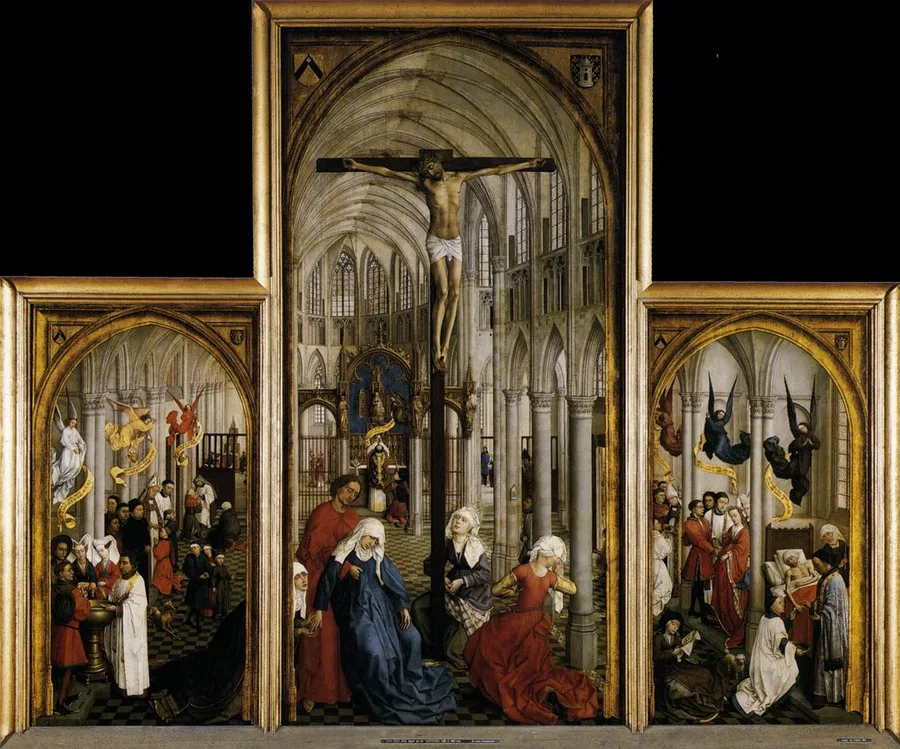
Light pours in abundantly; the cathedral seems cheerful, gentle, and smiling. Neither the formidable maxims, nor the sorrowful thoughts, nor the austere wisdom of Christians can reign in this diaphanous air and under these radiant vaults. The organ should not unleash its tempests here like the voice of a wrathful God; only the singing of young girls, the sweet litanies of monasteries, rise towards the Redeemer of mankind, like the fresh notes of the lark at sunrise. The tranquil and graceful genius of Memling already seems to vivify this monument.