It is a widely held opinion today that the renaissance of the decorative arts in France is a movement of foreign importation. The finest minds are busy propagating this doctrine, which concludes that our national genius has been subjected to the British yoke. According to this view, the current evolution was determined more by the copying of England than by "an intimate and profound desire to substitute new forms for old." In Britain, the first efforts date back to 1860, while those of other European nations are barely fifteen years old; on the whole, our neighbors across the Channel deserve to be considered the forerunners and the masters.
These are declarations that would be greatly alarming if they were to be taken as entirely accurate. However, error is mixed with truth, as happens whenever a generalization becomes too rigidly absolute. The day we decide to compare the Romantics with the Pre-Raphaelites, we will be forced to recognize that before William Morris, Victor Hugo and his disciples, and then Viollet-le-Duc, had demanded the benefit of beauty from everything and for everyone. Their claims, inspired by the humanitarian philosophy of the time, caused no surprise in a country that had seen art ennoble the useful with its prestige for centuries. This is a tradition that economic or historical turmoil may have interrupted, but without ever ruining or annihilating it.
Across the English Channel, nothing of the sort occurred. The report by the Comte de Laborde established how, at the 1851 Great Exhibition, well-understood self-interest led the English to foresee the impact of art on the development of their industries. Subsequently, they set an example of a great people "devoid of taste" who managed to create one for themselves artificially, through sheer force of will. Praise was lavished upon them all the more because the result was so difficult to achieve. Yet an acquired quality can never be the same as a natural gift. This suggested taste is not like the instinctive taste of the Greeks, the Japanese, or even the French of old, which left its mark on every object. It is successful only in a specific domain, and our neighbors have primarily set an example of simplicity, concern for purpose, and practical necessity.
These are precious lessons, I admit—timely reminders of sobriety and logic, from which more than one has not failed to profit—but we must be careful not to attribute too broad a virtue to them. Is the limit of their effect not, moreover, traced by radical differences in temperament, spirit, and existence? In France, comfort is valued only when adorned with elegance. This is due to more frequent social interactions and a desire to please that has become a sort of point of honor. One must also account for the preeminence attributed to women in our society, and with her nature, which here is less practical, more delicately frivolous. "The Englishwoman," says Taine, "does not know how to make herself pretty; she lacks the talent for being coquettish and piquant in her own home, whereas the Frenchwoman, at every moment and before every person, holds herself at attention and feels she is on parade."
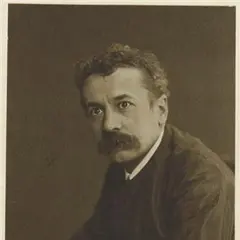
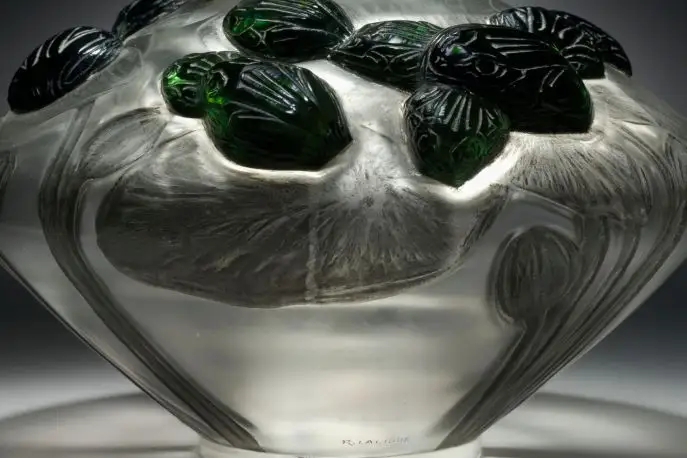
Her personality radiates onto her surroundings and governs their arrangement. At all times—in the 18th century and still now—her domination has been exercised over the domestic arts. This is why the passing whim of a graceless fashion, and a few secondary pastiches, quite rare in sum, do not authorize us to derive the origin of all our decorative renovations from across the Channel. When one thinks of the leaders and instigators of this renaissance, one perceives no link connecting the mastery of a Gallé or a Roty, a Jules Chéret or a Bracquemond, to English influence. For a quarter of a century or more, they have been the ones doing the work and receiving the honor. Since then, Alexandre Charpentier and Pierre Roche, Dampt and Prouvé, Desbois and Carabin, Aubert and Nocq—all the embellishers of life and the home—have likewise escaped the contagion of foreign styles. And only among us could a body of work arise that was composed entirely for the glory of woman and the exaltation of her beauty: the radiant work of René Lalique.
The Rise of a Master
Suddenly, the Salons brought him to the attention of the public. In 1894, those who scouted for new signatures had taken note of an iron vase and then a binding for Die Walküre, both with an unconventional allure, though the latter was difficult to appreciate due to the immediate oxidation of the gilding that enhanced the ivory. But the true revelation did not burst forth until the following year. We remember the delighted surprise caused by that initial selection of seventeen jewels, diverse in appearance and use, but equally exquisite in their decoration and workmanship. A single one would have been enough to win the approval of the elite.
The brilliance of this success, as one might imagine, intrigued public curiosity. Who was this newcomer with such a prodigal imagination and protean knowledge? Not a beginner, to be sure, but a master whose talent had matured slowly, in secret. Indeed, the career of Mr. René Lalique was soon revealed: it was learned that he was a former student of the École des Arts Décoratifs and a laureate in several composition competitions in England. He had been involved in designing for the jewelry trade before opening his own workshop in 1885. Around that time, it has been recalled, "his qualities were held in high esteem by certain manufacturers, who, while profiting from his works, were careful not to make him known."