By Édouard Monod-Herzen
The publication of Eugène Grasset's book, Méthode de Composition Ornementale (Method of Ornamental Composition), was eagerly awaited, not only by his former students—who were delighted to see the lessons they always found too brief now developed and codified—but also by all those interested in the arts. This work arrives at a crucial time, marking with brilliance the first stage of the welcome reaction following the great crisis of decorative art in the last century.
The Crisis in 19th-Century Decorative Art
As M. Léonce Bénédite wrote in substance, the upheaval of the great French Revolution had indeed given birth to secondary waves that propagated through every domain of thought, profoundly unsettling them.1 A complete rupture had occurred between the past and the present, interrupting the tradition necessary for the life of a style. At the same time, however, a spirit of scientific curiosity was born, so that instead of one past, we soon had all of them, simultaneously. Romanticism rejected the classical admiration for the Greeks and Latins only to become infatuated, in turn, with the Middle Ages, the Renaissance, the Louis XIV style, the Louis XV style, and so on, thereby creating great disarray.
Then, the incessant expansion of international trade introduced all foreign art, from the Orient and the Far East, and these overly numerous and rapid contributions increased the disorder to the point of chaos. If we add to these moral causes powerful economic factors—vital competition, the unprecedented development of mechanical industry, and the lowering of prices, which allowed the market to be flooded with inferior models—we can understand the prodigious suddenness with which the corruption, perversion, and degradation of public taste could occur.
Who among us has not witnessed the spectacle of the bourgeois man who, having achieved comfortable means, decides he will "do" art? He endows the good old family home with a Romanesque vault and medieval niches. He heaps together Japanese trinkets, Tanagra figurines, Arab chests, and stoneware (!) reproductions of antique bronze lions. Soon, he pontificates behind a desk of his own composition: the top is Byzantine, the sides are Renaissance, with small columns adorned at the bottom with Gothic Virgins! Finally, pleased with such a "creation," the good fellow anoints himself an artist and clutters his home with furniture embellished with so many angles and points that one gets bruised every time one approaches it, with light fixtures that illuminate almost as much as sepulchral lamps, and with clock faces so well-conceived that one can distinguish neither the hands nor the hours. It is the epitome of incoherence, ignorance, pretension, and foolishness.
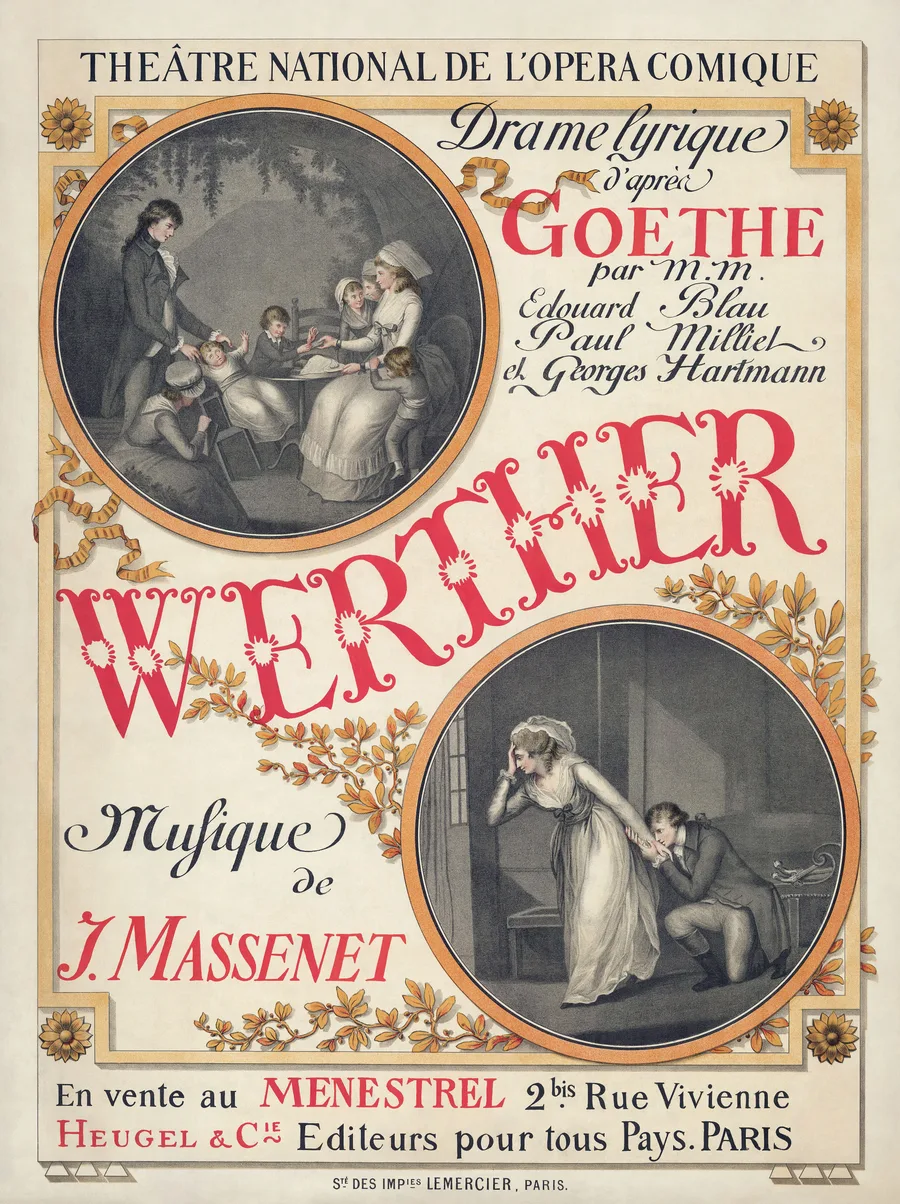
The Reaction and Grasset's Foundational Role
](/_ipx/w_900&q_82&f_webp/api/content/artwork/2039e37a-4768-473c-b652-7cefad9716c8.jpg)
A reaction, however, was gradually building. On all sides, people began to pull themselves together. A need was felt to be re-immersed in nature to cleanse one's gaze, to stand before it to seek the elements for new conceptions. The necessity of studying it closely and disciplining one's efforts became clear. Certain masters did not limit themselves to creating and disseminating the study of natural forms through their works; they wanted to preach this new crusade and dedicate the best part of their lives to professing their faith.
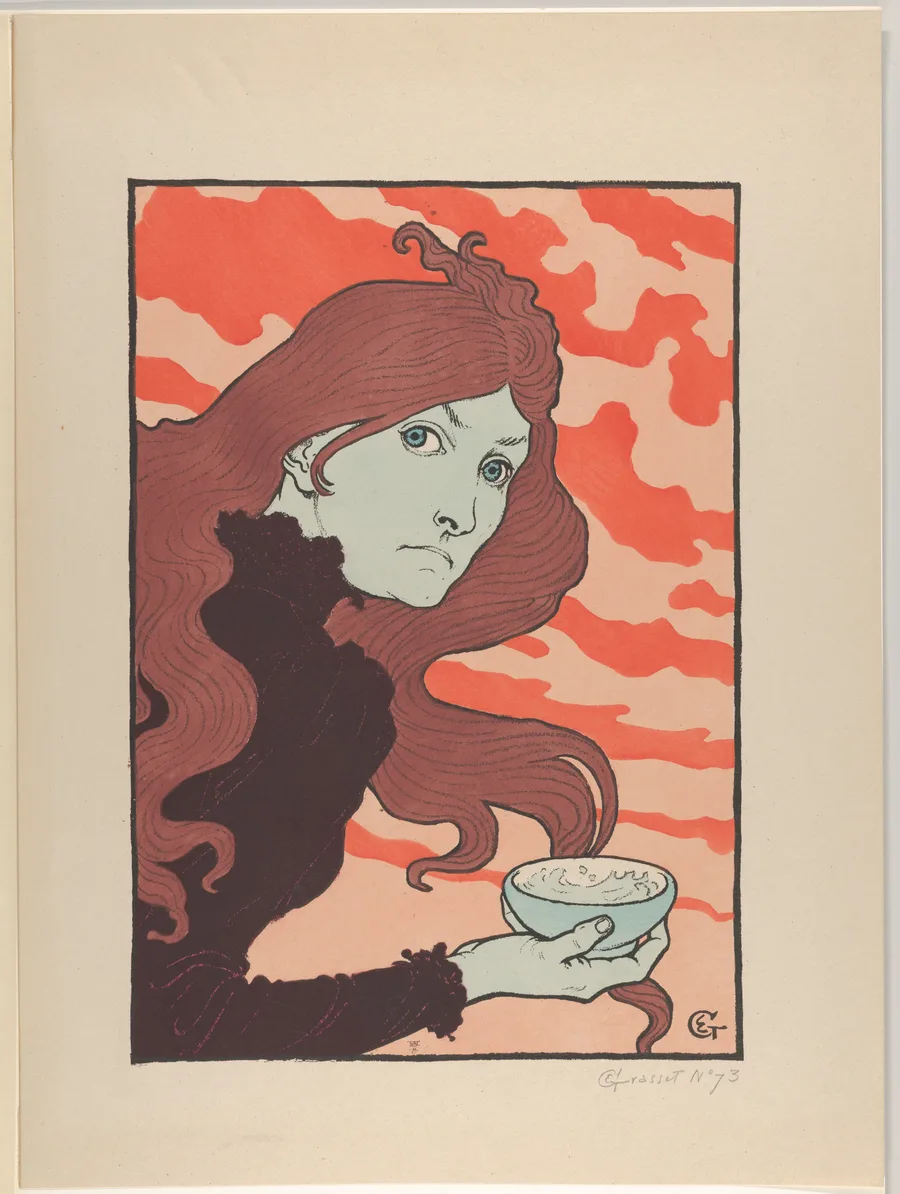
One of the most devoted of these was Grasset.2 He has been teaching among us for more than fifteen years. His course forms a three-year cycle, and it is the first year—developed far more extensively than oral lessons ever permitted—that is now published in two volumes of the highest interest. But Grasset is not merely one of those who helped restore health to a dilapidated organism; he is the one who first saw the full importance of an abstract ornamental art, and his work has the exceptional merit of having laid its first foundations.
Many people readily believe that abstract ornament, doubtless because of its apparent simplicity, occupies a lower rank in the evolution of the res æsthetica (the aesthetic domain) than figurative ornament, which is seen as the result of a higher differentiation. This is not the case. Not only does experience teach us that the human intellect always proceeds from the complex to the simple, but all of history confirms it. In prehistoric ages, figurative art was born before architecture. In Egypt, figurative art was the first to be established in the decoration of monuments; ornamental drawing came only later. And in mouldings—the abstract art of accentuating masses—it did not begin until around the 12th Dynasty. The same has been true in every country. It is therefore abstract ornamental art (along with moulding) that constitutes the highest expression of aesthetic development.
We may thus hope that after having strayed and floundered in complete anarchy, after having followed the brand-new surge of figurative decoration, we will be granted the chance to witness the progress and blossoming of abstract decorative art. We might then—oh, miracle!—cease to copy the same Greek mouldings forever, and we will finally have a renaissance of architecture. We see from this, and it should be a consolation to us, that apart from the very original art of all-metal constructions, it is somewhat natural that our modern architecture is still so utterly pitiful.
The Logic of Grasset's Method
Grasset's method is clear and logical. The visual perceptions that bodies give us are, independent of color, the innate perception of contour (two dimensions) and the acquired perception of relief within the contour (the third dimension). Relief, which is revealed to the eye only by the play of shadows, is similar to color, or more precisely, to value. We can therefore, in a first approximation, neglect it and consider every being in the phenomenal world as "composed" of flat planes (méplats) distributed in a certain way. This leads to a twofold study: that of the specific form of the flat planes, and that of their distribution or grouping—technically, their arrangement (ordonnance).
From Composition to Form
We will begin with the second of these studies for several reasons. First, because it is the easiest. As we will see in Grasset's book, beneath an apparent diversity, the groupings of given motifs can always be reduced to a limited number of general types, whereas the vocabulary of forms is infinite. The analysis of Form is therefore a very delicate and difficult problem that must come later. Other considerations add to this. It is the arrangement of a work that gives it its character—that is, its fundamental quality. Furthermore, as soon as one moves a little farther away, the details merge, and only the overall arrangement remains. Its role is therefore predominant, and its study must come first.
It follows from this that for initial investigations, it will be permissible to replace the flat planes under consideration with equivalent but simpler ones, obtained by regularizing their contours. We will thus have reduced the proposed question to that of grouping elementary figures.
Foundational Exercises
As the saying goes, practice makes perfect; and it is by grouping that one learns to group. Grasset takes schematic figures and shows how, by grouping them suitably, one can obtain pleasing combinations. He then advocates for what are truly "suppleness exercises"—his book is nothing more than this, he tells us with extreme modesty—and he develops a great number of them with rare ingenuity. His main goal was to assemble forms with one another in a way that awakens the reader's constructive spirit. This is the first time a rational method of composition has been presented using the simplest elements, accessible to all.
These are covered in the chapters on the Point, the Straight Line, and the Combinations of the Line and the Point; those on the Division of Figures and the Development of Elements; and finally, those on the Grouping of Primitive Elements, Borders, Networks, and Background Patterns (Jeux de Fonds).
From Two Dimensions to Three
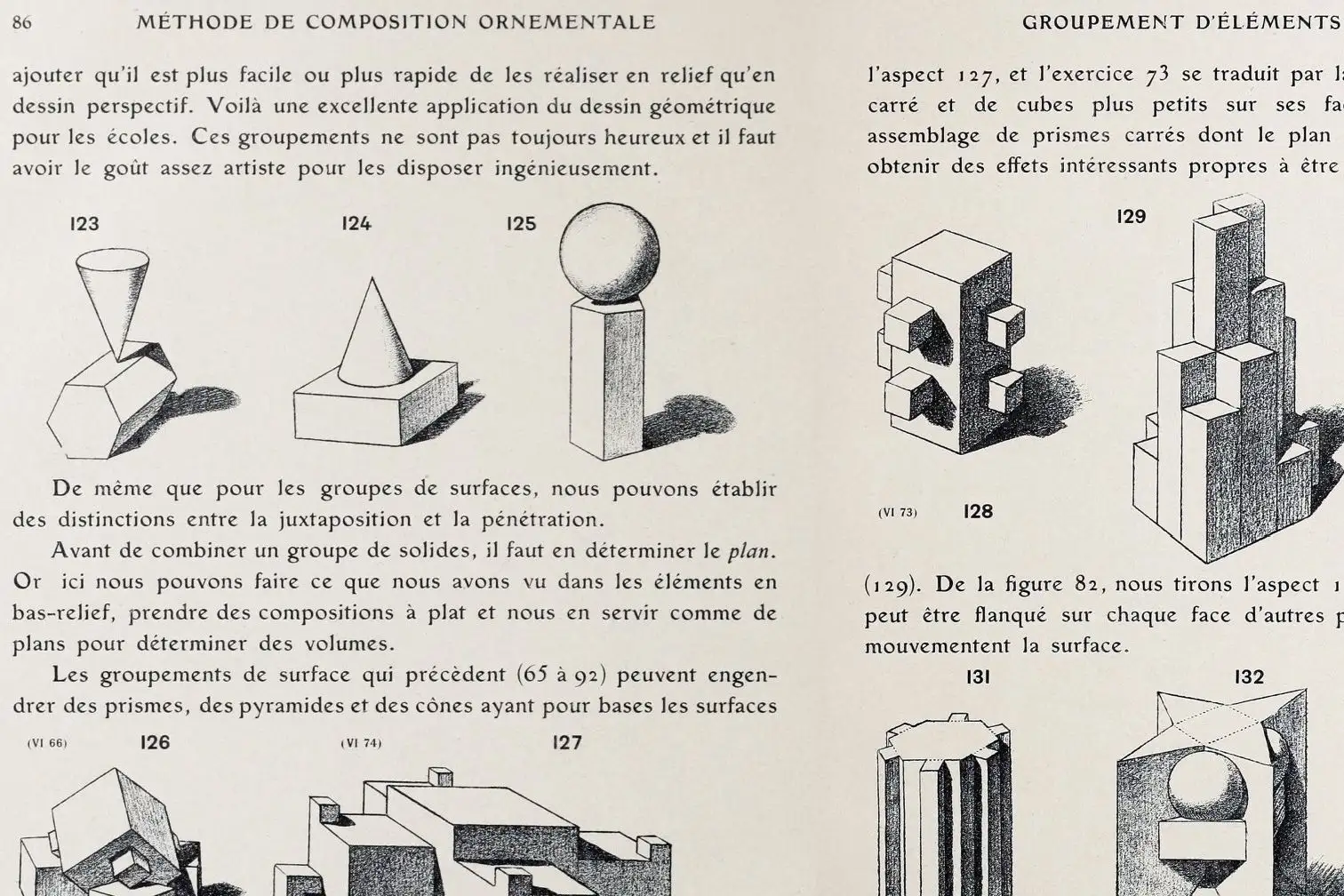
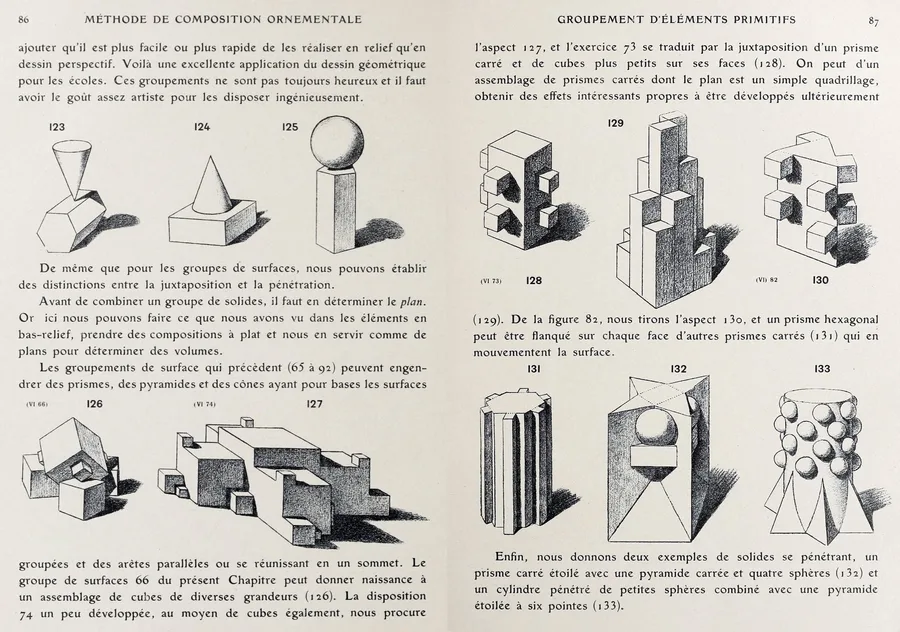
Also noteworthy are some very interesting considerations on volumes. Each of the previously obtained schemas can serve as a basis for constructions in relief that will be very well-proportioned, provided that the standard of the schema is respected. Let us take, for example, a group formed essentially by the juxtaposition of several smaller figures of the same kind next to a main figure, here a square (fig. 74). On each square, let us erect cubes and simply repeat this operation two or three times, always in the same spirit. We obtain the following appearance (fig. 127), which curiously recalls certain Assyrian constructions. We find ourselves led, without having noticed it, to the very gates of architecture.
What is most remarkable is that Grasset, in proceeding this way, was acting, without knowing it, like the artisans of the Middle Ages and the Renaissance. Very recent research has in fact established that the artisans of old studied their plans with extreme diversity and care, but varied rather little the way they constructed their elevations, which they "drew out" from the plans systematically, a bit like extending a telescope. This is a topical justification of Grasset's method.
The Elements of the Second Volume
The second volume contains the study of curved elements. A great number of the exercises from the first volume are revisited to show how they are modified when curved elements are substituted for rectilinear ones.
The Study of Curves
This is covered in the chapters on Curved Elements, the Application of Curved Elements, the Grouping and Development of Curved Elements, and on Scrollwork (Rinceaux) (fig. 303). Regarding scrollwork adorned with volutes, Grasset rightly points out that just because the volute was used in the past is no reason to reject its principle today. What one must forbid oneself is copying the arrangements of volutes imagined by the ancients; but we have every right to seek out original ones.
Inspiration and Originality
We are, in fact, absolutely free to draw our inspiration from whatever sources we wish. We never create the elements from which our works are built; at most, we can choose them. It is the work of composition and interpretation that reveals our temperament and constitutes our originality. We can therefore consider the riches of the past, contemporary foreign riches, and all those of nature as an immense vocabulary of forms and colors.
"Certainly, one does not create literature with a vocabulary (or even with a grammar), but one must have recourse to it from time to time, not to copy the letter of an obscure term, but to find its spirit."
In this sense, we would ask that the eloquent plea made for the volute be extended to the rosette.
Towards Living Forms
The other parts of the volume lead us, by imperceptible transitions, to living beings. The observation of natural sheaves suggested to Grasset the fundamental chapter on Curved Sheaves (Faisceaux) and the Harmonization of Ornaments. The principles of this harmonization are in fact modalities of the great principle of unity, the observance of which is a necessary, but not sufficient, condition for the creation of a work of art. This is the keystone of the entire edifice, and this investigation alone would be enough to make the work a unique monument.
The book concludes with the most engaging of studies: those of Composite Motifs, the Linkages of Grouped Motifs (fig. 63), and Systematic Groupings (fig. 98, 113, 121, 132). It is regrettable to be able to reproduce so few of them, as they are so pretty and elegant in their simplicity. Finally, we come to stylized plants, with Groups composed of radiating or overlapping forms (fig. 178, 189), and the composition of Florets (Fleurons) (fig. 250).
Practical Applications and Craftsmanship
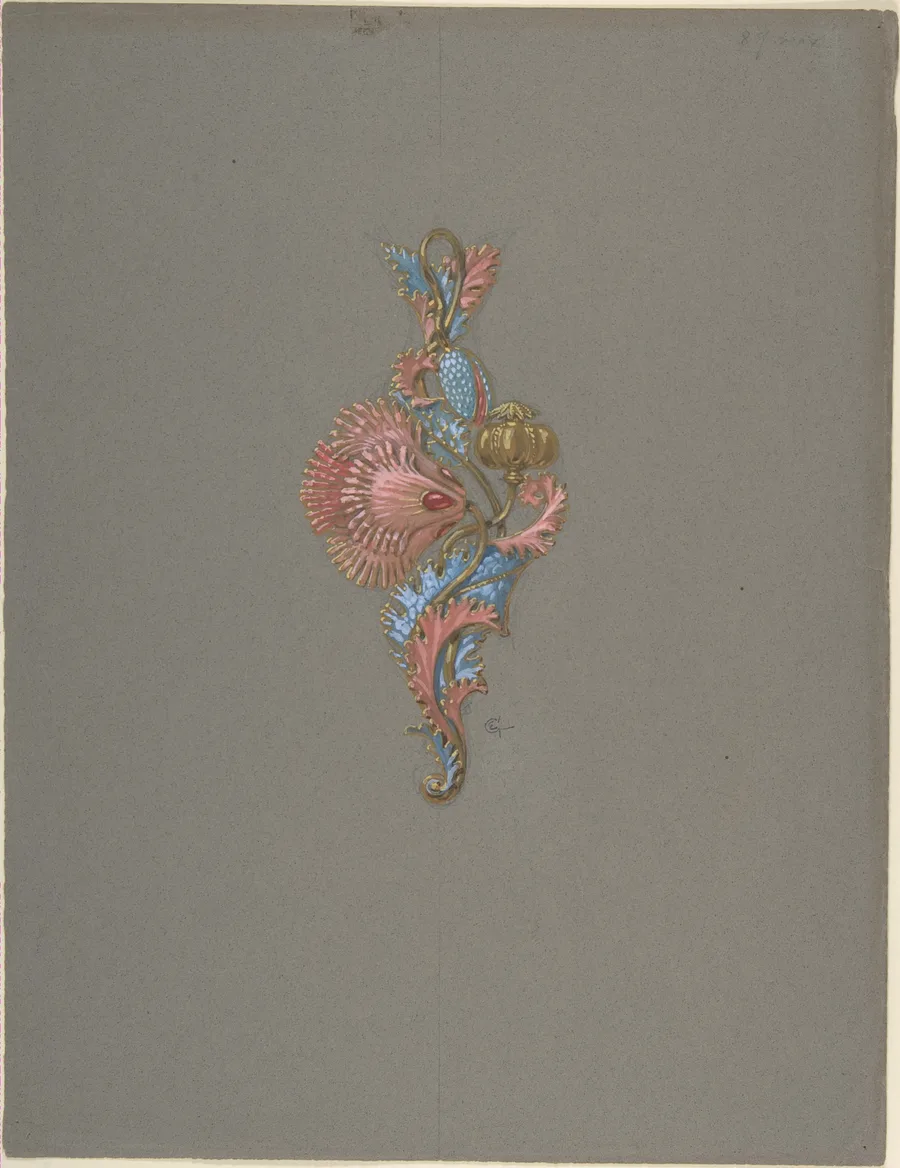
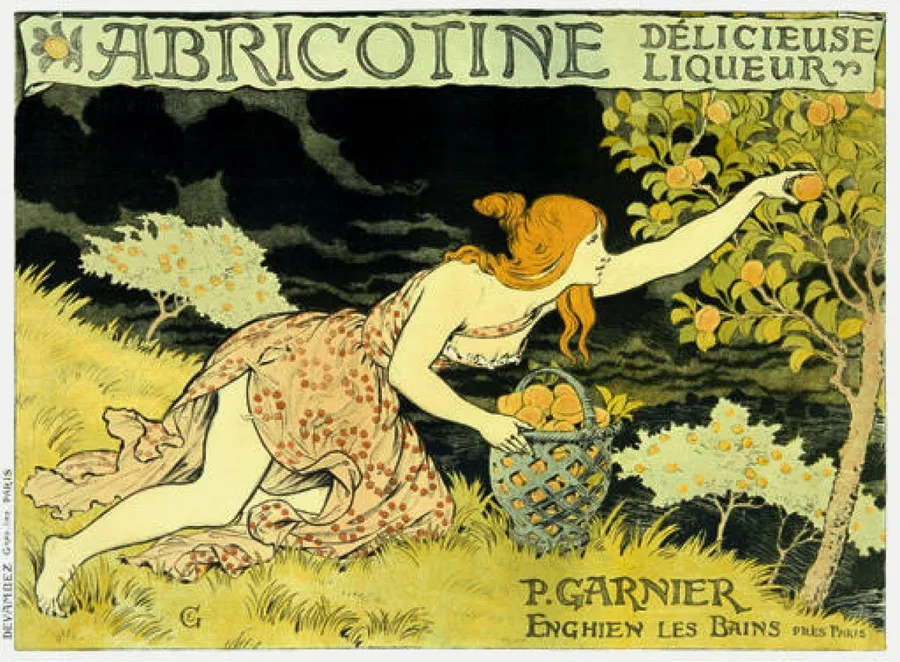
The value of the Méthode de Composition Ornementale lies not only in its exposition of the general principles governing the grouping of forms; it is also, and above all, in the development of its practical applications. Grasset certainly never forgot that his first and most fervent listeners were the artisan jewelers of the union on the Rue Thévenot.3 His book is addressed to all those who "work and take pains," and it is with them in mind that he has devoted such a large place to considerations of craft.
He does not confine himself to railing against the teratological art of hybrid grafting, or against the absurd mania for denaturing materials; he dedicates a very large part of each of his chapters to questions of execution. The economic evolution of the last century and the division of labor have created far too many draftsmen, far too many specialized workers, and no longer any true artisans. It is therefore impossible for modern works to present that integrity that so charms us in those of the past. It is no longer sufficiently known that the mere act of choosing a material introduces certain limitations, and that far from wanting to free oneself from them, one must, above all, respect them.
Adaptation to the requirements of the material is a rigorous law, and a perfect adaptation is necessary to give a work its highest aesthetic expression. The essence of taste is knowing how to limit oneself, and its very core lies in the old Greek word sôphrosuné, which signified both moderation and wisdom: harmony.
In Grasset's work, one will find a most new and original chapter on Scattered Patterns (Semis) in the matching of draperies, and twelve very varied projects, studied with a great wealth of detail, the whole of which forms a collection of precious technical information. These projects include: a patinated metal apartment lock; a cabinet inlaid with bone and pewter; decorated earthenware; a tile border; wood paneling; a copper grille for an office window; a display case for a hallway door; a wrought-iron gate for an entrance; a cushion covered with appliqué embroidery; a spandrel (écoinçon) in ceramic tiles; a mirror frame decorated with inlays; and a drapery fabric.
We must also highlight in passing the impeccable execution of the plates, as well as the printing of these two volumes, which do honor to the well-known reputation of the Librairie Centrale des Beaux-Arts.
We will conclude this all-too-brief analysis of such a vast work with the following sentence, which summarizes Grasset's entire artistic creed: "Art must have no prejudices; it must strive to introduce itself everywhere, to leave nothing, even in the most vulgar necessities of life, to incoherence and bad taste. It must be the master everywhere and always, if it does not want to be rapidly abandoned—which would be the defeat of our industries—or reduced to the narrow and ever-diminishing role of serving as an amusement for the rich and a pretext for vanity."4