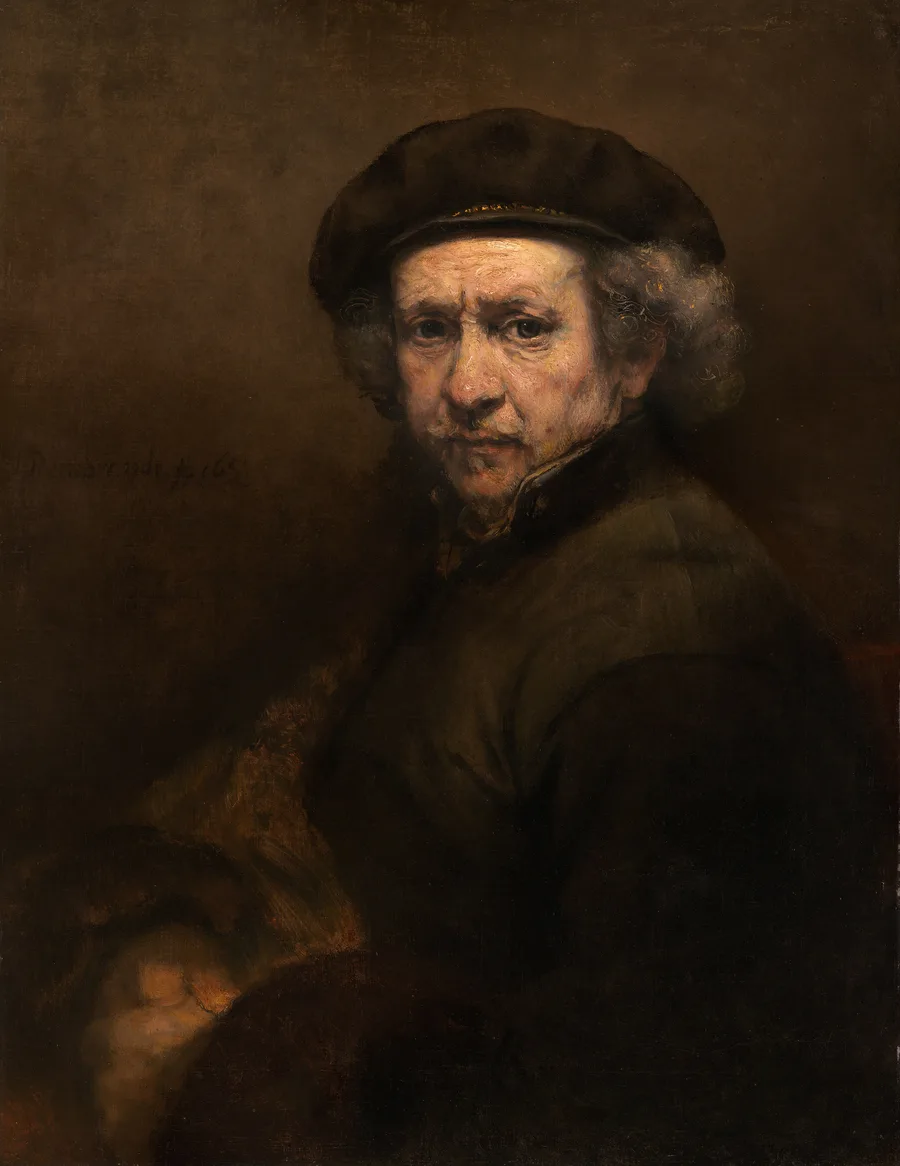
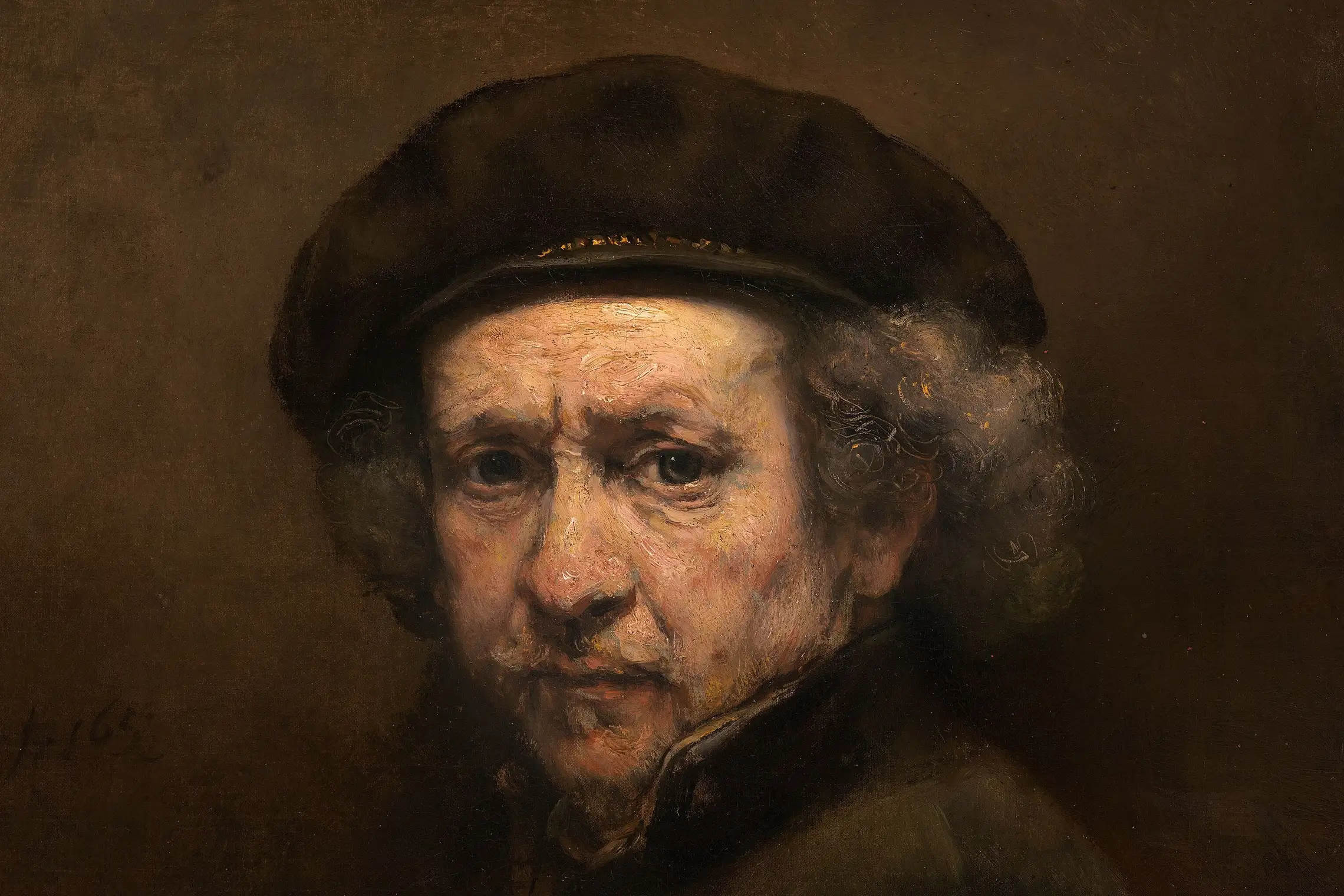
Not a month—I might almost say not a week—goes by without newspapers announcing the discovery of a Rembrandt painting in England, Russia, or elsewhere. Often, however, these discoveries ultimately amount to something other than works by the master himself. Yet Rembrandt's oeuvre, though burdened with paintings attributed to him by overzealous critics, is not yet complete. Just recently, a portrait of the master in his advanced years emerged from Italy, masterfully and broadly brushed, and of a singular beauty. In France, a magnificent signed and dated portrait has been discovered, previously known only through several old copies.
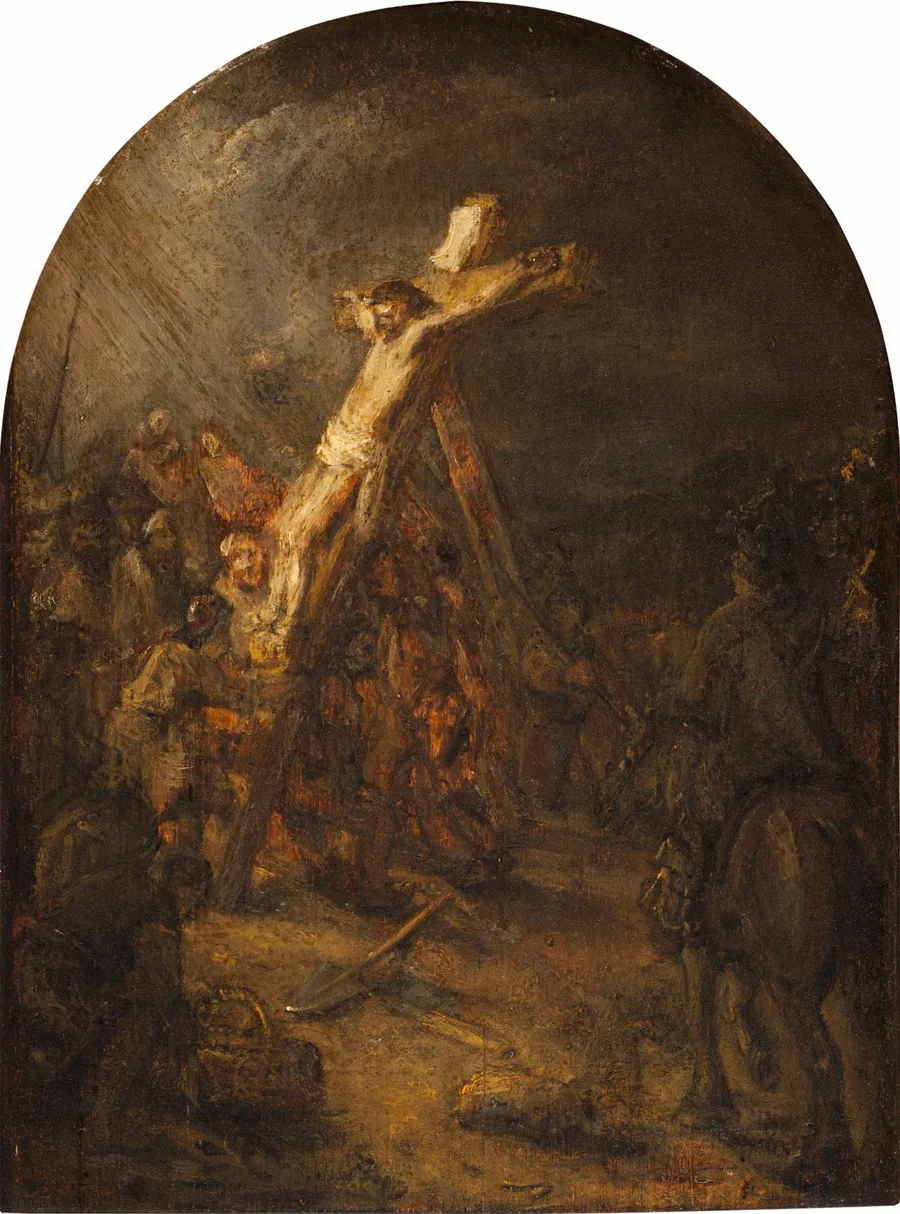
And the brilliant sketch of The Raising of the Cross, reproduced here for the first time, was long buried in England without attracting attention, despite having belonged to the famous collector Wynn Ellis of London.
I also think it is worthwhile to point out and reproduce a charming little portrait of the young Rembrandt, painted around 1630 on copper and measuring 12 by 14.5 cm. This work is little known but is also located in France. I first saw it at the home of the Countess Delaborde, who was gracious enough to entrust it to me for the Exhibition of Old Portraits in The Hague in 1903. Although it was reproduced in the supplementary volume of Mr. Bode's great work, The Complete Work of Rembrandt, and in the latest edition of Klassiker der Kunst, this lively portrait, with its penetrating eyes, is often mistaken for a self-portrait by the young Ferdinand Bol, the original of which is in the collection of Mr.
Taft in Cincinnati.
The Portrait of a Man Reading
The superb Portrait of a Man Reading, belonging to the Count of Demandolx-Dedons in Marseille and measuring 56 by 74 cm, was previously known through old copies. These copies were found in the Cook collection in Richmond, as well as in the collections of Mr. Johnson in Philadelphia, the Count of Besenval, and others. They were generally attributed to Carel Fabritius. Rembrandt was not considered because the problem the artist set for himself here differs from his usual approach: the figure, entirely in shadow, stands out against a very bright background.
Yet here, at last, is the indubitable original, duly signed, and how superior it is to the copies we have just mentioned! The delicate and warm tones in the shadow enveloping the expressive face are admirable. The black costume also vibrates in this Chiaroscuro, while the sun brightly illuminates the white wall behind the figure. Our reproduction shows the beautiful signature: Rembrandt f. 1645. Before the excellent relining by Mr. D. de Wild, the last digit was uncertain; at first, I thought I saw a 3, but it is indeed a 5 that must be read. Rembrandt, therefore, painted this masterpiece four years after The Night Watch.
I suppose the model was one of Rembrandt's friends who, like the mother of the painter Doomer,2 had the father's portrait, painted by a friend, reproduced for his children. This would explain the large number of fairly accurate copies of this painting that exist. One of these copies was reproduced in the catalogue of the Cook collection in Richmond by Mr. Kronig, and another in that of the Johnson collection in Philadelphia by Mr. Valentiner. It appears that the original (?) or a copy that was in the collection of the Marquis Gerini was engraved by Debucourt.
A New Vision of The Raising of the Cross
In 1633, Rembrandt painted, for Prince Frederick Henry of Orange, a Raising of the Cross that is currently in the Alte Pinakothek in Munich. The composition is quite unsuccessful and disjointed, but the lighting—the chiaroscuro—is already marvelous. The artist took pleasure in depicting himself as one of the executioners at the foot of the cross; his father, wearing a beautiful turban, appears in costume as a centurion on horseback. Very prominently in the foreground, a shovel stuck in the ground forms a line parallel to the cross.
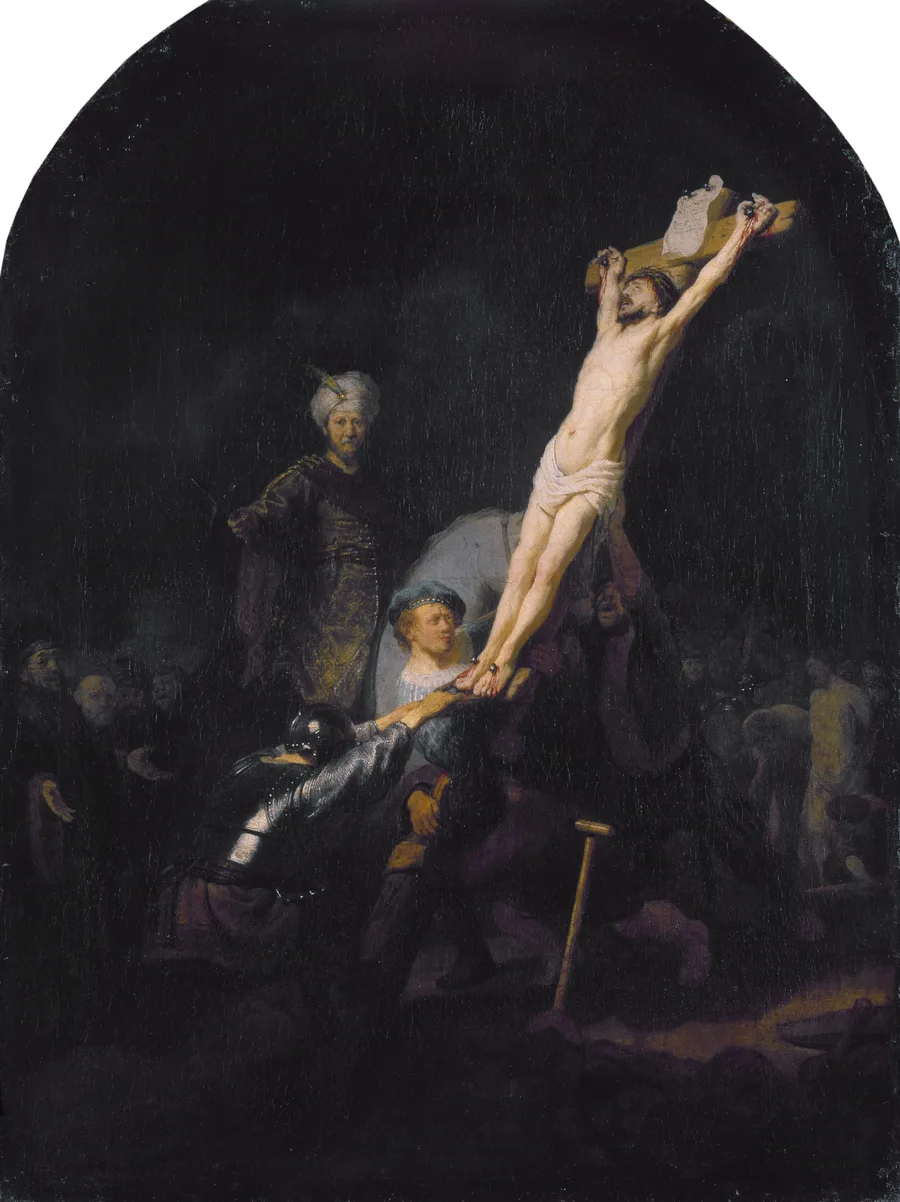
It seems that Rembrandt was dissatisfied with this painting and revisited the subject some time later, perhaps around 1640. The sketch reproduced here, much smaller (30 by 39 cm) and broadly painted in tones of sienna, black, and white with a touch of yellow, shows the same Christ on the cross but without the annoyingly prominent portraits of the artist and his father. Here, the composition is entirely reworked: the cross is placed more to the left, and there is much more action among the figures who are in the process of raising it.
From above, a celestial light descends upon Christ and the group of figures on the left, where one can vaguely discern the Virgin Mary, falling backward in grief. The shovel reappears, but this time it is laid on the ground. The artist was able to create great depth in the painting thanks to the use of repoussoirs (framing elements): on the left, a woman with a basket, and on the right, the centurion on horseback, now with his back turned to the viewer. The work has improved in every way: the composition is now perfect, the chiaroscuro sublime, and the effect striking.
Perhaps Rembrandt intended to make an etching from this sketch. It appeared in the Wynn Ellis sale in London as a study for the Munich painting. However, the skillful and balanced composition, the fantastic lighting with its mysterious chiaroscuro, prove that the master painted it later when his talent had reached a higher level—when he was already in the fullness of his genius. It is a pity that the reproduction of this masterpiece can give only a very imperfect idea of its beauty.
Rembrandt's Monochromatic Compositions
We know of a series of these camaïeux—monochromatic paintings—by Rembrandt. The most important, one of the master's most remarkable large compositions, is undoubtedly the Saint John the Baptist Preaching in the Berlin State Museums. It is dated to around 1636; perhaps he painted it even a little later. In its grouping of figures, its rendering of the most diverse expressions across numerous characters, and the extreme delicacy of its chiaroscuro, it is a worthy counterpart to the famous etching known as The Hundred Guilder Print.
Dated 1636, the grisaille (a painting in shades of grey) Joseph Recounting His Dreams, formerly in the Six collection and now with Mr. Voltz in The Hague, is almost a finished painting in black and white, with a magnificent light effect and very beautiful execution. There is also, at the Mauritshuis, an earlier work (c. 1630), The Rest on the Flight into Egypt, which is primarily a study of chiaroscuro. Other examples include a very broadly painted sketch of The Entombment of Christ (c. 1634) in Glasgow; the Christ before Pilate of 1633, a large and highly finished study for the etching of the same year; and a very beautiful Deposition from the Cross in the National Gallery, London.
Mr. Bode dates this last work to around 1642. Here, the movement of the women and the man supporting the fainting Virgin, her expressive face, and the poignant grief of Mary Magdalene make this magnificent study one of Rembrandt's great works.
This work will be featured at the Exhibition of Dutch Masters opening at the Jeu de Paume on April 21st.