

The recent, provisional installation of the Moreau-Nélaton collection at the Pavillon de Marsan, awaiting its triumphant and imminent consecration at the Louvre, stands as one of the great artistic events of our era. As the Moreau family name is inextricably linked here with those of Delacroix, Decamps, Corot, Millet, Chavannes, Fantin, and Manet, I ask permission to first sketch in a few cursory strokes the figures of these three sagacious and generous collectors.
What characterizes all three is the bold certainty of their taste. The one hundred paintings they are offering to the state constitute a truly complete, almost definitive pictorial anthology. This "centennial in one hundred paintings," housed at the Musée des Arts Décoratifs, is a synthesis of considerable pedagogical value. The essential stages of our French school are marked. There are no false glories, no minor masters—only the most profoundly original creators, represented by their strongest and most varied works.
A Dynasty of Collectors
When Adolphe Moreau the elder began to adorn the walls of his home on the Rue Neuve-des-Mathurins around 1840, the poorly enlightened public taste hardly favored the Romantic masters. While Jean-Dominique Ingres and Eugène Delacroix followed their parallel paths—without, incidentally, understanding one another—who captured the crowd's attention and won the applause of the official, philistine critics? It was Horace Vernet, a narrator of episodes, an enlarger of military vignettes, a prestigious storyteller—the Alexandre Dumas of painting.
It was also his son-in-law, Paul Delaroche, a virtuoso of melodrama, who personified the ideal of the middle class. It was the skillful and artificial stage-setter of terracotta-hued shepherds, Léopold Robert, whose popularity was extraordinary, yet who was hardly better than the bland and monotonous Victor Schnetz, whose survival is more than problematic. These were the artists who enjoyed favor and were warmed by popularity. This did not, however, prevent Adolphe Moreau from acquiring works that were violently debated, even dismissed, and from glorifying names that sounded like a challenge to public opinion.
In 1853, he purchased the masterful reduction of The Entry of the Crusaders into Constantinople and the teeming The Turkish School. It has been said of the latter that, along with The Guardhouse in the Musée Condé and The Punishment of the Hooks in the Wallace Collection, it is one of the most luminous Orientalist pages ever signed by Decamps.
The second Adolphe Moreau, son of the first, enriched the family's pictorial heritage with several other works by Decamps. He paid no mind to the unjust critiques of those who declared the enamel of Decamps's colors to be petrified, sensing that this lover of the mysterious play of light had, with all due respect to Fromentin, a true understanding of values. This same Adolphe Moreau endowed the Louvre Museum with an imperishable treasure: Delacroix's The Barque of Don Juan, from the Salon of 1841, a masterpiece that Delécluze, the famous pontiff of the Journal des débats, dismissed as a "tartouillade" (a messy daub).1
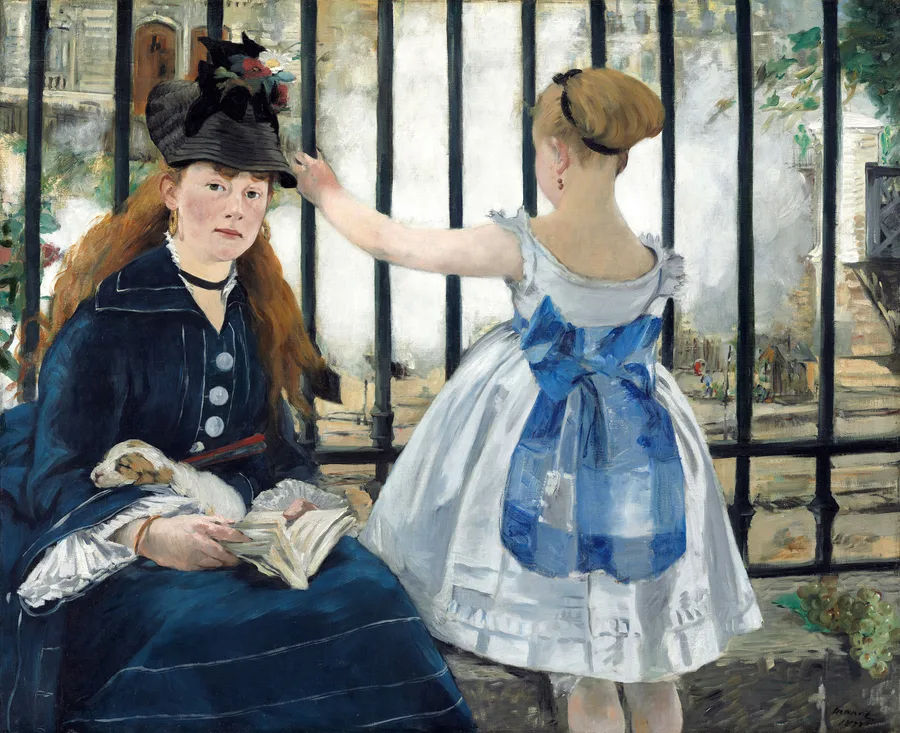
In turn, Étienne Moreau-Nélaton expanded the collection. Corot, whom he adored with a filial piety, Fantin-Latour, and Manet were, along with the Impressionists of 1874, his preferred masters. He gave the divine "bonhomme" (good fellow), Corot, the place of honor.
The Collector as Creator and Philanthropist
A brief digression is necessary here to speak of the exceptional artist that Étienne Moreau-Nélaton proved himself to be. He is himself a creator of eminent merit. He is a painter of interiors, brushed with a brisk frankness; a potter, both learned and simple, who prefers the rustic and flavorful popular earthenware and stoneware to the subtleties of the neo-Japanese ceramists. As a writer, he raised a pious monument to his beloved Corot. While Adolphe Moreau had previously published Delacroix et son Œuvre, Étienne Moreau composed the touching Histoire de Corot et de ses Œuvres.
Long concerned with artistic education (his donation to the Louvre is magnificent testimony to this), Moreau-Nélaton stood alongside Roger Marx as one of those who did the most to bring art into primary schools. His series Les Fruits de la terre (The Fruits of the Earth) remains a fine model for schoolhouse imagery. This is the man who has just offered one hundred paintings to the Louvre.
One can understand, to a certain extent, when a financier—though the event is rare—parts with his paintings, that the sacrifice does not strike him in the depths of his soul. But for a sensitive and knowledgeable dilettante to do so is another matter entirely. "I shall have to leave all this!" said Cardinal Mazarin, who hardly possessed the genius for renunciation. And Mazarin wept at the thought of losing his treasures in articulo mortis (at the point of death). It is in the midst of life, in full health and full work, that Moreau-Nélaton has been able to lead "the old friends of his hearth" to the Louvre.
As a painter, he had passionately savored the wholesome joys of contemplation. But as a man, he knew how to renounce them—as an infinitely delicate phrase in the anonymous preface states—"renouncing for himself and his children riches too noble to be confused with those that are valued in gold."
Rare are the collectors who hold such a concern for works of art. Ordinarily, they watch over their treasures with a jealous eye, delighting as the patina ambers and gilds the tones. They speculate on the rarity of a theme; they follow the market, betting on rising prices. Moreau-Nélaton must have seemed an eccentric to his peers. "What is this strange mania for socialism?" they must have said. "What is this owner who considers himself a mere custodian?" Yet Moreau-Nélaton, indifferent to such commentary, thought only of fulfilling the wish, the secret intention of the creators "who dedicated their works not to a few, but to the world."
A Corrective to State Negligence
Moreau-Nélaton offers a fine example not only to fellow collectors but also to the state itself. Is it not deplorable that the state is always so timid, so incompetent, so ignorant, and so unjust when it comes to true artists—the independents, those revolutionaries of today who become the classics of tomorrow? Is it not a point of contention to leave the glory of enriching our museums to the enlightened care of individuals like Thomy-Thiéry, Caillebotte, and Moreau?
The administration of the Beaux-Arts—with the astonishing exceptions of Castagnary and Henry Marcel—has always reserved its favors for the skillful, the official, and the academic. It preferred Delaroche to Delacroix, Meissonier to Millet, and Cabanel to Manet; it placed "you-know-who" at the École des Beaux-Arts and the Villa Medici. For twenty years or more, Impressionist masterpieces have been streaming abroad. New York, Chicago, Dresden, Munich, and Berlin have filled their museums with the luminous and bold works of Degas, Claude Monet, Pissarro, and Berthe Morisot. The present initiative, therefore, has a rare suggestive power.
May it bear fruit!
The donation comprises one hundred oil paintings and eighty-nine drawings, watercolors, and pastels. Delacroix and Corot dominate. The arrangement, the presentation on the cimaise (gallery wall), was conceived and executed by the donor himself. Thus, one sees a panel composed of The Dream by Puvis de Chavannes and the large Still Life by Delacroix, with a Sisley to the left, The Bridge at Argenteuil to the right, and two Corots below (including La Rochelle!), framed by two works of Delacroix. The Forge at Marly-le-Roy, acquired last year at the Depeaux sale, hangs beside The Port of Le Havre.
And all these masters harmonize marvelously.
I will not attempt to analyze all one hundred works in the collection. Almost everything has already been said about our Romantic painters, our Barbizon landscapists, and those of Giverny and Moret. A few observations, however, will not be out of place.
Highlights of the Romantic Masters
Regarding Delacroix, the influences of Géricault, Bonington, and English painting are once again interesting to note. In The Entry of the Crusaders into Constantinople, which is not a sketch for the Louvre's painting but a replica in reduction, the differences in framing will provide material for curious comparisons. Let us simply say that the painting, about a square meter in size, is in no way diminished; Delacroix, unlike many a history painter, knew how to achieve grandeur in a small space.
Also of note is the Large Still Life from the Salon of 1827. Neither Fyt nor Snyders ever produced such a piece. Horse Attacked by a Lioness is further proof that Delacroix could, when he wished, obtain the most dramatic effects not through the movement of figures but through the accentuation of color. The magnificent greenish and wine-like tones of Dying Horse (Mesdag Museum, The Hague) would be worth comparing to these.
Finally, might we be permitted, while overlooking The Prisoner of Chillon for a Byronic quality that is disconcerting today, to linger instead on a certain small Odalisque (no. 61), installed just below The Mad-Brained Girls by Diaz. Was this odalisque painted from memory, after a beautiful girl from Mogador or Meknes? I highly doubt it; the slenderness of the supple, warm body, the nervous grace of the silk-stockinged legs through which the flesh appears rosy, are clearly those of a Western sultana. Moroccan or Parisian, the odalisque is exquisite. And the quality of the whites—the silver-white of the moiré-like sheets, the white tinted with rosy beige of the stockings—is of a rare delicacy.
I must confess that the two graceful little paintings by Diaz that frame this marvel seemed to suffer from the juxtaposition. While the landscapist Diaz of the Thomy-Thiéry collection displays the fine, tight technique of Théodore Rousseau, I believe, in agreement with M. Marcel, that when Diaz treats the figure, whether in his turqueries (Turkish-themed scenes) or his oaristys (idyllic scenes), he uses a soft and buttery touch.
If Delacroix "hinders" Diaz, Decamps is no less dangerous for Fromentin. The Turkish School is prodigious in its spirited swarm and picturesque animality. The dandyism of Gabriel Decamps detracts from the easy but more simplistic elegance of Eugène Fromentin. I am aware that one can criticize the former for sometimes having somewhat uniform values and, in The Turkish School, for reds that come too far forward. But truly, the figures in The Burial are of a thin substance, while the horsemen in The Ford, silhouetted against a sky of gold and copper, possess an infinitely more decorative finesse.
Without a doubt, the portrait of Adolphe Moreau that Thomas Couture executed in 1845, two years before The Romans of the Decadence, is superior to that vast composition of such artificial Veronese-like grandeur. Yet, were it not for the family interest attached to this effigy, we would be justified in preferring to it the adorable little portrait of The Schoolboy, signed by Camille Corot.
The Heart of the Collection: Corot's Luminous Vision
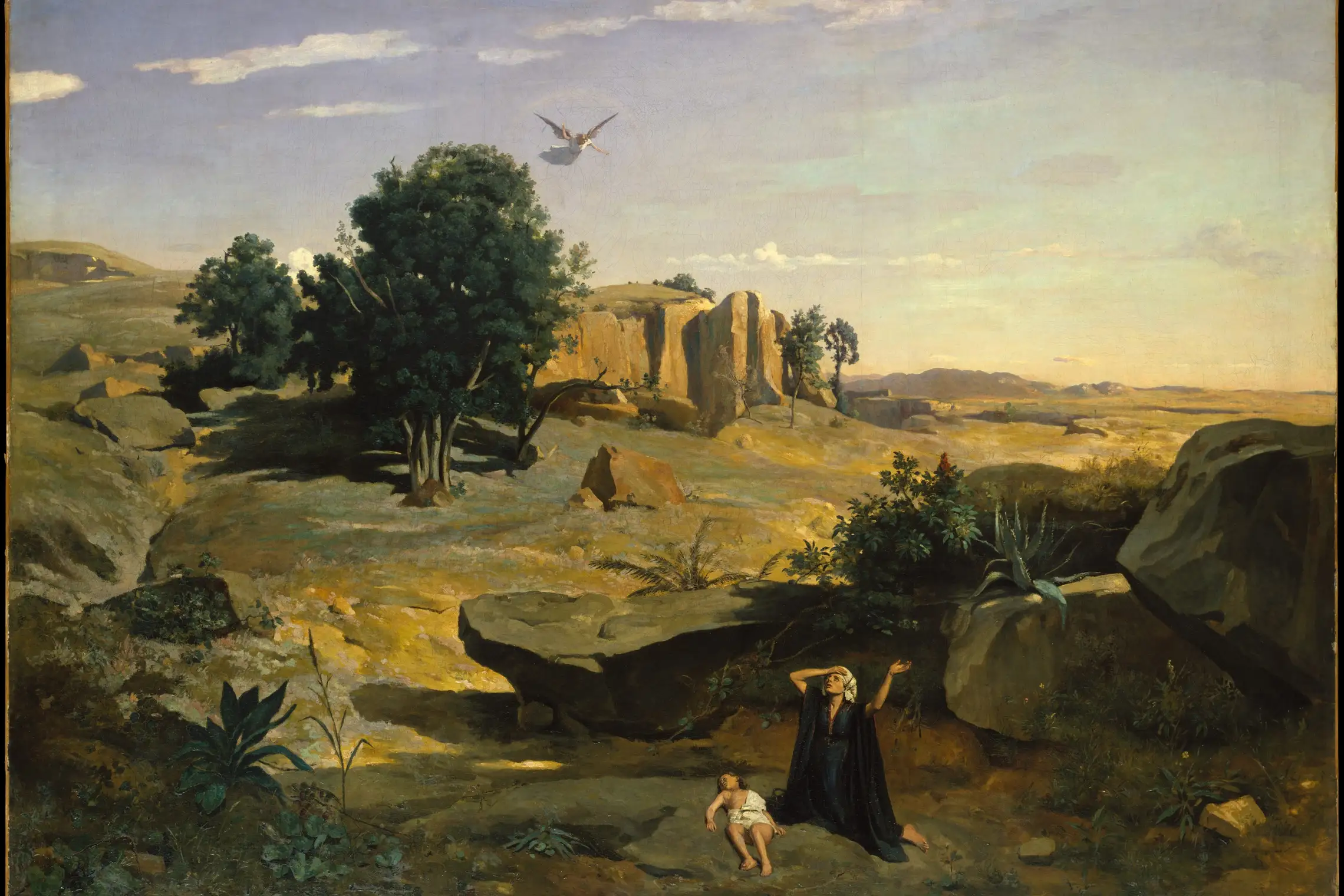
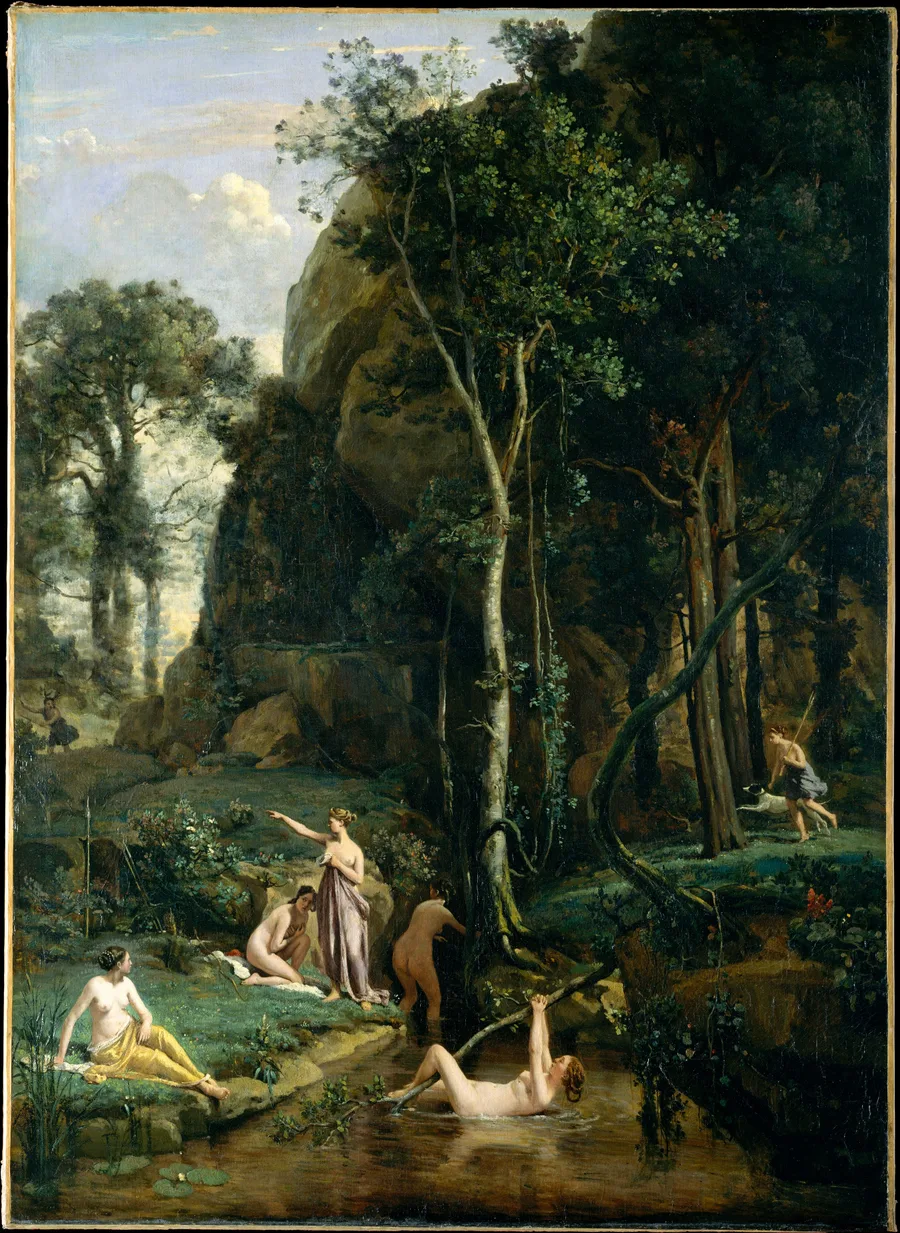
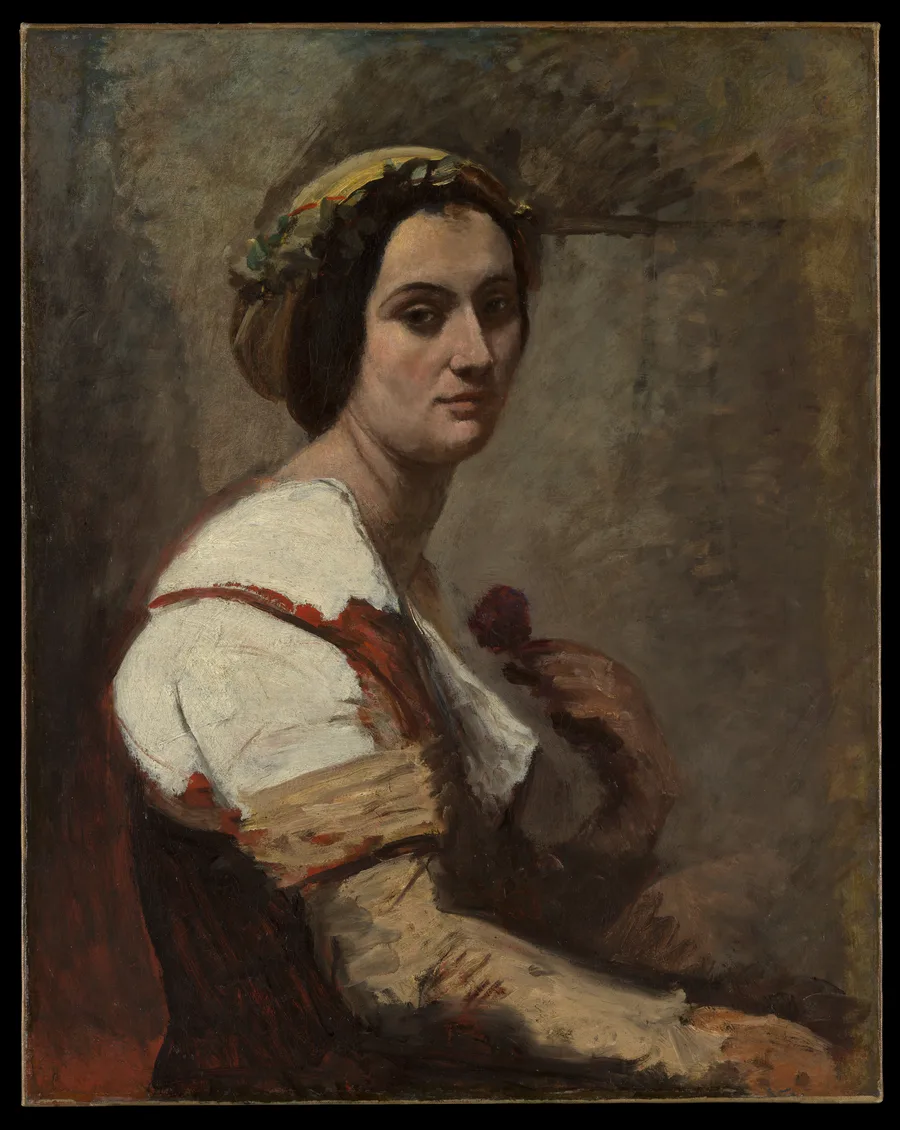
We now arrive at the thirty-seven Corots, which are the jewel of this inestimable gallery. The entire life of the divine landscape painter—the rival of the two most subtle painters of light, Johannes Vermeer of Delft and Jean-Baptiste-Siméon Chardin—unfolds before our eyes. From the precise and meticulous self-portrait Corot left as a pledge to his parents before leaving for Italy at the age of twenty-nine, to The Tanneries of Mantes, painted in 1873, we see the stages of a glorious and fertile career.
Here are studies from Italy, from his first or second journey: Monte Testaccio, The Colosseum, the Castel Sant'Angelo, Vesuvius, The Town Hall of Volterra. His early style is so tight, so precise, that it does not shy away from dryness. Then, freedom is acquired, the handling broadens. But from his very first paintings, Corot asserts a miraculous understanding of values. For him, light is the very center, the principal subject of the painting; one sees it enter the frame, illuminate a few points, and disappear. And thanks to the honest and sure distribution of the play of light, objects are in their proper place, buildings at their correct distance—such as the Colosseum seen from two hundred meters away through the arcades of the Basilica of Constantine.
Étienne Moreau-Nélaton—for it was he, of the dynastic trilogy, who deliberately chose almost all the Corots—preferred the more realistic visions of Italy or Provence, of the Île-de-France, the Charentes, or the Beauvaisis, to the Virgilian landscapes, the poetic forest edges, and the ponds glazed with silver and mauve, bathed in mysterious glimmers.
Here is Chartres Cathedral, painted in 1830 and retouched in 1872 (the two figures in the foreground are from this second date; study the relationship between the whites of an apron and a pile of stones). Here is Saint-André-en-Morvan, where the tree, so decorative, is portrayed with the care of a Hobbema. Here is the seascape of La Rochelle, where the grays of the background, behind the lighthouse, are of an extraordinary transparency. Here is the Rustic Interior at Mas-Bilier, which brings to mind a successful Drolling. And here is Velléda, naive and leaning, a finger placed on the open page of her book, whose dress, treated with a broad approach, irresistibly recalls the gowns of Vermeer's modest heroines.
The majority of these paintings were acquired by Étienne Moreau-Nélaton at sales over the last twenty years. Thanks to him, the Louvre, where Chartres Cathedral will soon hang beside The Road to Arras, will surpass the nonetheless beautiful collection of the Musée de Reims.
The Dawn of Modernism
Daubigny, the most flavorful of executants; Troyon, a robust chronicler of pastures where indolent cattle graze; and Ricard, represented by a Head of a Young Woman with a handling less distinguished and rounder than his portraits of Mme Sabatier or Mme Baignières, lead us to Fantin-Latour.
Homage to Delacroix is too illustrious to require lengthy commentary. It is a profound joy to know that this composition, of a haughty serenity and supreme distinction, is now definitively safe, housed in the national museum.
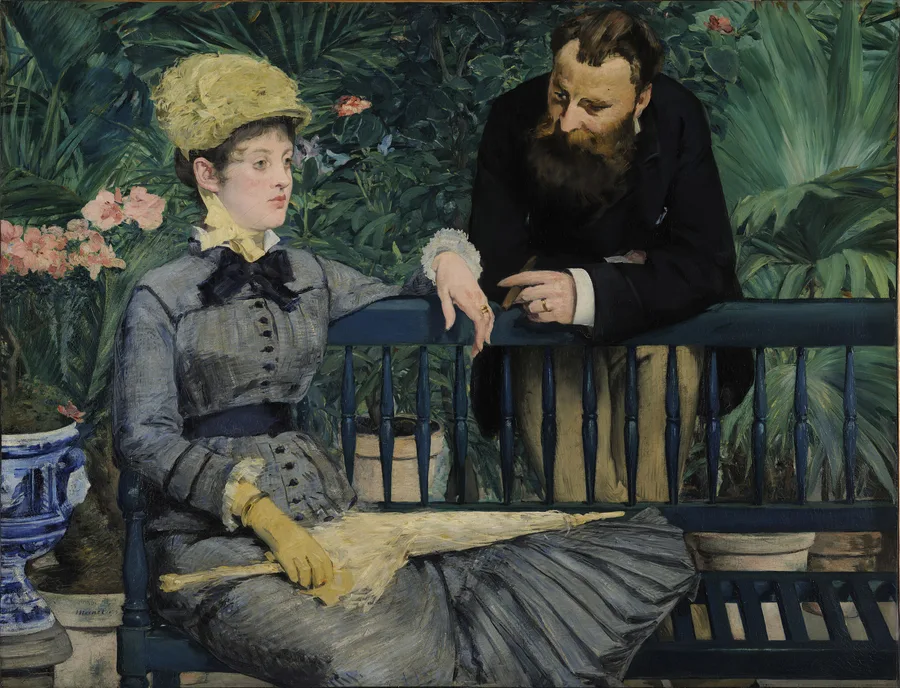
With Manet, we approach the modernists. Here, then, is the famous Le Déjeuner sur l'herbe (Luncheon on the Grass), painted in 1863 by a young man of thirty-one, which unleashed the fury of the jury, offended in its ideal of Italianism and shocked by the "indecency" of the subject. The nude woman and the one bathing, grouped with two clothed men, revolted the members of the Institut, who foolishly forgot Giorgione's Pastoral Concert. How this great canvas appears today—not tame, to be sure, but peacefully strong, and how it possesses the grand allure of a museum piece!
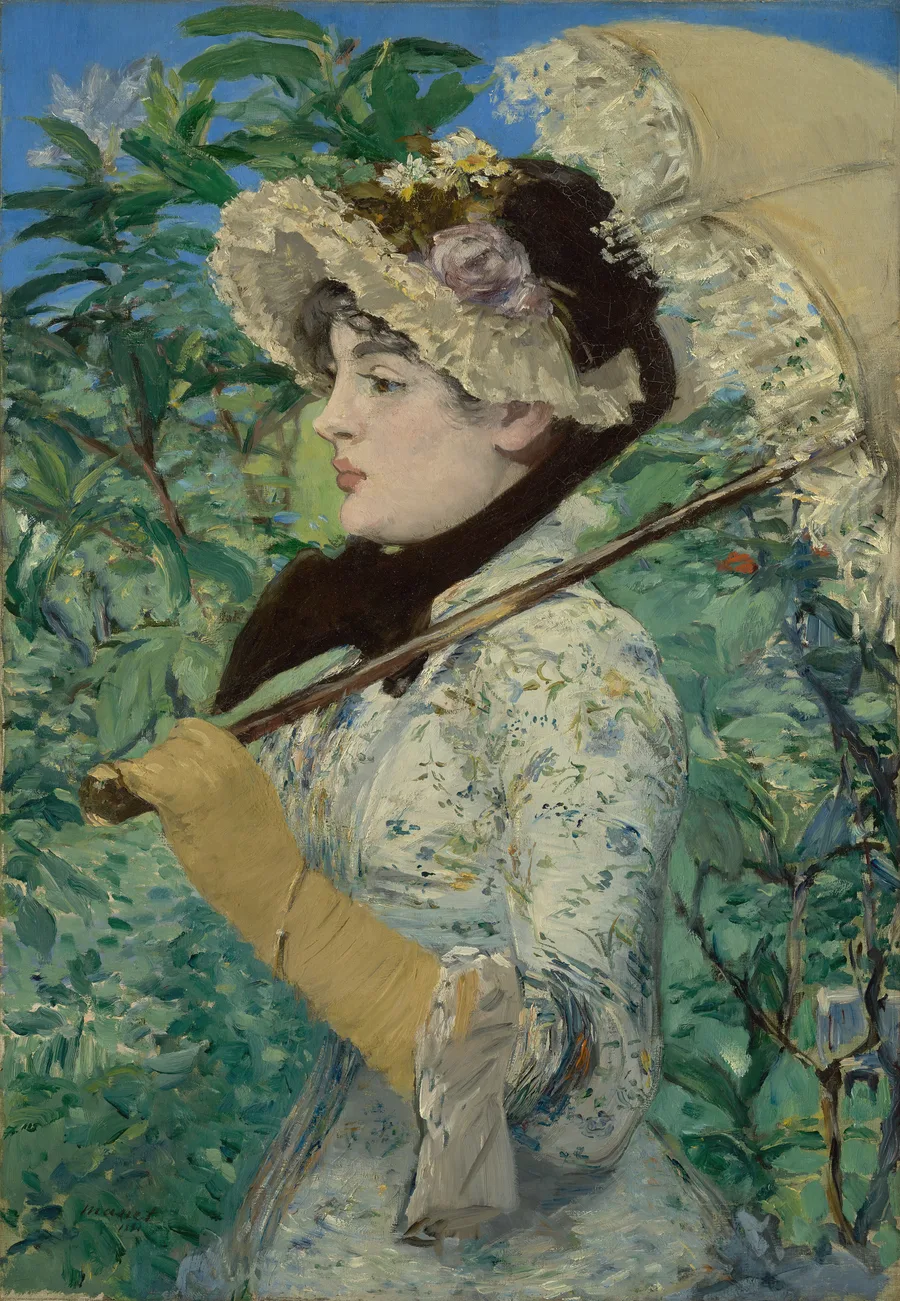
Manet's heirs, the school of 1874, whom the uncomprehending indifference of some and the declared hostility of others tried unsuccessfully to crush, and whose beneficial influence now radiates across all of Europe's palettes, have come to join the initiator of peinture claire (light-filled painting). Claude Monet enters the Louvre in his lifetime with nine canvases, among them The Bridge at Argenteuil and Poppies shivering in the light wind. Berthe Morisot and her delightful The Butterfly Hunt; Sisley, with his Boats at Bougival and his Forge at Marly, an admirable painting of concentrated energy, a rare accent in the Impressionist's work; and finally Pissarro, with his Stagecoach at Louveciennes, all take their rightful place, despite the irreducible hatred of the academy.
Justice is thus rendered, thanks to the sagacious collector. Will the lesson he provides be understood? Will independent art henceforth be respected, if not encouraged, by the ministers of Fine Arts? The visit of President Fallières and Under-secretary Dujardin-Beaumetz to the Moreau "Centennial," and their emotional thanks to the donor, are a happy omen. And the slender, singular courtesan Olympia, niece of the Maja Desnuda, has just forced the gates of the Louvre.
All this does not change the fact that the lives of Corot and Delacroix were long and painful, or that Millet in Barbizon, Sisley in Moret, and Chavannes and Manet in Paris endured the cruelest martyrdom. We must never tire of repeating to the public that Berlioz, Vigny, Courbet, Manet, Becque, Monet, Renoir, Verlaine, Villiers, Carrière, and Degas are our true national glories, and that their triumphant rivals and persecutors have already almost all sunk into oblivion. Such is the powerful lesson that emerges from a visit to the Moreau-Nélaton collection.
LOUIS VAUXCELLES.