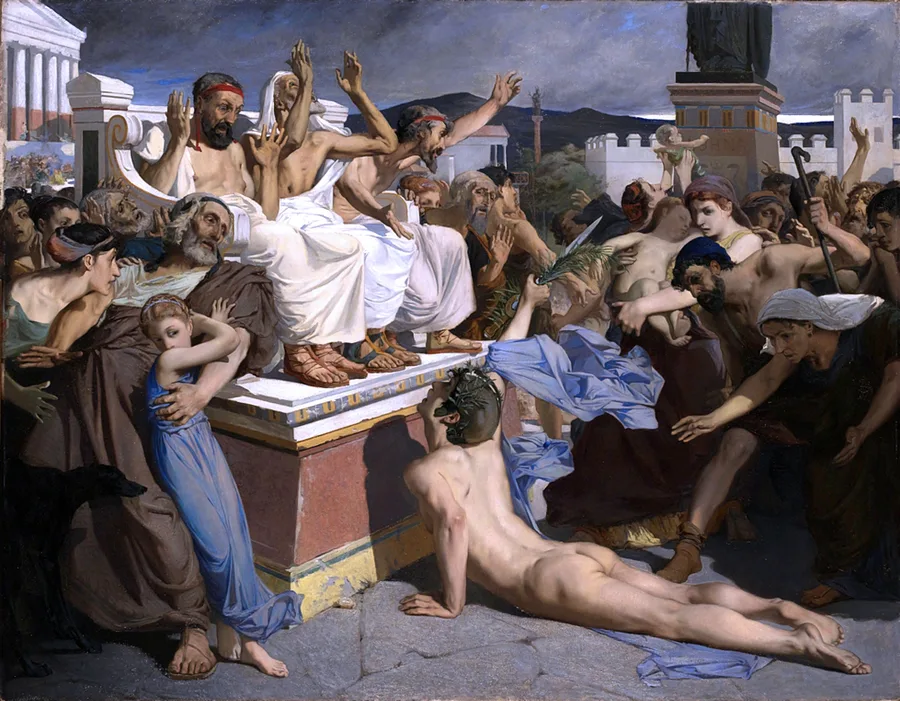
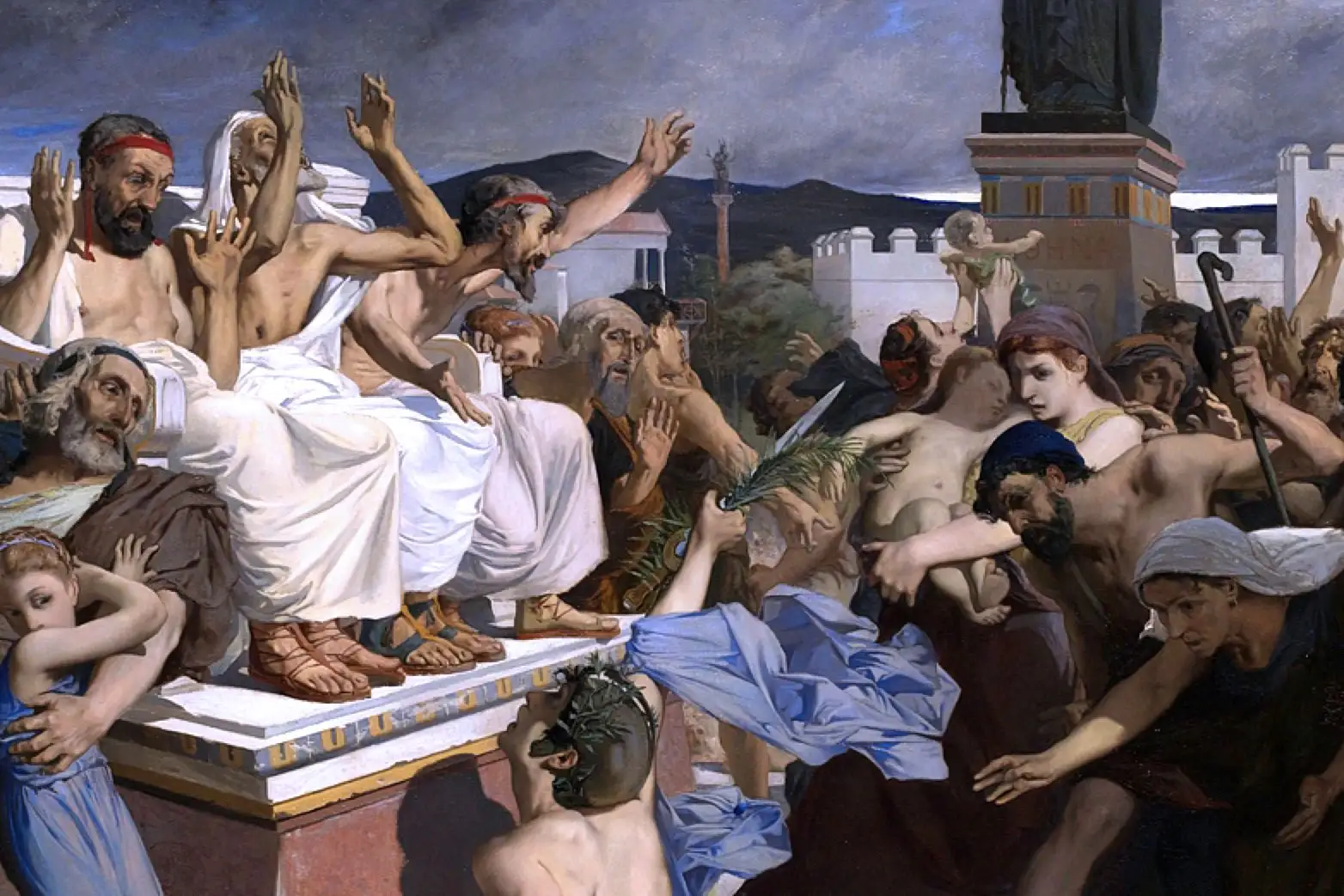
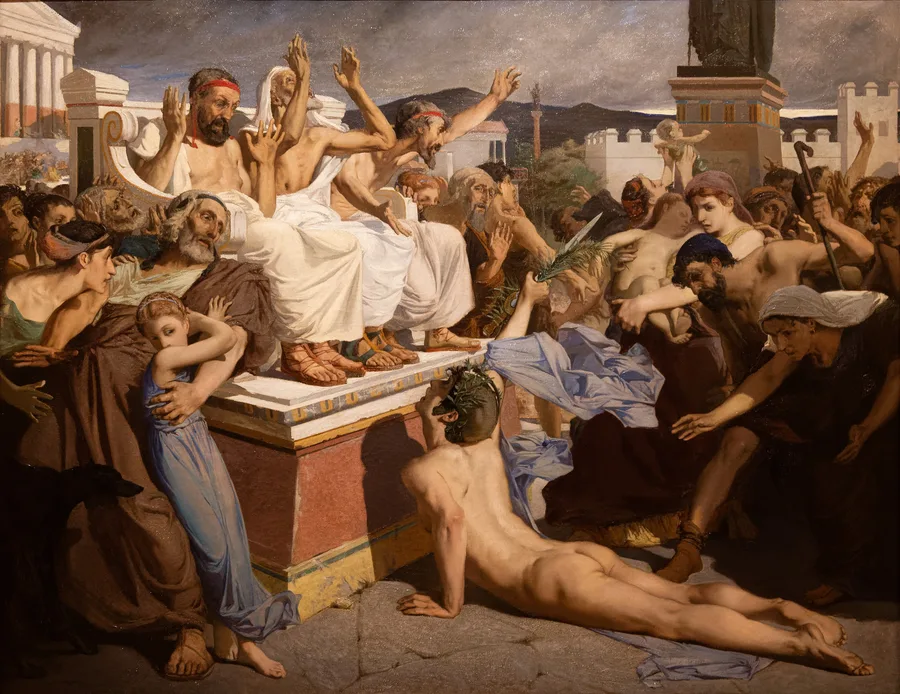
"I especially love and admire the qualities I do not possess," said an "art lover." One might wonder if our era, so paradoxical in all things, has adopted the viewpoint of the all-too-forgotten Jean Dolent. We are tempted to believe so at a time when the most violent intransigence is abandoning Impressionism to exalt the line of Ingres. If it is true that we value above all the gifts or assets that elude us, what master among the most recently departed better deserved the homage of our regrets than Luc-Olivier Merson?
An imagination served by impeccable knowledge: such was this master, as scrupulous as he was discreet. "You are a musician and you have wit!" Voltaire said to Grétry. Similarly, we would have liked to say to this charming enemy of fashion and trends: "You are a painter, and you have imagination. You dare to translate legends onto canvas and present ideas, while the morceau de peinture—a painting focused on technical skill, often in the form of a still life or a simple 'thing seen'—flourishes tyrannically. And you have never disdained to elegantly set these picturesque ideas in a chaste form, even as the most rudimentary vagueness and a contempt for drawing are held up as expressions of genius."
An Artist Against the Grain
At the 1920 Salon, amidst an atmosphere of noisy sensationalism and brutal approximation, the exhibition of Merson's admirable drawings silently dictated these thoughts. It earned the old master a Medal of Honor, as belated as his Commander's necktie from the Legion of Honor. Better still, the posthumous exhibition of his work at the École des Beaux-Arts has allowed us to rediscover the painter's very personal place in the confused history of contemporary painting, highlighting the beneficial significance of his art.
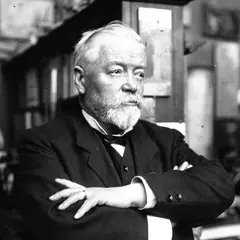
The defunct personality of a true artist should be perceived only in his work, in the beauty he brought into being and which survives him. However, a reflection of his character remains for us in the mirror of his portraits. There is the one from 1885, which François Schommer dedicated "to his friend" in the full maturity of his thirty-ninth year. Twenty-three years later, there is the fine pencil drawing that Émile Friant dedicated to the sexagenarian master, already stooped by indefatigable labor. We must not forget the pastel in which the grandfather chose to represent himself alongside his grandchildren. This is expressive testimony in itself, for the portrait is no less rare in the work of this imaginative artist than in the ideal worlds constructed by Puvis de Chavannes or Gustave Moreau.
His career, spanning fifty years of work, reveals an independent who remained so even at the Institut de France, which welcomed him on December 3, 1892, to the seat of the old Émile Signol, just as Jean-Paul Laurens had occupied Meissonier's chair since April 4, 1891. What a singular academician this solitary man was, this ingenious hermit of contemporary art! His cursus honorum, or path of honors, with its rare and widely spaced titles where each promotion took twenty years, offers irrefutable proof of the sincerity of his isolation. Our best historians of modern art have a ready excuse for having seemed to forget him for too long: absorbed by vast decorations for our public monuments or by small illustrations for masterpieces of our literature, he had shown almost nothing for seventeen years. An exhibitor from 1867 to 1920, this rare artist appeared in the Salon catalogue only eighteen times in fifty-four years, a period marked by fifty Salons.