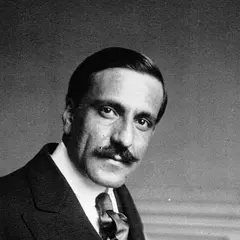
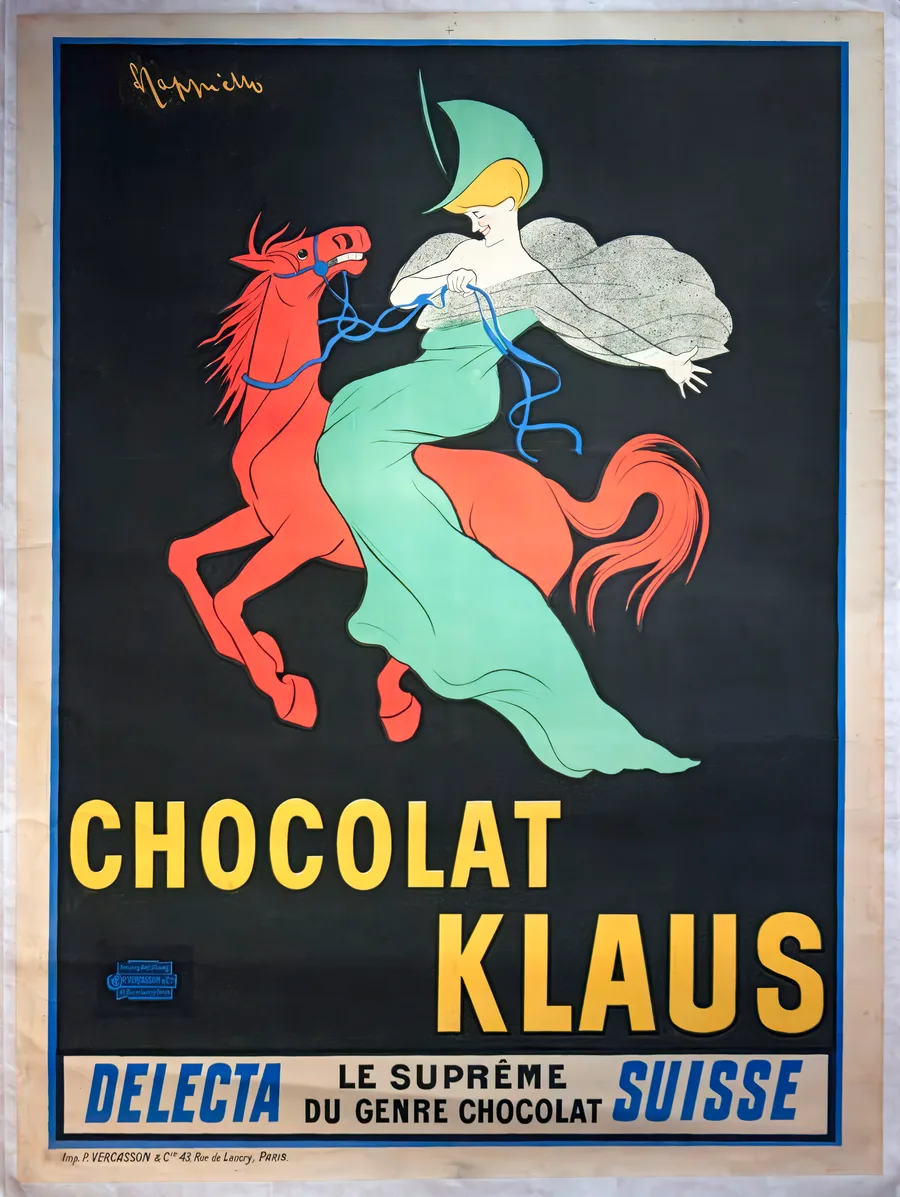
The art of the poster has sparked a fascinating spirit of competition among artists in various countries. While nations like England, Belgium, Germany, and Austria have produced works with distinct national characteristics, France has become a unique hub. As the birthplace of the artistic poster, pioneered by Jules Chéret, France has seen its own style enriched by an influx of foreign talent. Among these artists, the Italian Leonetto Cappiello carved out a singular niche, bringing a style so personal that his work is immediately recognizable.
The Four Faces of an Artist
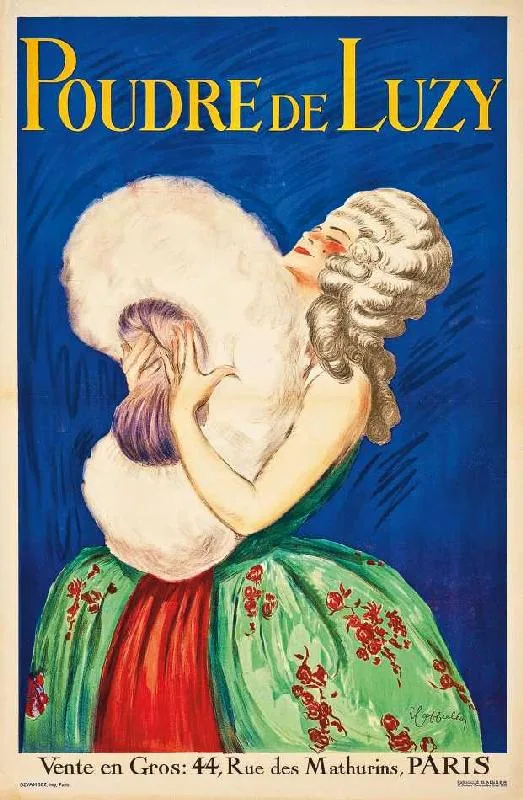
Paris has always exerted a powerful attraction on artists, and as we see, it is not only painters who come to live and work in France. Poster Artists also bring the original notes given to them by their nationality and the artistic understanding specific to their heritage. Among the poster artists of the day, Cappiello has established a very special place for himself through his evident personality—a personality that resides as much in his particular sense of the poster's composition as in the character of his drawing and his use of color. A poster by Cappiello could never be confused with that of any other designer.
While Cappiello has successfully created a real originality as a poster artist, this is not the only aspect of his work we will examine. His caricatures of the theatrical world are famous, and he has also revealed himself to us as a portrait draughtsman as well as a decorator. These are four very distinct facets of his talent, which make him all the more interesting as his works are more varied.
His caricatures first brought him to public attention. Actors, actresses, and authors, in turn, excited the verve of his pencil. With a sharp line, he masterfully captured the physical characteristics of those he intended to represent. He did not, it seems, seek to express their moral character, perhaps believing that a caricaturist should have less lofty aims. He turned his subjects into recognizable puppets, and his puppets amused us. Should we ask more of them? Whether he shows us Brandès, Réjane, Granier, or Simone Le Bargy, he knows how to present them in their characteristic attitude, deforming their features only to accentuate their character.
He also seeks this character in the drawn portraits he enjoys creating, a character he then finds in the truth of the features rather than in their exaggeration. Certain portraits of women, conceived in this way, are charming, full of grace and suppleness, and executed with great facility. But do we find in them the acuity of analysis that we were pleased to note in the theatrical caricatures? It seems that here, Cappiello intends above all to create a work of charm, while still creating a work of truth. It is curious to observe this dual facet of talent in the same artist.
Certainly, an artist like Abel Faivre gives us both charmingly painted portraits of women and drawings where the figures are of the purest caricature. But he does not give us, as Cappiello does, portraits that are by turns charming or caricatural, while still remaining faithful likenesses. This is a curious faculty in an artist, and it shows the great flexibility of his talent. As we have already seen, he offers us other resources as well.
From Decoration to the Street Wall
Recently, Cappiello revealed himself to us as a decorator in a series of panels intended to adorn the walls of a villa in Saint-Germain-en-Laye. These panels are not without charm. Their composition is simple and easy, certainly not aiming for effects of high aesthetics; but their author believes that decoration has no need for convoluted allegories that pose themselves to the mind as difficult problems to solve. A decoration should rest the eye and the spirit through simple and pleasant forms and harmonious coloration. Cappiello has succeeded in this, aided by his rare facility. He must, however, be wary of this facility and not rely on it too entirely.
Another poster artist, Jules Chéret, has already given us decorations full of flavor. Chéret also knew how to bend his great talent to decorative works. In them, he retained his beautiful and complete faculties as a colorist, and his decorations sing a song of joyous harmony. But this harmony he already possessed in his posters.
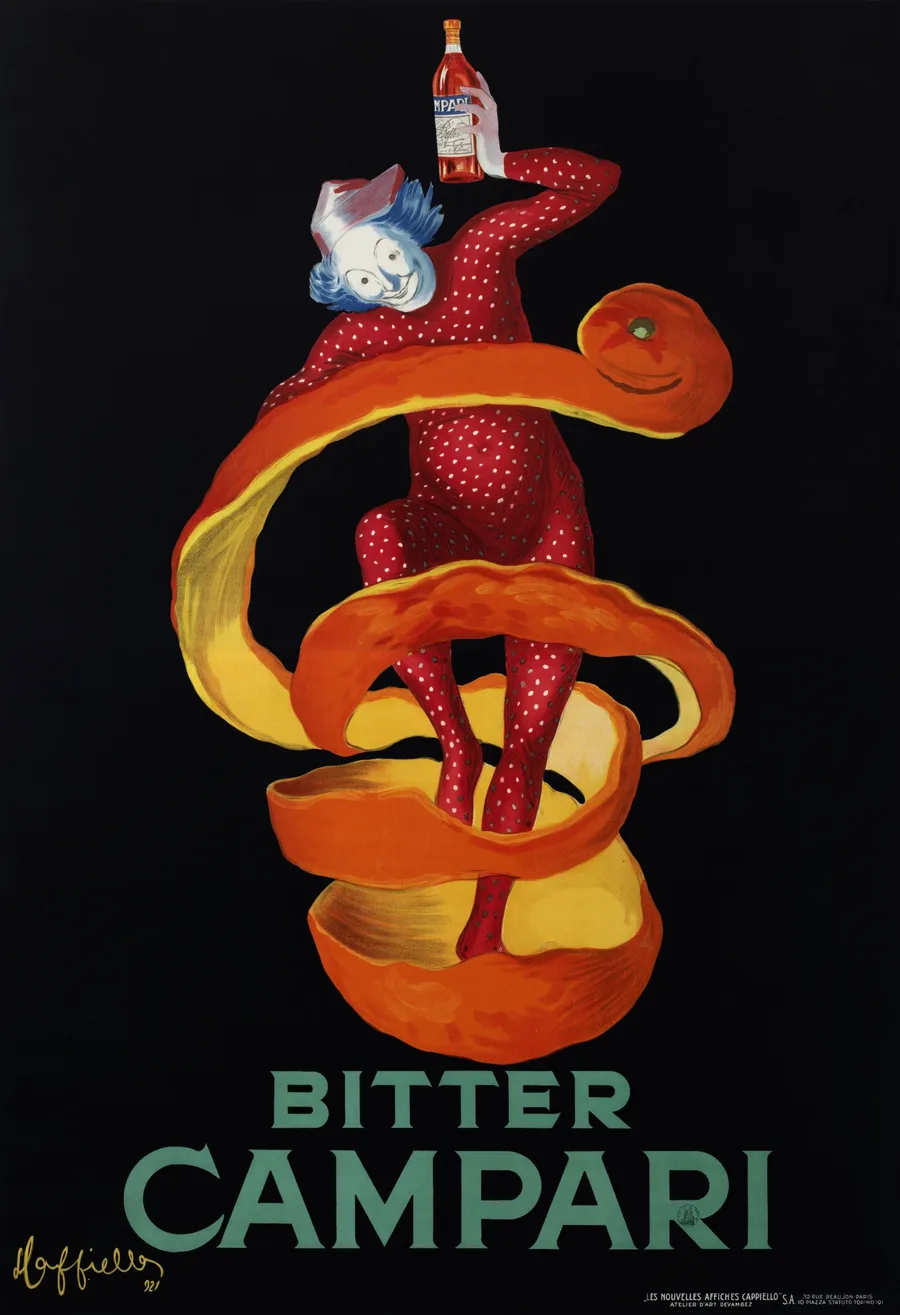
Cappiello, as we shall see, could not retain for his decorations palettes analogous to those he ordinarily favors. He had to create a new one. His posters are conceived in color ranges intended to attract attention. The colors are sometimes a bit sharp, but they wonderfully fulfill their advertising purpose. They could not be transposed into decorative works, and Cappiello knew how and was able to tone them down and harmonize them. His decorations are very interesting and possess a certain charm.
For us, however, Cappiello remains above all a caricaturist and a poster artist. There, we feel he is completely at ease, moving with facility in a curious fantasy that is uniquely his own. This is his proper domain. This ease, moreover, he will be able to acquire rapidly in his decorative work.
A New Language for the Poster
We spoke earlier of Chéret as a decorator; we can now speak again of Chéret as a poster artist. The contrast he forms with Cappiello is indeed striking. What did Chéret seek in his compositions destined for the city walls? A graceful female silhouette and a harmonious coloration. He achieved this harmony by simple means, and three or four tones were sufficient for him; most of the time, a red, a blue, a yellow, and a black. More rarely, a pink or a green would be mixed in. And his tones, strong in themselves, softened, blended, and sang for the joy of our eyes, all while fulfilling their purpose: to attract and hold the attention of the passerby.
Chéret operated through charm. Cappiello resorts to other means.
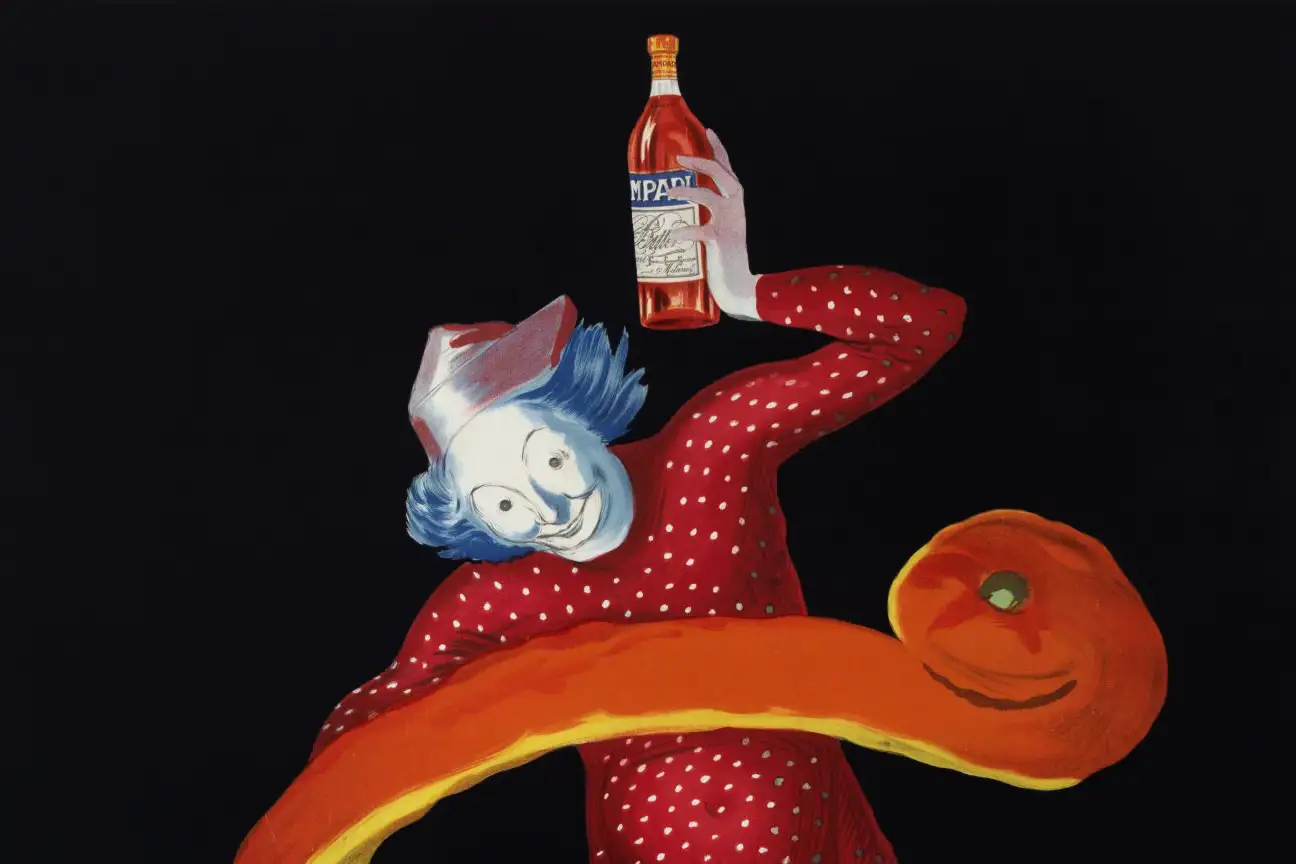
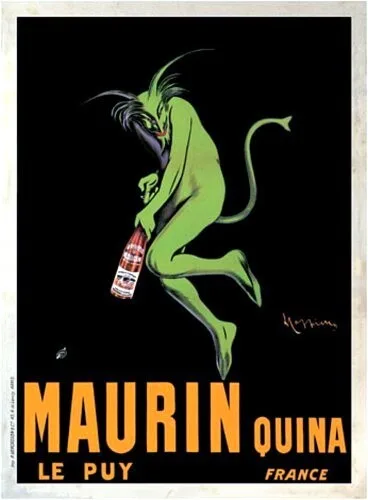
It is rare, in fact, that the impression caused by one of his posters is meant to charm us in the proper sense of the word. It is the bizarre in him that attracts, astonishes, and holds us. It is a fantasy that is very particular to him; it is his very particular color as well. His posters are always a bit caricatural, but they admirably fulfill the advertising purpose for which they are intended.
Cappiello's fantasy presents itself to us in various aspects. Sometimes, our eyes are drawn by the unexpected and bizarre choice of subject. A frog, dressed in trousers and a woman's hat, offers us a bottle of mineral water. A goitrous pelican gargles with another brand of table water. Elsewhere, a drinker with a large belly, sitting before a cask and crowned with vine leaves, drinks the wine he is meant to recommend to us.
At other times, or often simultaneously, Cappiello derives his effect from his coloration itself. But this colorful effect is more often found in the bizarre than in harmony. It might be a child in a yellow dress, riding a bright red goat that stands out against a lawn of raw green. Or, to recommend the fashionable car, it will be an automobile at speed, hurtling towards us in a rainbow of colored dust. For a cake, the Fleur des Neiges (Snow Flower), women dressed in vermilion fur coats pass through a winter landscape, overloaded with the boxes they are recommending. Another time, it is an entire grocery store facade that is shown to us.
Still other times, it is in the drawing itself that our artist finds the interest of his poster. And this effect is no less in our eyes. The simplicity and sobriety of his poster for Le Friquet are proof of this. The face of the actress Polaire is expressed there in a painful mask of great expressive intensity, and this poster remains one of Cappiello's best, among the countless ones to his credit. And, in general, the female silhouettes in his posters are extremely graceful, with a grace that is very particular to them. One might recall, in this regard, an already old poster made for the Amandines de Provence, and others that brought various liqueurs or cakes to our attention.
An Expanding Domain
Cappiello's activity is great, and no less great are his verve and his facility. His posters are countless, and new ones appear every day. In terms of ease of production, one can hardly compare him to anyone but Chéret, who remains in a way our national poster artist. But Chéret's productions in this field are rare now. Today, he delights in decorations where his fine talent finds its perfect application. Cappiello, on the contrary, is in the full swing of production, and this can only expand as he extends his domain.
And this, one might believe, is his secret dream. He seems to want to mix portraits and decorations with his posters and caricatures, reserving his preference for the latter, which are newer to him and which provide him with a more extensive and varied field of study.
So far, then, and despite the interest that his works as a portraitist and decorator hold for us, Cappiello remains above all a poster artist and theatrical caricaturist. This does not go without displeasing him a little; like any artist in love with his art, he would like to see us appreciate more the works that are dearest to him. And he desires that his new efforts be as appreciated by the public as his old ones. We certainly do not refuse this. But in this, Cappiello has to struggle against customary routine. An artist is classified by the public as a poster artist, a portraitist, a painter, or an illustrator.
And when the artist evolves and modifies his art, the public's evolution follows only afterward and little by little.
There is no doubt, however, that this evolution will be rapid; and Cappiello will have the joy of soon seeing his portraits and decorations consecrated, according to his desires, on an equal footing with his caricatures and his posters.
M. P.-Verneuil.