
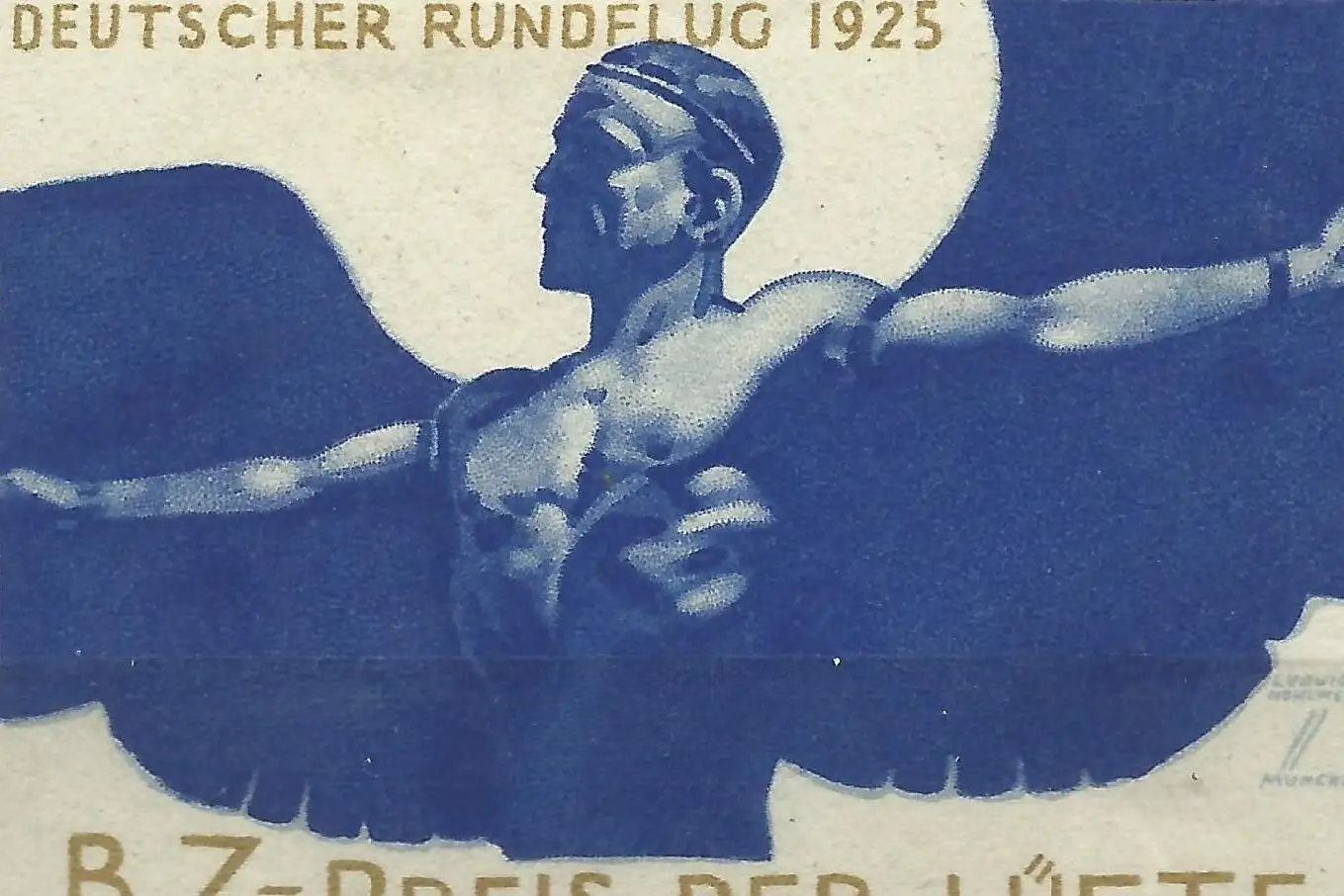
Ludwig Hohlwein of Munich was born in Wiesbaden in 1874 to a family originally from Holland. His fame as a creator of sports posters and as a decorator of interiors—hotels, restaurants, and villas—is now as great in America, England, and Switzerland as it is in Germany. A hunter, horseman, and soldier before becoming an artist—or rather, an artist as a sportsman—Mr. Hohlwein is perhaps the only truly convincing example of a valuable artist formed by modern high society. The ancient courtly tournaments and Olympic games had well-known repercussions on the art of past eras. In contrast, I do not see that, aside from a few horse studies by Géricault, the racetrack has had much influence on our art. That has been the case until now, but anything can change. Art is such a hardy plant that it often blooms against all common sense, precisely where one would least naturally think to look for it.
The fact is that in France, for example, Mr. Bernard Boutet de Monvel—the only artist whose name might come to mind in connection with Hohlwein—seems to me above all a poet interested in elegant life. His sense of physical beauty is undeniable, as is his taste for chic and charming clothing. Mr. Hohlwein, on the other hand, if asked, would not hesitate to declare, I believe, that he would immediately sacrifice art for a certain kind of life. He would say that a beautiful horse or a purebred dog interests him infinitely more than a master's painting, and a proper groom more than a pretty, sparkling, and witty creature—even if she were the "pheasant hen" from Mr. Rostand's play Chantecler. His art is meant to smell of leather and the stable. His dream is less to bring his architectural designs to life than to go hunting.
The Sportsman-Artist
Hohlwein is an architect by trade. His studio is adorned with the skull of his favorite horse, whose death brought him to tears, perhaps more so than any photographs of women and children might. He sees few artists but many hunting and riding companions. He works almost exclusively on commission, delivering with one hand and collecting payment with the other. And if he could get away with doing nothing, he would not hesitate.
Yet, his is a nature refined enough to take pleasure in a delicate and delicious anguish, listening to twilight fall in the silence of his studio, where not a single atom of dust dulls the pristine neatness. To him, art appears as something constructed, artificial, and polished, having nothing to do with nature or the spontaneous impulse of a natural temperament. He explained to me that he does not consider a realistic portrait to be a work of art, and even less so a study from life. If Wagner's music grips him through the senses, he corrects such failings, which he deems reprehensible, with a healthy dose of Oscar Wilde-like paradoxes.
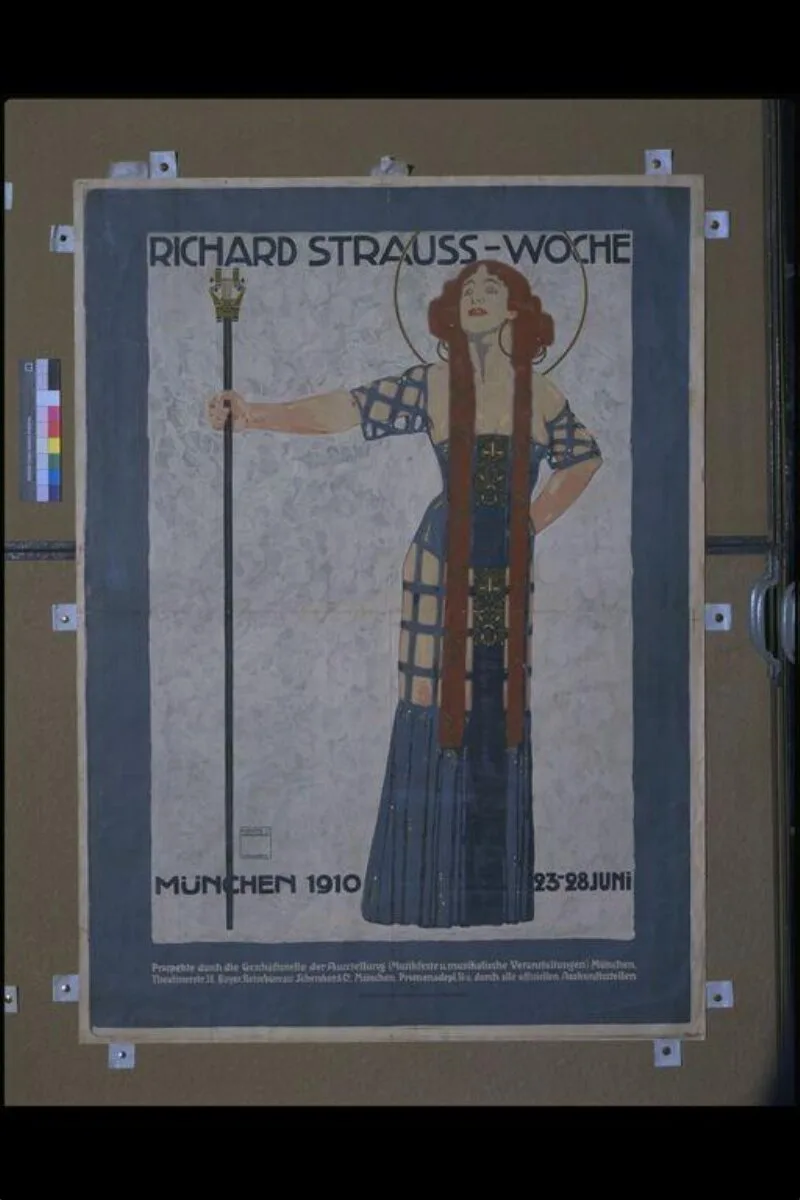
Furthermore, there is not a trace of aestheticism of any kind in his demeanor. Correctness comes before the picturesque, and he is prouder of never having made an error in his depictions of carriages, officers, and jockeys than of having had genuine creative breakthroughs in connection with them. With a somewhat square face and stature, shaved twice a day, his hair closely cropped, impeccably dressed in white, and polished, he is the quadrangular figure from his own posters. Matters concerning the number of buttons or the cut of red hunting coats can be debated with him, provided that he settles them with rigorous authority. Such judgments will be final, as will the artistic decisions that arise from such preoccupations.
He was, naturally, the schoolboy with an expressive and willful line, known for violent and decorative caricatures, about whom the drawing teachers unanimously declared he would never amount to anything. At twenty-one, he was a student at the school of architecture in Munich. He moved on to the Academy of Dresden. He completed his military service in Wiesbaden and visited Paris and London before settling permanently in Munich. In Paris and London, he spent more time on the turf and in the parks than in museums. In Munich, he first worked in studios for modern industrial art before establishing his own practice. And then, suddenly, came a first poster that would be the pivotal event of his life, for from it dates his fame and a new, rather special direction for his work.