
Christie's and Artory: the first blockchain provenance pilot
In November 2018, Christie's New York auctioned the Ebsworth Collection — 90 works of American modernism, including major pieces by Edward Hopper, Georgia O'Keeffe, and Mark Rothko, with a total sale value of $323 million. The collection was notable for its exceptional provenance documentation: Barney Ebsworth had assembled it over forty years with meticulous records. Christie's chose this sale to pilot a blockchain provenance system developed in partnership with Artory, a New York-based art registry platform.
The Artory system recorded each of the 90 lots on an Ethereum blockchain at the time of cataloguing, creating an immutable timestamped entry containing the work's description, provenance summary, condition notes, and sale result. Bidders and subsequent buyers could access the record via a secure interface. The blockchain entry could not be altered retrospectively — a critical property for provenance documentation, where the value lies precisely in the inability of any subsequent party to revise the historical record.
The Christie's/Artory pilot demonstrated that blockchain technology was commercially deployable in the art market at scale, and that major institutional buyers would accept blockchain records as a component of due diligence documentation. It did not, however, solve the authentication problem. The blockchain recorded what Christie's cataloguers had written about each work — it did not independently verify those claims. A work whose provenance was incorrectly documented would be recorded incorrectly on the blockchain. The technology's value was in securing the chain of custody from the point of registration forward, not in validating what existed at registration.
Synthetic DNA: Tagsmart and the molecular marker
Tagsmart, a London-based technology company, was founded in 2016 to address a specific gap in art authentication: the ability to physically link an object to its identity record in a way that could not be forged by transferring a certificate from one work to another. The company's approach uses synthetic DNA — artificially designed oligonucleotide sequences that are unique to each registered work — suspended in a solution that can be applied to a canvas, sculpture surface, or other substrate with a brush or dropper.
The synthetic DNA marker is invisible to the naked eye and does not alter the appearance of the work. It can be detected and read by standard PCR (polymerase chain reaction) testing, which amplifies the sequence for identification. Each sequence is deposited in a secure registry; a match between the physical sample and the registry entry confirms that the object bearing the marker is the registered object. The system is designed to be tamper-resistant: removing the DNA marker would require treating the surface in a way that would itself be visually detectable.
Tagsmart's commercial model involves embedding the DNA marker at the point of sale, with the registry entry linked to a certificate of authenticity and a digital provenance record. The artist or issuing gallery pays for registration; subsequent owners can query the registry to confirm the work's identity. By 2022, the company had registered thousands of works across galleries, auction houses, and private collectors. The system has been adopted by several Royal Academy artists in the United Kingdom for new work, creating authentication records from the point of creation rather than retrospectively.
A single drop of synthetic DNA on a canvas creates a molecular identity record readable by PCR at any future date — the most tamper-resistant authentication marker ever deployed in the art market.
AI brushstroke analysis: Rutgers and the biometric fingerprint
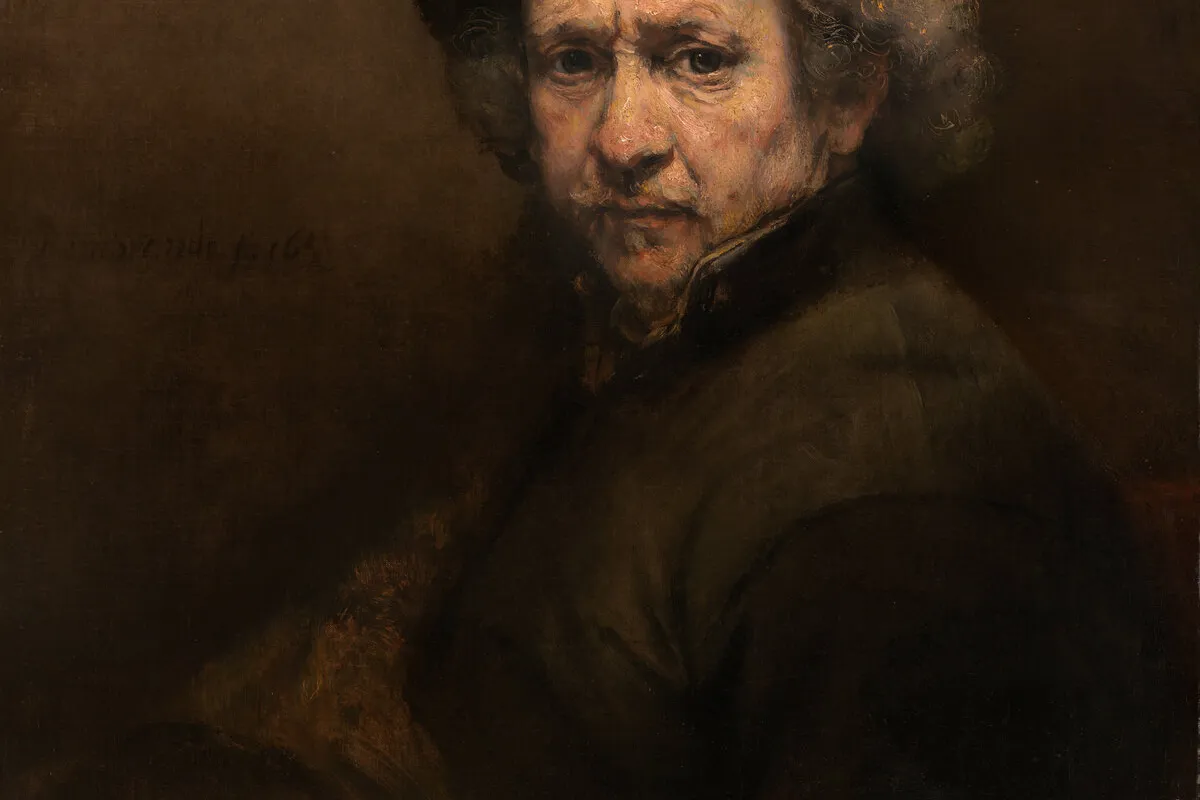
The most scientifically ambitious authentication technology developed in this period is AI-based brushstroke analysis, which treats an artist's physical execution as a biometric signature analogous to a fingerprint. The foundational research was conducted at Rutgers University by a team led by Ahmed Elgammal of the Art and Artificial Intelligence Laboratory, building on earlier work by computational art historians including Lior Shamir.
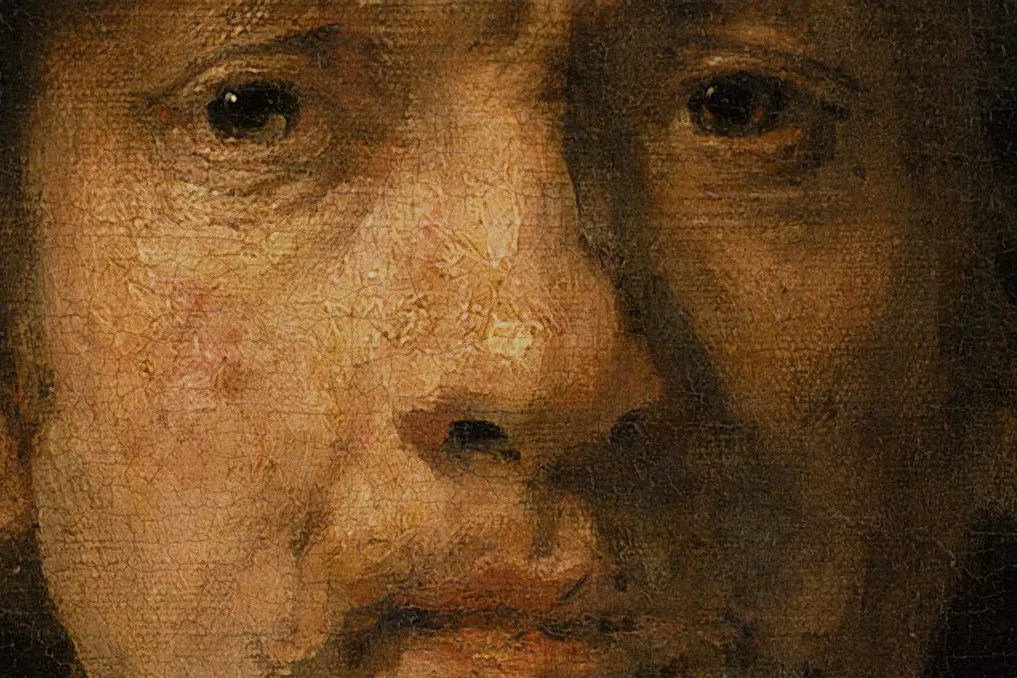
The Rutgers methodology extracts quantitative features from high-resolution scans of paintings: brushstroke width, curvature, pressure variation, directional consistency, edge profiles, and the fine-grained texture patterns created by the interaction of bristle and pigment. These features are processed through a recurrent neural network trained on approximately 80,000 individual brushstroke segments extracted from 300 authenticated works across multiple artists. The system learns to distinguish an individual artist's motor patterns from those of contemporaries and potential forgers.
In controlled test conditions, the Rutgers system achieved accuracy rates of approximately 96% in distinguishing works by one artist from works by another in the same style and period. When applied to a disputed Bruegel attribution — the question of whether Bruegel personally painted a particular panel or delegated it to a workshop assistant — the system identified consistent motor signatures in the central figures that diverged from peripheral areas, supporting a composite-execution hypothesis. The study was published in 2022 and subjected to peer review by art historians and computer scientists.
The limitations are significant and acknowledged by the researchers. The system requires high-quality multispectral imaging that is not routinely available for all works. It performs less reliably on heavily restored surfaces. And its legal standing is entirely unestablished: no court has yet accepted AI brushstroke analysis as expert evidence, and the methodology has not been cross-validated by independent research groups with different training datasets. The Rutgers results are scientifically promising but market-deployable only as one layer in a multi-method approach.
The initial-claim problem
Every digital authentication technology — blockchain provenance, synthetic DNA markers, AI brushstroke databases — confronts the same fundamental limit: it can secure or analyze what it is given, but it cannot validate the accuracy of what it was given in the first place. This is the initial-claim problem, and it is the reason that no digital technology has solved the authentication challenge despite significant investment and genuine technical progress.
A forger who registers a fake Warhol on Artory's blockchain in 2019 with false provenance documentation will receive a blockchain record that is permanently and immutably wrong. The immutability that makes the blockchain valuable for protecting authentic provenance is exactly the property that makes it dangerous when the initial entry is false: a false record secured on a blockchain is harder to correct than a false record on paper. The blockchain proves only that a claim was made at a specific time by a specific registrant — it says nothing about whether the claim was true.
Synthetic DNA markers face a related problem: they can confirm that the object bearing the marker is the object that was registered, but they cannot confirm that the initial registration was accurate. A dealer who registers a fake with a DNA marker and a false attribution has created an object that will pass DNA verification at every future point of sale — but the work is still a fake. The molecular technology proves identity continuity, not initial authenticity.
A fake registered on a blockchain is still a fake — and harder to correct, because the immutability that protects authentic records applies equally to false ones.
The multi-layer standard: where the field stands
The current consensus in serious authentication practice — among forensic laboratories, major institutions, and leading auction houses — is that no single method is sufficient and that the only reliable standard combines multiple independent layers: documentary provenance, connoisseurship by qualified specialists, scientific materials analysis (XRF, FTIR, carbon-14 where applicable, dendrochronology for panel works), and where available, digital registration in a tamper-resistant registry.
This multi-layer approach is not a new idea. It has been the implicit standard of best practice since the Van Meegeren affair established that connoisseurship alone was insufficient. What has changed in the digital era is the tools available for each layer: AI brushstroke analysis supplements but does not replace visual connoisseurship; blockchain registries supplement but do not replace provenance documentation; DNA markers supplement but do not replace physical examination.
For art market professionals issuing certificates of authenticity, the implication is that a certificate's evidentiary weight corresponds directly to the number and independence of the methods underlying it. A certificate supported by a catalogue raisonné reference, a scientific analysis report, and a registry record in a recognized database is more defensible than any single certification, however authoritative. This is not merely a legal protection for the issuer — it is the only epistemically honest representation of what the art market can actually know about an object of uncertain history.