
The earliest known maker signatures
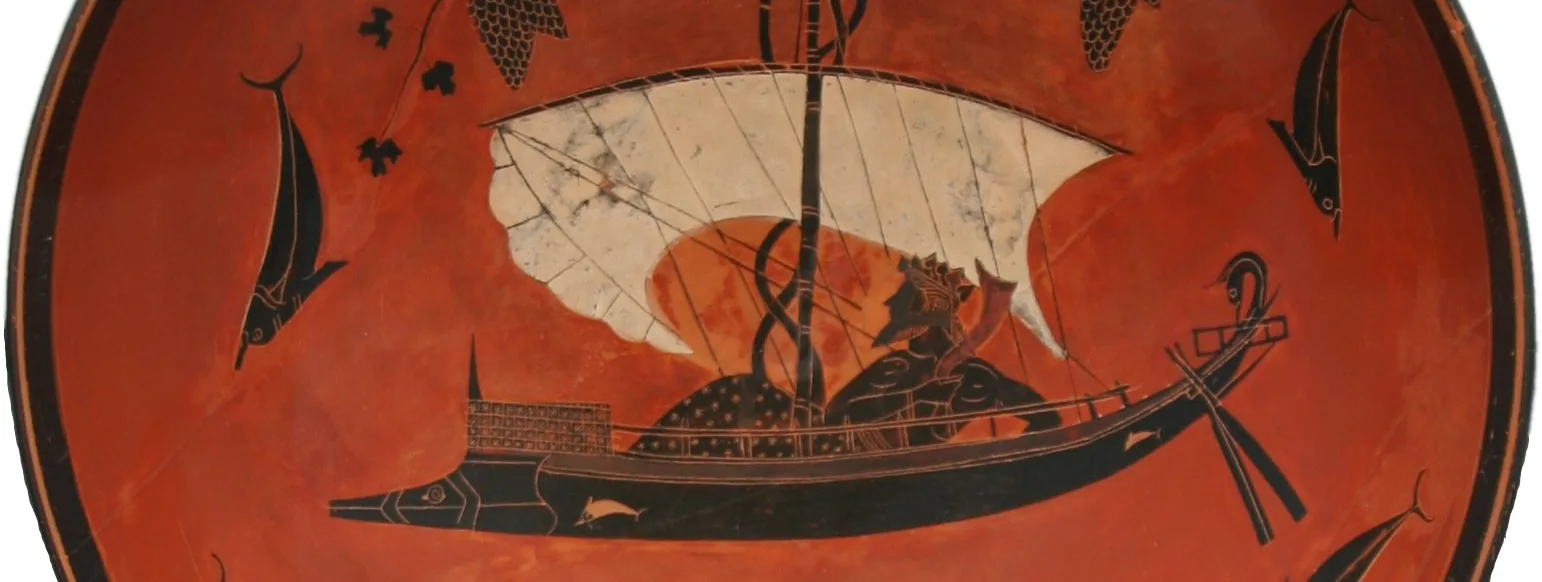
The impulse to attach a name to an object of value is nearly as old as the objects themselves. The earliest surviving maker signatures in Western art appear on Attic pottery in the first half of the sixth century BC. Sophilos, active in Athens around 580 BC, is the earliest Greek vase painter whose name is recorded: he signed two dinoi (mixing vessels) now held in Athens and London, using the formula "Sophilos egrapse" — Sophilos painted this. The survival of his name across 2,600 years is remarkable precisely because it was incised deliberately into clay at the moment of creation.
The two dominant formulae in Greek vase inscriptions encode a distinction that would take centuries to re-articulate in legal language. Epoiesen ("made by") designated the potter who formed and fired the vessel; egraphsen ("painted by") designated the painter who applied the figural decoration. When both appear on the same object, as they do on the Vatican amphora by Exekias (inv. 16757), they constitute a double-chain authentication document: maker and decorator, separately named, separately responsible. Exekias, active between roughly 550 and 525 BC, is known from fourteen signed objects. On several he used both formulae — the only Greek artisan of his period known to have claimed responsibility for the complete production of a vessel.
Forgeries of signatures appeared almost immediately. Archaeological evidence and ancient literary sources confirm that prestigious workshop names were added to unsigned works to increase their sale price. The market for authenticated Attic pottery in Etruscan cities was sufficiently developed by the late sixth century to make fraudulent inscriptions commercially worthwhile. Authentication and forgery are not modern problems; they are structural features of any market in which attribution affects value.
Beazley and the science of connoisseurship
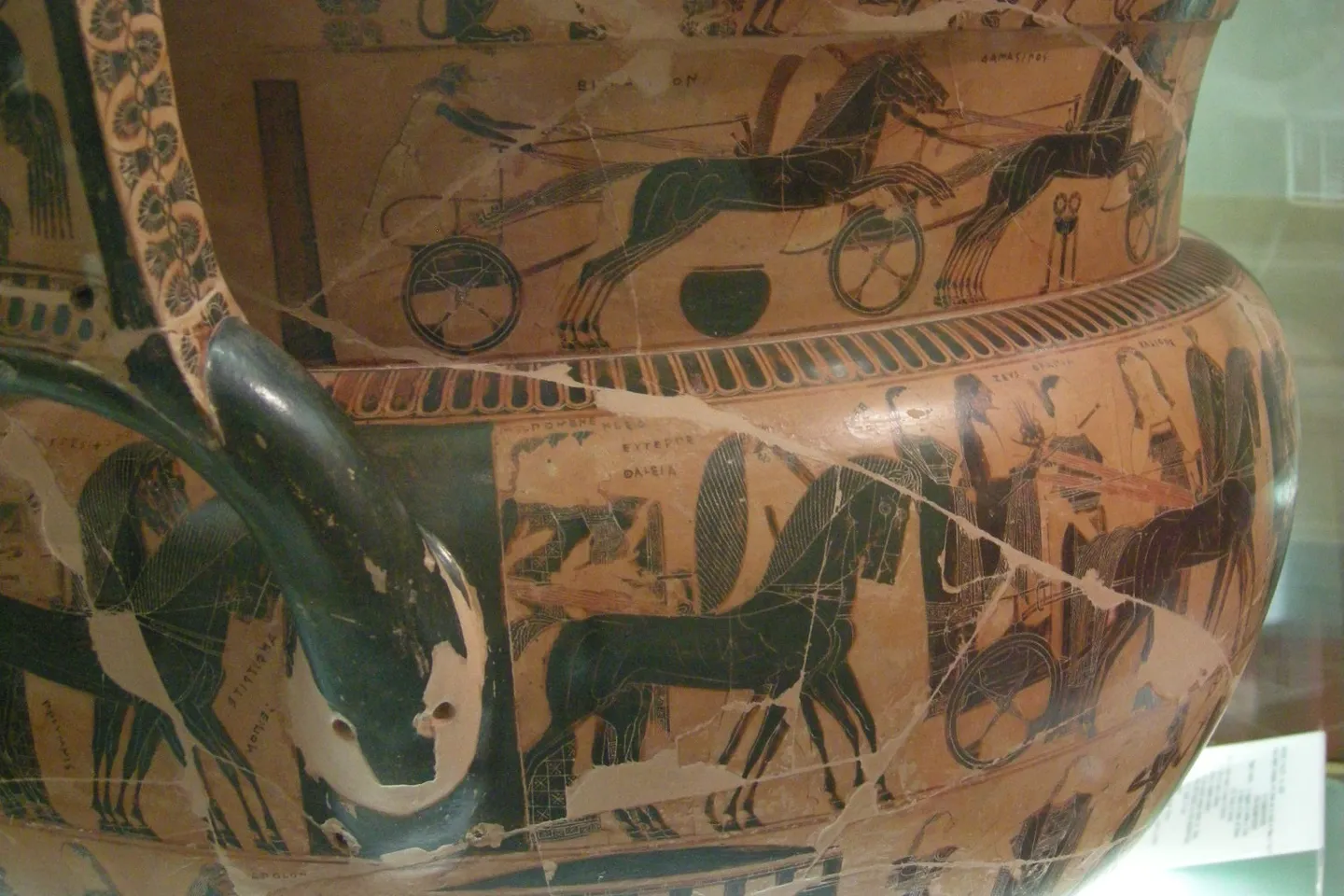
The Greek signature tradition was not fully understood as a systematic authentication tool until the twentieth century, when the Oxford classicist J.D. Beazley applied Giovanni Morelli's comparative method to the entire corpus of Attic figure-decorated pottery. Beginning around 1910, Beazley examined approximately 65,000 vases and fragments held in collections across Europe and North America. By the time of his death in 1970, he had attributed 17,000 of them to individual painters — most of whom were unknown by name and identified solely through stylistic analysis of anatomical details: the rendering of ears, nostrils, and fingers.
The Beazley Archive at the University of Oxford, now a digital database of over 100,000 records, remains the world's largest photographic archive of Greek figure-decorated pottery and the foundational reference for any attribution of Attic vases. Its existence is a formal proof that systematic connoisseurship as a method predates the Renaissance by at least a century, and that the challenge of distinguishing authentic work from workshop imitation is as structurally embedded in the study of ancient art as it is in the modern market.
Beazley's method was controversial in his lifetime and remains so today. Critics note that it relies on subjective pattern recognition that cannot be independently verified, and that the authority of his attributions has been elevated to a near-institutional status that makes revision difficult. The same structural tension — between the authority of the connoisseur and the limits of individual judgment — would resurface in the dissolution of twentieth-century authentication boards.
Beazley examined 65,000 vases and attributed 17,000 to individual painters — the largest single act of art authentication in history.
Dürer's cartouche and the branded maker
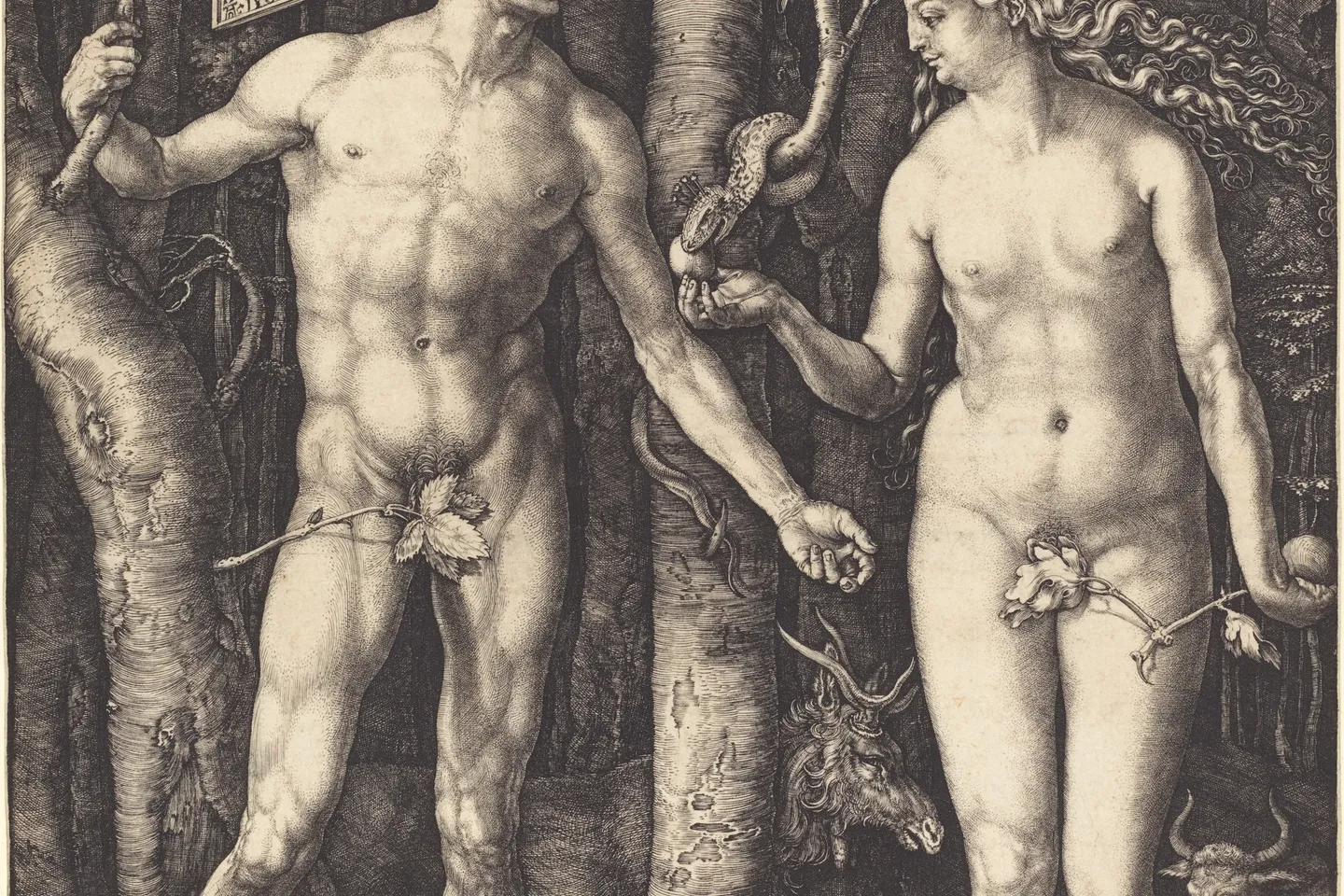
In 1504, Albrecht Dürer produced a copper engraving of Adam and Eve that is unique in his graphic work: it bears his full name, city of origin, and the year of execution in a single inscription on the tablet that Adam holds. The text reads ALBERT DVRER NORICVS FACIEBAT 1504 — "Albert Dürer of Nuremberg made this in 1504." No other Dürer print combines all four elements — name, origin, date, and the *faciebat* formula — in a single visible statement. The Latin *faciebat* is deliberately chosen: it implies an ongoing, perfectible act rather than a completed one, a humanist formula of deliberate authorship.
The value of the AD monogram as an authentication device was so clearly understood in the market that it was routinely forged by contemporaries. The most documented forger was Marcantonio Raimondi, who reproduced Dürer's woodcut series Life of the Virgin with the AD monogram intact, and sold copies in Venice around 1505. Dürer took the matter to the Venetian authorities — an early recorded instance of the enforcement of maker's identity rights in a commercial context. The Senate of Venice declined to intervene in the copying itself but ordered that the AD monogram not be reproduced. The resulting distinction between the work and the signature is legally significant: it established that the name carried independent commercial value separable from the image.
Dürer's monogram was later the subject of at least one sixteenth-century lawsuit in Germany. The systematic effort to protect his brand — combined with his own documentation of his market experience in letters and journals — makes him the first artist for whom authentication as a commercial and legal practice is thoroughly documented from his own perspective.
Renaissance contratti and the proto-certificate
The legal instrument most closely analogous to the modern certificate of authenticity in the Renaissance was not a certificate but a contract. Commission documents — contratti — specified in binding legal terms the materials to be used, the ratio of the artist's own hand to that of assistants, the quality and quantity of pigments (distinguishing ultramarine from cheaper lapis lazuli substitutes), the completion date, penalties for non-performance, and sometimes explicit provisions about what would happen if the patron found the finished work unsatisfactory.
The art historian Michelle O'Malley, in her 2005 study of ninety commission documents from the thirteenth through sixteenth centuries, found that the vocabulary of these contracts consistently distinguished between "good" and "adequate" work through enumerated technical criteria. Civic opere — oversight committees appointed by city governments to manage major artistic commissions — monitored execution and could demand modifications before accepting delivery. The contratto thus functioned as both a quality control mechanism and a pre-emptive authenticity document: a legal record, created before the work existed, of what it was supposed to be and who was supposed to make it.
The limitation of this system was its dependence on prior commission. Works that were not pre-contracted — works traded in a secondary market — had no equivalent documentation. The emergence of free market trading in paintings in seventeenth-century Netherlands created exactly this gap, and the mechanisms developed to fill it would define the next four centuries of authentication practice.
Michelangelo's Sleeping Cupid and the first famous forgery
In 1496, a young Michelangelo Buonarroti completed a marble Sleeping Cupid that his patron Lorenzo di Pierfrancesco de' Medici suggested he artificially age and sell as an antique. Michelangelo treated the surface, and the work was sold through the dealer Baldassare del Milanese to Cardinal Riario of San Giorgio in Rome for 200 ducats. When Riario discovered the deception, he demanded his money back from Baldassare — and received it. Michelangelo, for his part, kept the 30 ducats he had been paid, arguing (correctly) that he had produced a work of quality equal to any antique original.
The affair had a paradoxical commercial outcome. Rather than destroying Michelangelo's reputation, it demonstrated to Cardinal Riario that a living artist had surpassed the ancient sculptors he had been trying to acquire. Riario subsequently invited Michelangelo to Rome, launching the career that would produce the Pietà and the Sistine Chapel. The Sleeping Cupid itself was eventually recognized as a Michelangelo and entered the collection of Isabella d'Este; it was later lost, probably during the Sack of Mantua in 1630.
The episode is structurally instructive: the forgery succeeded not because the work was inferior, but because the market rewarded antiquity over quality. The authentication failure was a market failure, not an artistic one. It also documents, for the first time in the modern art historical record, the complete commercial circuit of a forgery: creation, intermediary sale, discovery, refund, and the forger's retention of earnings. Every element of this circuit reappears in the Van Meegeren and Beltracchi affairs five centuries later.
Rather than destroying his reputation, Michelangelo's forgery proved he had surpassed the ancient sculptors — and launched the career that produced the Sistine Chapel.