
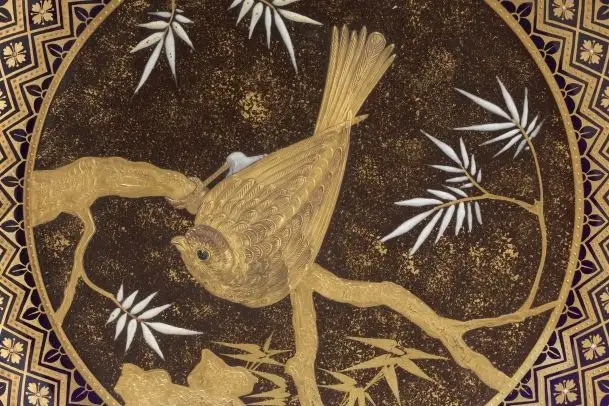
The revival of painted enamels in the 19th century was sparked by the writings of Claudius Popelin, whose work inspired a new generation of artists to rediscover a nearly forgotten craft. Among them was Paul Grandhomme, a jeweler who found his calling in Popelin's book L'Émail des peintres (The Enamel of Painters). This text became his grammar, launching a career that, alongside contemporaries like Alfred Meyer, would define the modern renaissance of this delicate and demanding art form.
The Vocation of Paul Grandhomme
Paul Grandhomme was one of the thousands of craftsmen that Paris counts among its own. He had trained as a jeweler, gone into partnership with a friend, and created delicate works. But then the war came with its attendant miseries; the workshop was closed, the partnership dissolved, and yet Grandhomme held on to hope.
He spent the entire duration of the Paris Commune in Épernay, where he gained admission to the city library. It was there, as he later told me, that he discovered Claudius Popelin’s L'Émail des peintres. This book captivated him more than any other because it was the only one that dealt with a craft so similar to his own. He read and reread it. The precious and strange style in which it was written was not immediately intelligible to him, but little by little he absorbed its doctrine, seized by an ardent curiosity for an art he had never suspected existed. Grandhomme, therefore, descends from Popelin; before knowing the man himself, he had understood him through his book, and this book was his foundation.
Upon his return to Paris, although he had taken up his tools again to work for a jeweler, Grandhomme made the most of his remaining hours. He sought out an enameler, met a man named Gagneré, and learned from him how Popelin worked. He requested a copper plate and some enamels and set about copying the image that the author had drawn in L'Émail des peintres, which he had named "Bien-faire" (Good-doing). This was the student's first attempt.
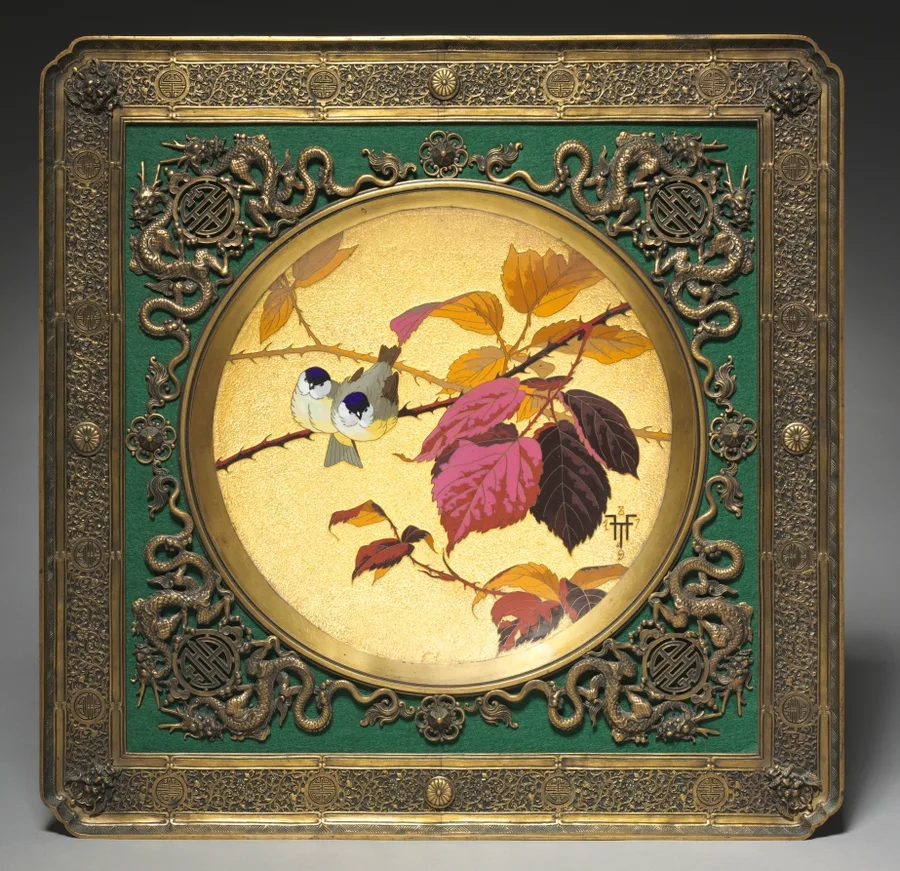
He made others, installing a kiln in his room on the hearth of his fireplace—not only for economy but to follow and penetrate the problem of enamel. He fumbled, he searched, he endured all the disappointments that the most thankless of crafts reserves for the beginner. He thought he had found something: he ran to a goldsmith, showed him the enamel he had painted, and was met with a rebuff. He went to consult a bronze-caster whom he believed to be more indulgent or more artistic, and was barely received or listened to.
What would have discouraged many others did not break Grandhomme. His work as a jeweler provided a living, and he tried to apply enamel painting to the objects of his trade. Just as Meyer was making small painted subjects for jewelers, he tried to do the same, giving them a more graceful allure and bringing particular care to the composition of his profiles and the character of his settings. He succeeded thanks to the help of Gagneré, and also to the lessons he had once taken from Mme Isbert, a miniature painter and a student of Ary Scheffer herself.