
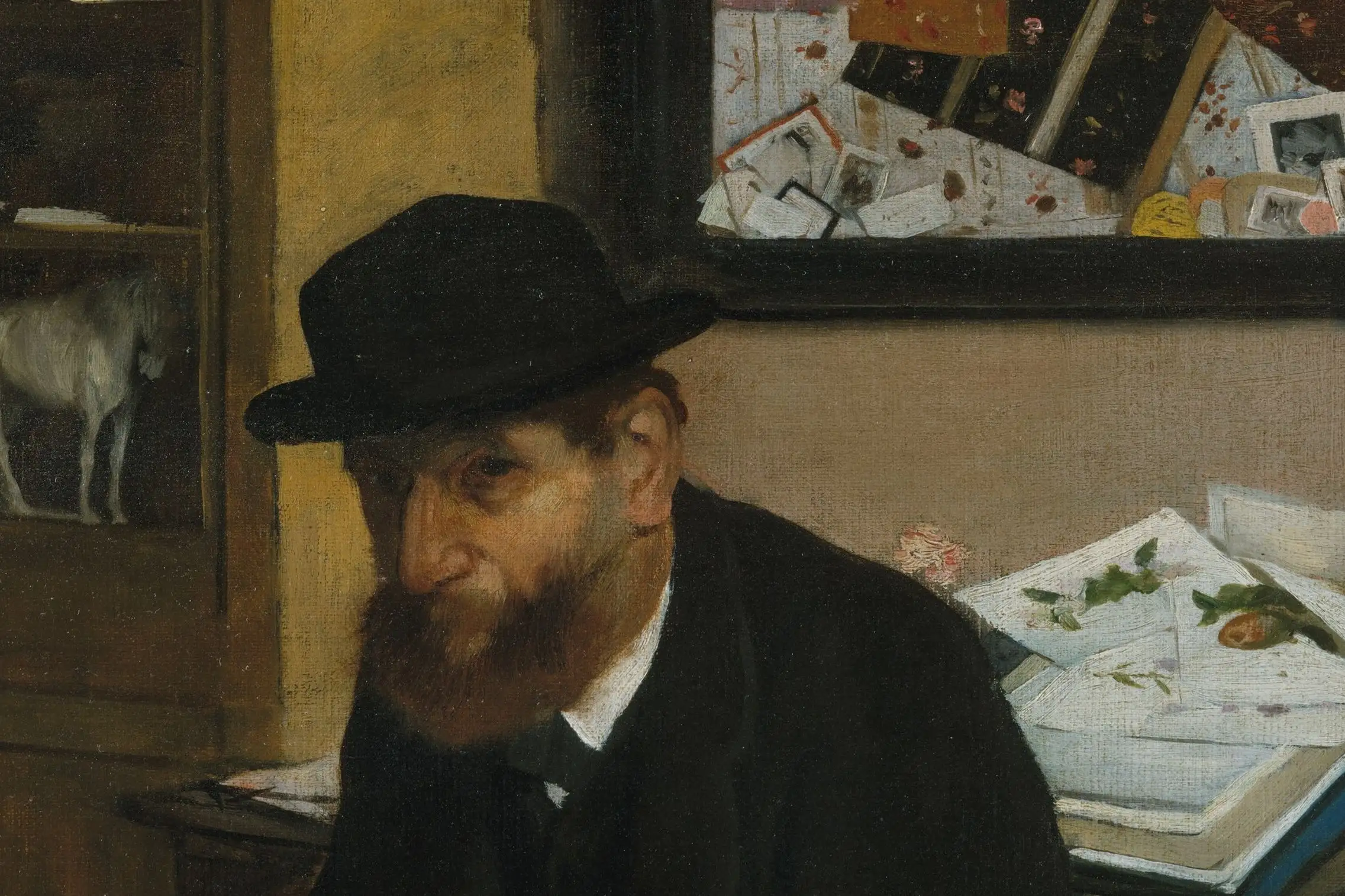
The retrospective exhibition is the collector's purgatory. In principle, he will exhibit no more—he says so himself. What's the point? Has he not already paid his debt to the Alsatians-Lorrainers, to the Union Centrale, to the Trocadéro, and elsewhere? It is high time to make way for others. To begin that perilous back-and-forth all over again! You can't be serious; two moves are as bad as a fire. The last time, they broke that lovely Saxon figurine; do you think they even apologized? Was he even thanked for his trouble, his collaboration, his sacrifice? After all, he has stripped his drawing room, closed his door, and delayed his departure for the spa towns; no one is grateful to him for it.
However, the exhibition is taking shape. A few skirmishers have ventured forth; packages arrive daily, and more are promised. He goes to see them, just to pass the time and have a chat with friends. But what is this display case, filled with mysterious parcels, tied-up things, and tightly closed cardboard and cigar boxes? He is told it is Lelio's case, and he has not yet unpacked.
And our man becomes pensive, for Lelio is a rival, and to refuse battle would be to concede his superiority. What would his colleagues say? Whatever the cost, the duel must be accepted. He resigns himself, determined to do as little as possible. He allows a half-dozen pieces of faience to be torn from him, not one more. Alas, everything in this world is connected, and faience begets porcelain, which begets snuffboxes, which beget watches, which beget miniatures, which beget an entire display case.
The Collector's Purgatory: The Retrospective Exhibition
Sometimes the affair is less complicated. If the exhibition organizer knows his trade, he immediately appoints our collector as a member of a committee. This time, he is caught in the trap; how can he abstain and not set an example? Noblesse oblige.

Right away, a delicate question arises: where will the newcomer be housed? In which room? In what vicinity? In which position, north or south? He is not demanding; give him the best spot, and he will consider himself satisfied. Unfortunately, the good corners are already taken. He must make do with the common display case, open to all, while Lelio spreads out all alone in the one he has chosen, which belongs to him and bears his name.
Willy-nilly, the collector makes his decision, brings his objects, and begins operations. First, the small skirmish; the great battle will come later, at the last moment. Every morning, he arrives at his post, spying on the enemy's maneuvers from the corner of his eye. He places, displaces, and constantly reorganizes his army corps, bringing in fresh troops, sending away the recruits, and advancing the old guard. Vain efforts! Lelio's display case is dazzling. Prominently placed, skillfully arranged, and lined with a velvet drapery that enhances every object, it immediately draws the eye.