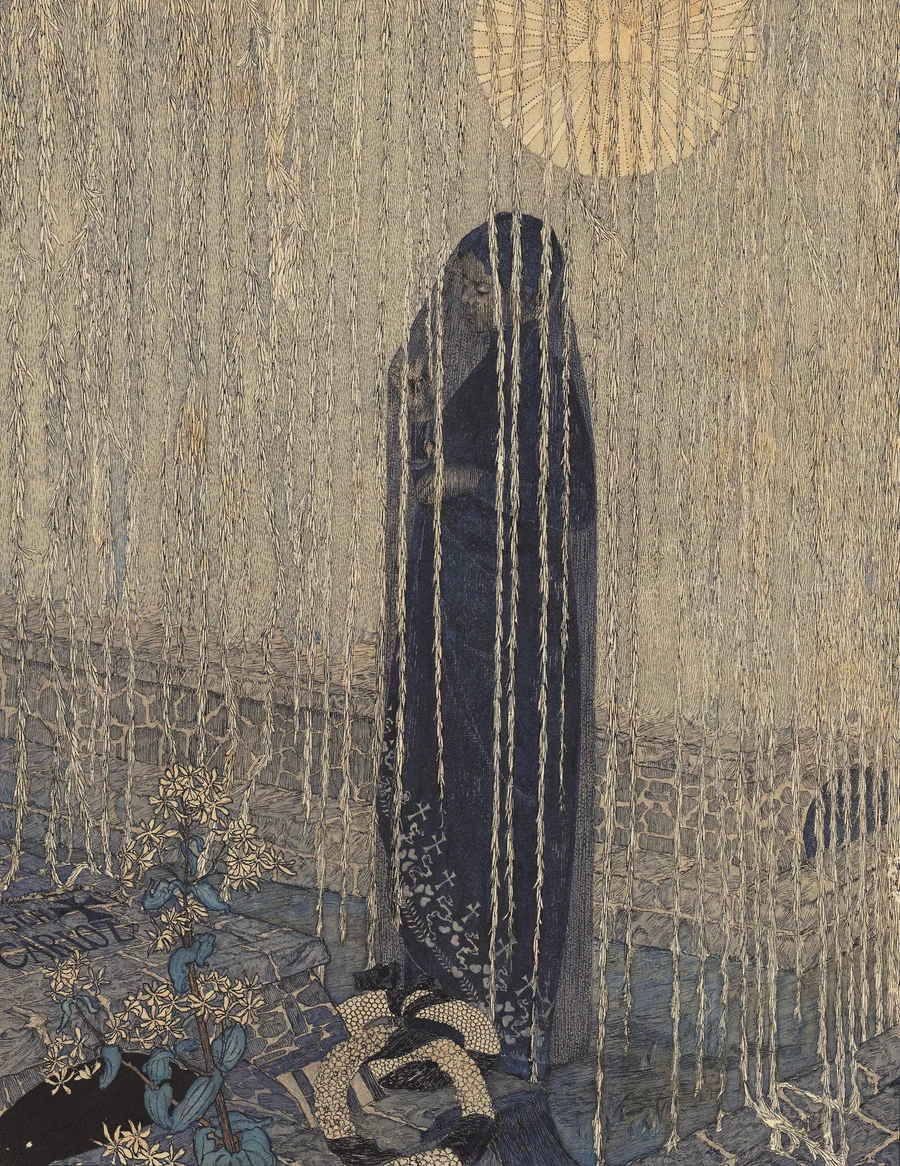
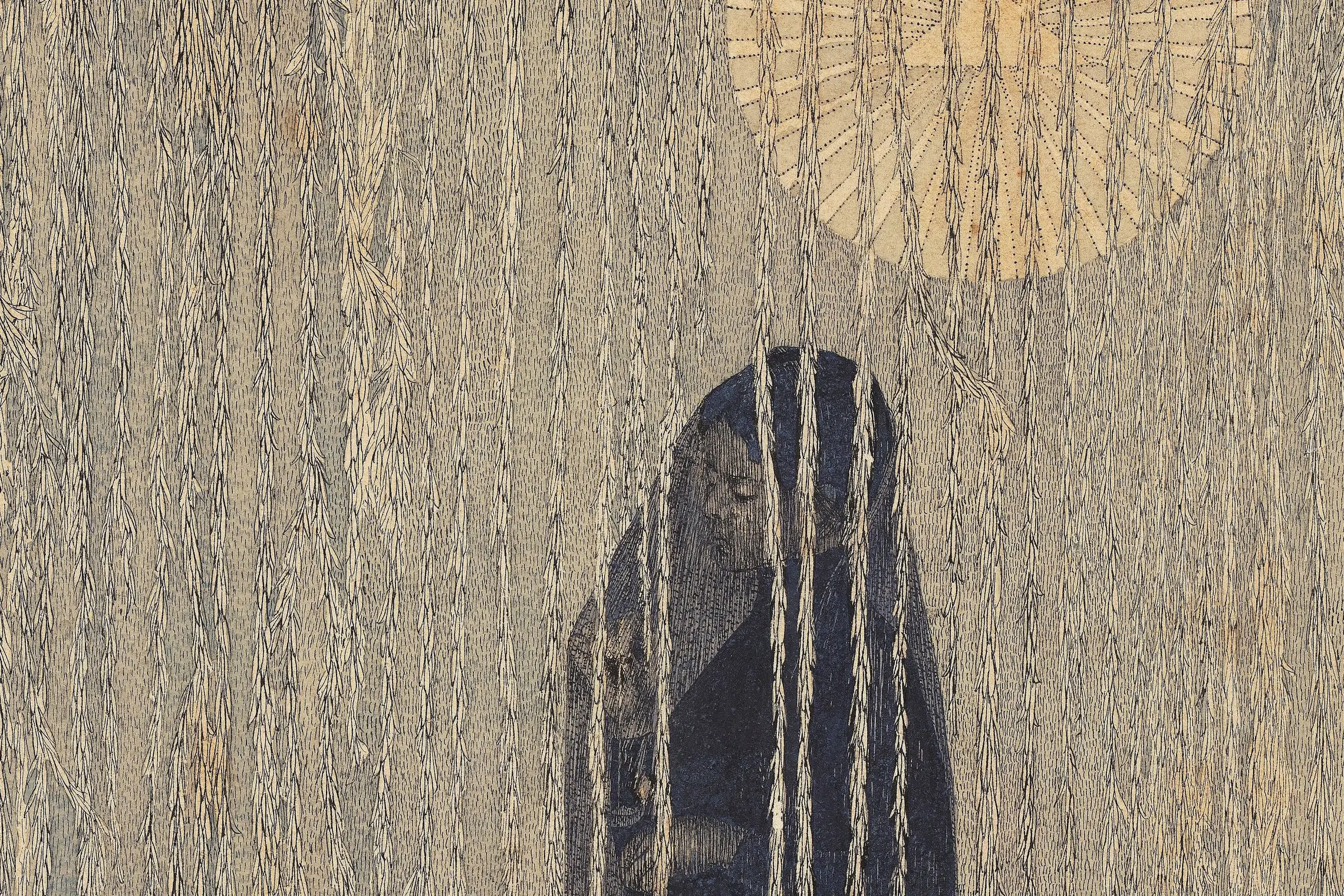
The public has likely not forgotten the important study we dedicated in May 1899 to the work of the noble artist, Mr. Carlos Schwabe. At the Universal Exhibition, the Swiss section in the Grand Palais brought the public face-to-face with several of his powerful works, and Carlos Schwabe certainly acquired new and fervent admirers there.
The Recent Works of Carlos Schwabe
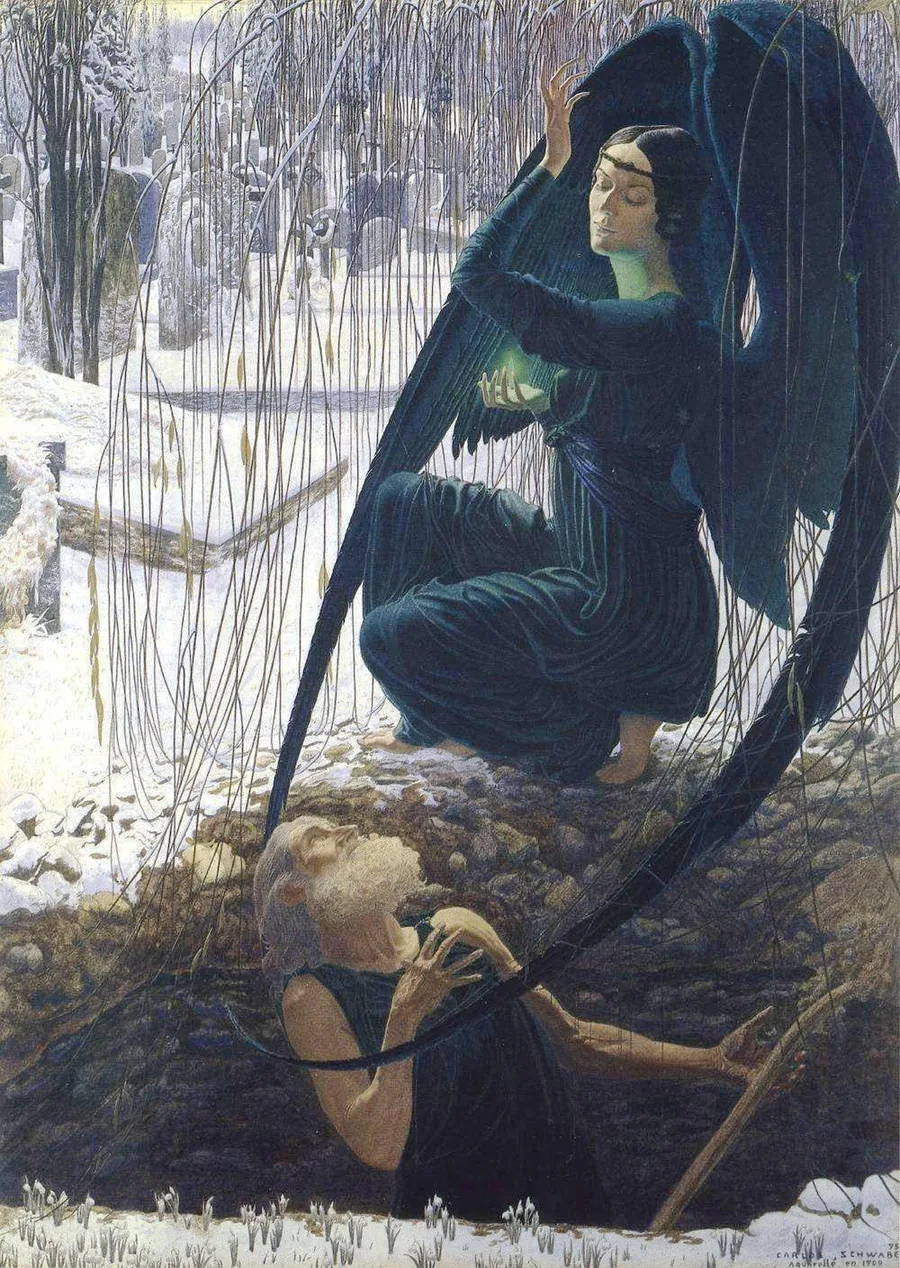
One could see, in particular, at the Grand Palais, the large watercolor, The Death of the Gravedigger, a concept conceived years ago that had, until recently, remained a drawing. In our previously published study, we spoke of this moving work, whose character and sentiment are irresistibly compelling, even if some of the deeper meanings intended by the artist might escape the viewer. For Mr. Carlos Schwabe is evidently one of the most complex and frenetic artists of this time, one of the most eager to pour a whole ferment of ideas into a drawing or painting.
While it is necessary to engage in some meditation before the work to penetrate these ideas, analyzing the various elements of the composition, it can be said that the artist seeks to define his thought through the sentimental expression of his characters, as well as through the details represented or the general character of his work. That is to say, he resorts to means that are plastically achievable. Even if the most secret springs of his inspiration were not to be understood, much would still be grasped, and one would not linger before his work without taking away powerful impressions.
Also featured at the Universal Exhibition was the very dense drawing, The Passion, a fragment of which we are presenting here. It includes the figure of Religion, who nourishes and comforts Faith, while in the background of the cross-shaped composition, all the scenes of the Passion unfold. Arguably, no one has gone further than Carlos Schwabe in the suggestive intensity of attitudes, in the exasperated and almost anguished expression of gestures, head movements, convulsions of the lips, and gazes. All human features contract in their ardor to reveal the very depths of the soul. And in its very strangeness, the artist's work becomes one of the most vehement, passionate, and compelling imaginable.
Yet even in the expression of the most violent, painful, or ecstatic feelings, the absolute purity of the drawing never disappears. It is to this admirable elegance of line, obeying the artist's will with exactitude, that this work owes the foundation of its energy and emotion. There is nothing more to expect; the drawing says all it has to say, without holding back anywhere. As in his Calvary, one can grasp this sureness of means, this victorious strength, in the second drawing we reproduce. We have already had the opportunity here to analyze our impression and describe the powerful beauty of these works; with these drawings and this watercolor, we simply wished to place a reminder of them before the eyes of our readers.