Paul Jouve's powerful and realistic vision of the animal world is captured in his sculptures and drawings, which define his subjects with an unparalleled authoritative vigor. His works, often described as "portraits of animals," are celebrated for remaining sober and broad while being exact and precise, a testament to his keen observation and artistic discipline.
The Sculptor of the Exposition
The Exposition was about to open; it was nearly sixteen years ago. Construction sites sprang up along the banks of the Seine as if by magic. Among the most active, picturesque, and generously ambitious was the site of the Porte Monumentale, which has not been forgotten. It was directed with infectious ardor and colorful verve by the poor Binet, who has since been taken from us so prematurely.
In the pleiad of young talents he had enlisted and led into battle, the youngest, Paul Jouve, was just eighteen years old. A relentless draftsman since he could first hold a pencil, he had spent some time at the École des Arts Décoratifs but was primarily self-taught at the Muséum through personal and direct study of his models. In the artistic domains towards which he had first been directed, Paul Jouve, under the discipline of Binet, had revealed himself to be a sculptor.
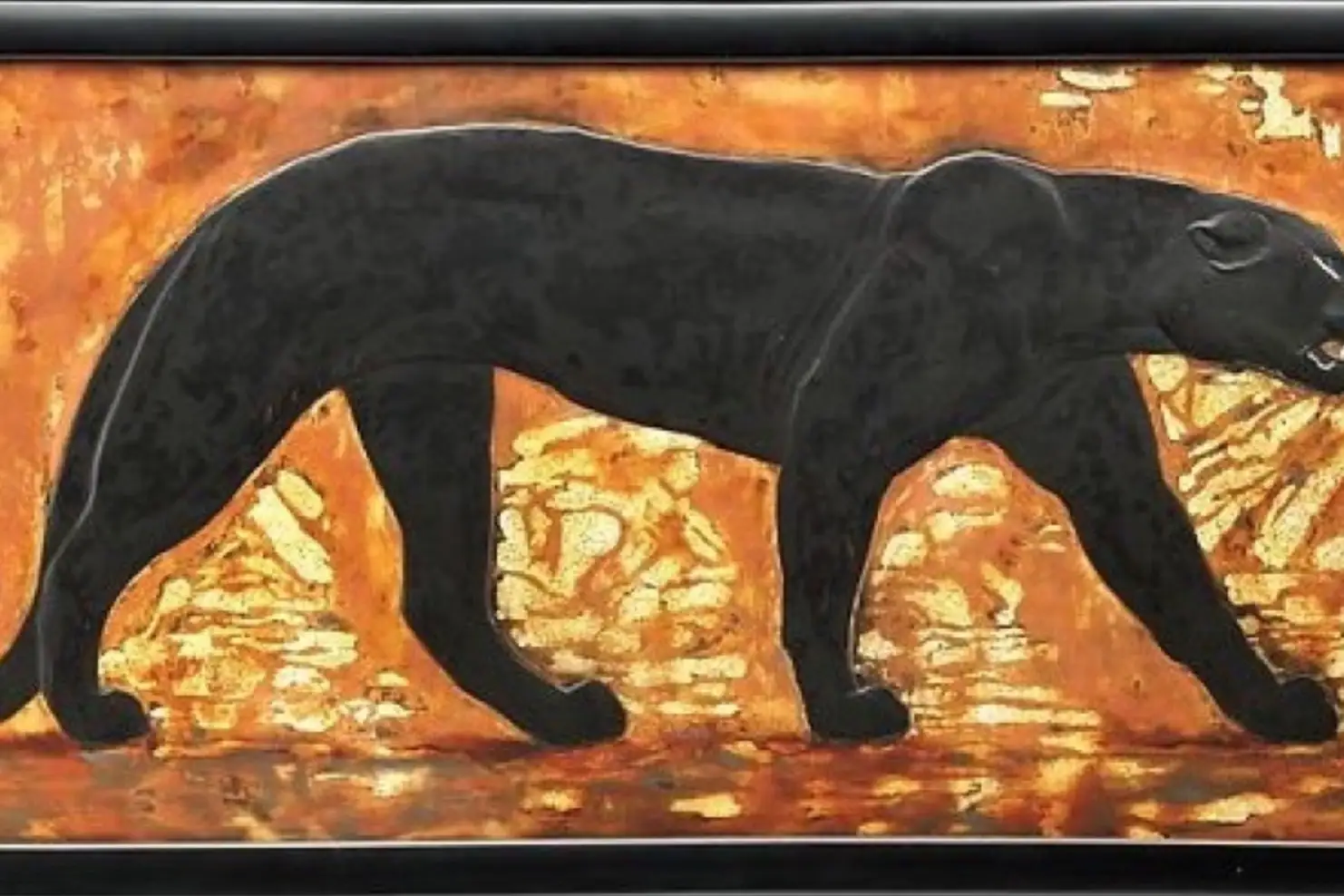
His frieze of stylized marching animals—lions, bears, tigers, and more—executed in Bigot stoneware, was one of the most complete successes of that composite and brilliant ensemble. With their energetic and simplified modeling and their somewhat archaic but distinctly decorative allure, these pieces stood out. The entire endeavor was undertaken with a beautiful youthful audacity and an impetuous ardor that often exceeded measure, and whose results seemed rather quickly outdated and obsolete once the festival was over and the fireworks had been extinguished.
Jouve's solid pieces, however, have not aged, and the success he encountered from his debut has not betrayed him. Nevertheless, that particular undertaking remains, at least to this day, somewhat exceptional in his body of work. He had the good sense, however easy this almost improvised translation of his earlier studies might have been, to return to them conscientiously, point by point. He was further encouraged and supported by the reception he received at Bing's gallery, whose bold and meritorious effort for the constitution of a modern art and for the revelation of talents who were unaware of themselves or were still unknown, it is only right to always recall.
How many sculptors, decorators, and artists of furniture and jewelry saw their beginnings facilitated or their mastery highlighted thanks to him! For Jouve, apart from a certain number of small-scale study pieces in the round, it was to drawing that he returned to translate his vision of the ferocious or placid animal.
A New Path in Drawing and Observation
From that moment on, very beautiful sketches by him appeared at the Salons of the Nationale, and then at those of the Société des Artistes Décorateurs, of which he was a faithful member from its inception. His temperament, moreover, did not incline him to be content with summary indications. He tended, from then on, in his drawings—which were immediately established on a rather large scale, a tendency that has only affirmed itself since—towards that energetic solidity in the construction of forms, and that scholarly study of modeling and the individual details of fur or plumage that constitute the strength and appeal of his studies.
The animal is defined in his work with an unequaled, authoritative vigor. They have been called "portraits of animals," and Jouve does not shy away from this definition, which underscores the incisive clarity and powerful reality in these beautiful pieces that manage to remain sober and broad while being exact and precise.
A scholarship to Algeria, obtained in 1907 at the Salon des Orientalistes, would allow him to broaden his circle of observations. Perhaps no example is more typical of the support such an institution can provide for an artist's development without definitively and narrowly localizing them. By then, although not yet thirty, Jouve had mastered his craft and was abundantly supplied with documents. Beyond our insufficiently endowed establishments, he had known to seek out the most magnificent zoological gardens in Europe, in Antwerp or Hamburg, and he delighted in the company and study of the beasts.
The trip to Algeria was not an occasion for him to go, like Tartarin, in search of the lion in the desert. He admits that it was not there that he encountered the great wild cats he portrayed. But what other unforgettable visions he found, from the great patient camels to the fiery horses of the wild fantasias! The silent gravity of the Arab, the nobility of their silhouettes and gestures, and the broad plastic or colorful effects of the large white or red cloaks seduced and held his attention.
In addition to the two regulatory stays, he has returned there several times since, and one has seen, at the Orientalistes or elsewhere, the meticulous or broadly stylized studies he has brought back. The notation of colors has often tempted him, and certain boldly brushed pieces testify to his awakened instinct for the bright and vibrant colors with which he would henceforth sometimes enhance and complete the truth of these studies from animal nature.
The grandiose landscapes he glimpsed would also serve to situate these drawings of wild beasts executed in the artificial setting of menageries. Similarly, he would use notes taken among the alpine rocks and glaciers to position his eagles and vultures. In the same way, Barye, with a singular evocative instinct, had created for himself in his landscape studies at Fontainebleau a repertoire of wild and romantic sites where he imagined his wild animals at liberty. Let us note, however, without depreciating the effort of the incomparable master and the grandeur of his evocations, that the approach of his young and distant disciple results here in greater verisimilitude.
The Illustrator of the Jungle
An important commission, which he received a few years later, would allow his talent to unfold at ease. It was the illustration of Kipling's The Jungle Book, commissioned by a society of bibliophiles. Pieces of this illustration have been shown on several occasions; the work is nearing its end, and one can already foresee the magnificent ensemble it will be when all of Jouve's drawings—full-page plates and vignettes, engraved and printed in color by his friend, the fine engraver Schmied—accompany the prodigious evocation of the mysterious forest with a truly adequate commentary.
It seems as though, like little Mowgli among his wild brothers, Jouve—who is no longer the little "hairless" man we knew sixteen years ago—has happily plunged into this strange world and lives there as a familiar, knowing the "master words" that appease the fearsome beasts and win the friendship and protection of reptiles and birds of night. The good bear Baloo, "the Doctor of the Law," must have gravely and paternally given him his lessons; in any case, he allowed him to understand and capture his heavy good-naturedness and his brutal, grumbling gaiety.
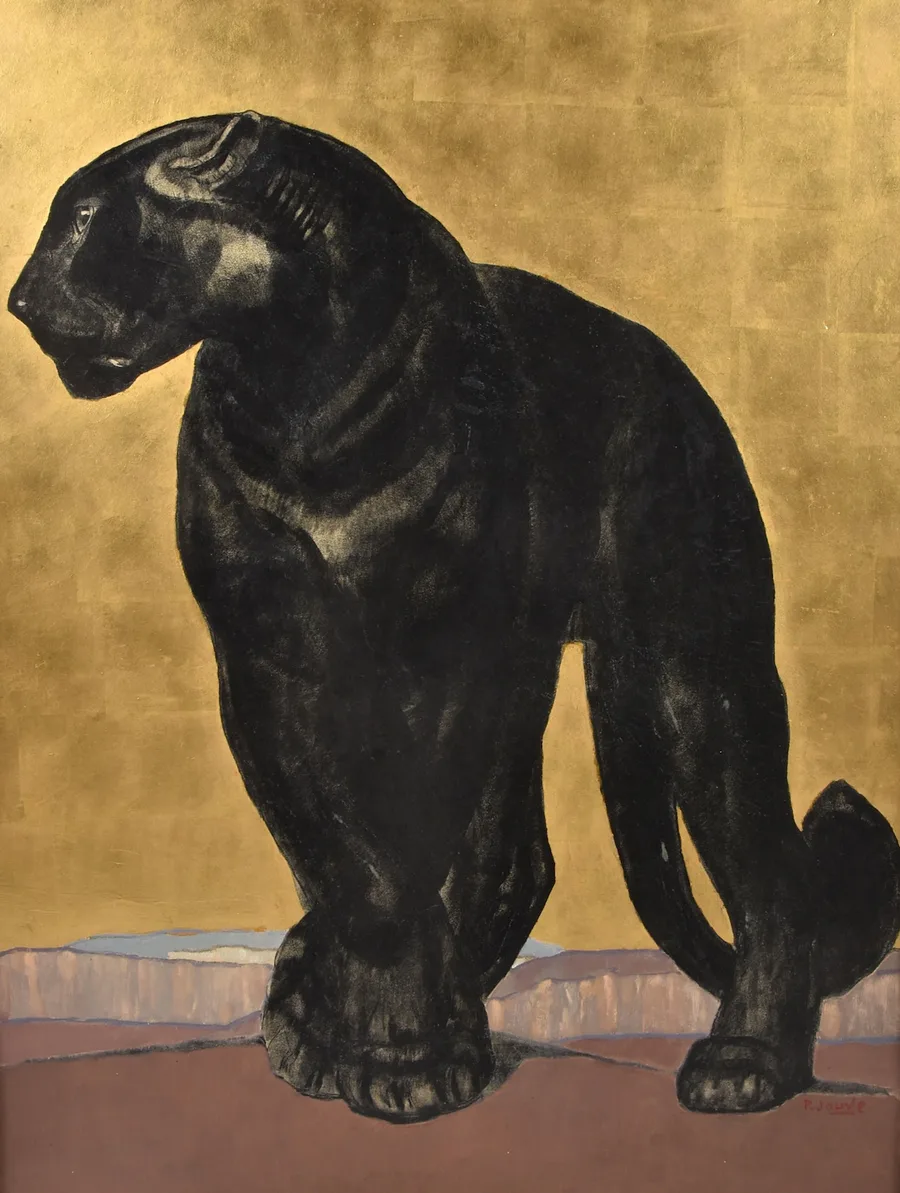
Bagheera, the black panther—light, vigorous, and terrible—was also his tender friend, if we are to believe the supple and elegant portrait he made of her. And one would say he has seen the majestic dance of Kaa, the Rock Python, before the mesmerized Bandar-log, who, halting their grimaces and disordered leaps, submit to the irresistible ascendancy of his fascinating power.
They are all there: from Tabaqui, the "Dish-Licker," the little jackal who roams about peddling stories and eating rags and scraps of leather in the rubbish heaps at the village gates, to Chil, the vulture who circles above the jungle "waiting for things to die." Also present is the majestic Shere Khan himself, the tiger, sovereign master and judge of the jungle, maddened by the smell of blood, or loudly gnawing on the bones of his victims.
Their individual nature is as clearly defined as in Kipling's admirable prose; their gestures and instincts are penetrated surely and simply. One expects to see them rise up, making an "Aughr" or a "Whoof," as in the storyteller's epic narrative. Mowgli himself, the little human frog full of wisdom and courage, appears here and there in this series of plates and vignettes, which, however, rarely dwells on anecdotal illustration. Instead, the main characters of the work pass one by one under the reader's eye in a truthful and parallel commentary.
A Parnassian Vision of the Animal Kingdom
One can even grasp quite well, in the quality of this adaptation, one of the essential characteristics of Jouve's talent. The Romantics of 1830 loved in wild beasts their raw and savage nature, their grandiose allure that corresponded to the lyricism of their thought, which took them out of themselves and their time to cast them into the sublime.
Barye himself, though much more imbued with a realist spirit than some of his contemporaries like Delacroix, for example, nevertheless loved above all the study of movement, living passion, and the dramas of animal life. On the other hand, as a vigorous interpreter of nature, he most often summarizes and interprets it; his admirable drawings are proof of this. He aims for the essential, almost for the schematic.
Our artist is entirely different; he analyzes and defines with attentive curiosity. More Parnassian than Romantic, he presents his heroes in their intimate and almost familiar truth. And if a certain page of his illustration of the jungle—the one accompanying "How Fear Came," for example—or certain of his drawings of a wounded panther or a bellicose eagle possess a real dramatic power, how many others are but images of intensely truthful life, yet devoid of any pretense of drama or action. They are like familiar portraits of characters, into whose analysis of feelings and customs we are introduced as easily as with Kipling himself.
It was doubtless, nevertheless, a restful interlude for Jouve to illustrate a book of Christmas carols, which he undertook almost parallel to the previous project. For this, he used many diverse sketches and picturesque imaginings, where his mind and talent could relax from the austere and intense study of his familiar models. Breton silhouettes mingle with memories of the Orient and visions of Provence, and the whole forms a composite and charming book. Yet, the concern for noble and powerful animal form frequently reappears, returning like a leitmotif in the work of the artist who has dedicated himself to its exaltation.
Such is the drawing of the Magi mounted on a majestic elephant, which advances with a rapid and sure step, filling the entire page with its imposing mass.
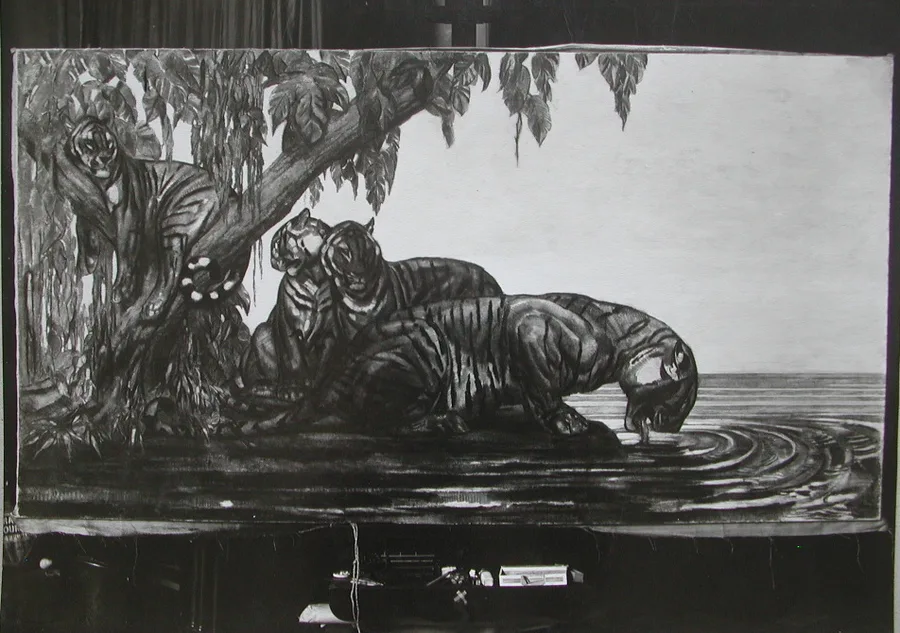
The animal reappears again in his attempts at flat decoration, inspired by sumptuous oriental decors with gold backgrounds and bright colors. An example is the large panel exhibited two years ago at the Nationale, where a magnificent black puma carried off an ocellated peacock, creating a beautiful decorative motif, a bit barbaric but of a singular richness and character. Another is the sketched screen we reproduce here, where an admirable tiger appears, fascinated by a snake. The large decorative pastel at this year's Salon is yet another example, and other attempts in this vein will certainly follow.
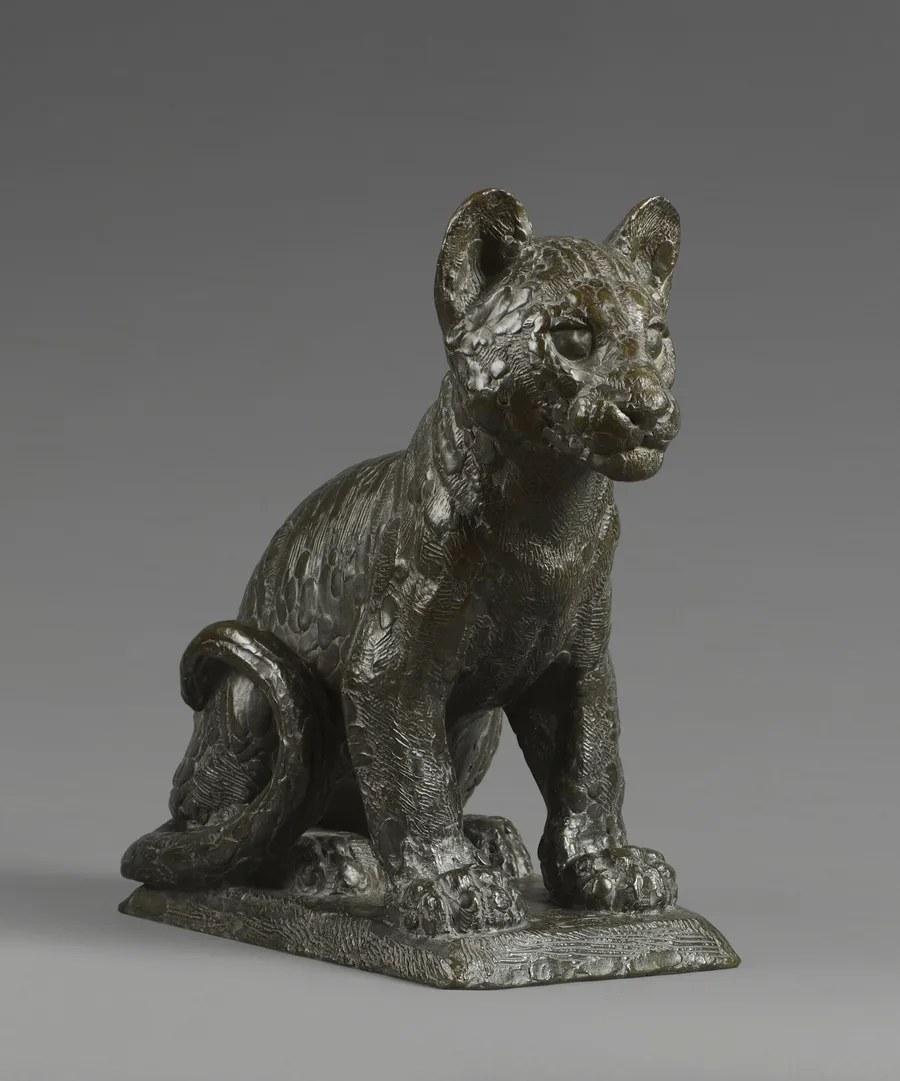
But it is to sculpture, above all, that the creator of the frieze for the Porte Monumentale of 1900 feels called back. Other reliefs, these ones quite thin and more finely studied, are underway. Two magnificent pieces of true large-scale sculpture, fully in the round, are appearing at this year's Salon. Both recall certain works by Barye in their choice of half-scale execution and in the very selection of their subjects. One might also think that it was not without some audacity to take up the motif of the walking lion or that of the crouching tiger devouring its prey, powerfully braced like the famous Jaguar Devouring a Hare.