
When one reflects for a moment, it is striking to see how often logic is absent from our most common decorative concepts. Rationalist theorists are indignant about this; they want to trace every object back to its own raison d'être (reason for being), every item to its legitimate function. They praise the greatness of artistic eras where all beauty arose from the perfect adaptation of human creations to their purpose and logical use. Unfortunately, this ideal perfection can only arise in simple minds. These great eras were all, if not primitive, at least periods marking the first full blossoming of a civilization and its art. We can certainly admire them, but we cannot remake ourselves in their image after centuries of development in every direction, punctuated by regressions, retrospective sympathies, and attempts at universal understanding.
It is almost accepted today that an object of very specific use, like a platter or a plate, can be a simple decorative item intended to be hung on a wall, whether it is old or modern. It serves as a lovely note of color to add to a panel, an ingenious combination of decoration meant to delight the eyes by its very arrangement.
The Functional Origins of the Mask
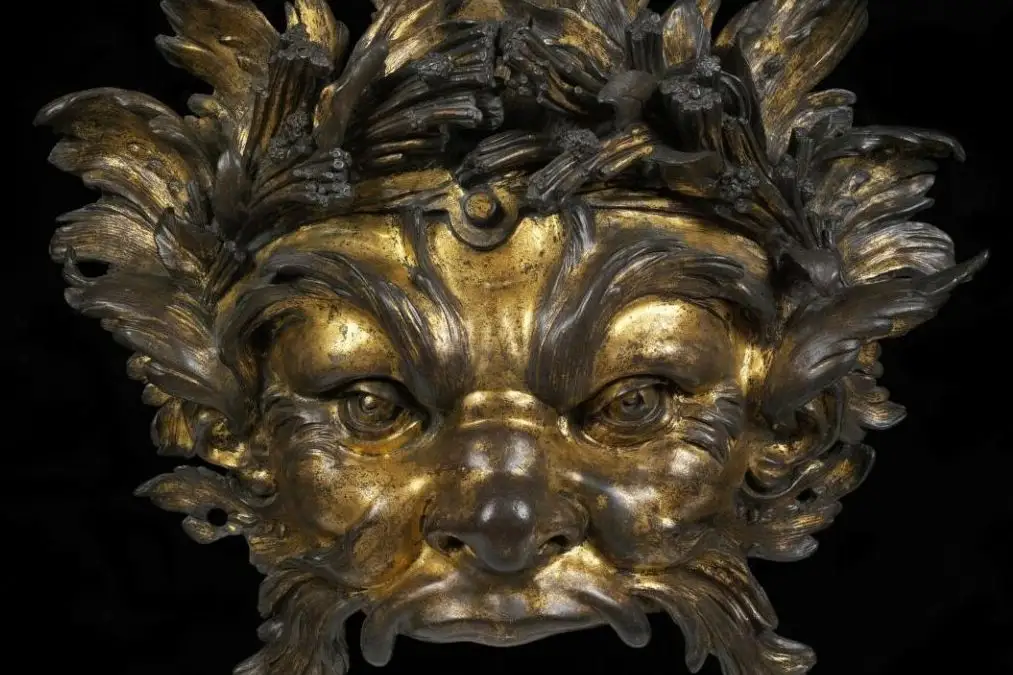
Is the lover of japonaiseries (Japanese-style art) or the simple enthusiast who has hung some Japanese mask with an enormous grimace between his prints and books often thinking that this mask is an accessory for theater or sacred dances? Certainly not, any more than the Parisian going to the Opéra thinks about the religious origins of stage performances. Our Japanophile simply takes pleasure in this deformation of the human face, at once fantastic and realistic. He finds it entirely natural that a contemporary artist, with no other pretext than to provide a similar pleasure, also endeavors to model a mask, render it in a rare material, and give it a curious patina.
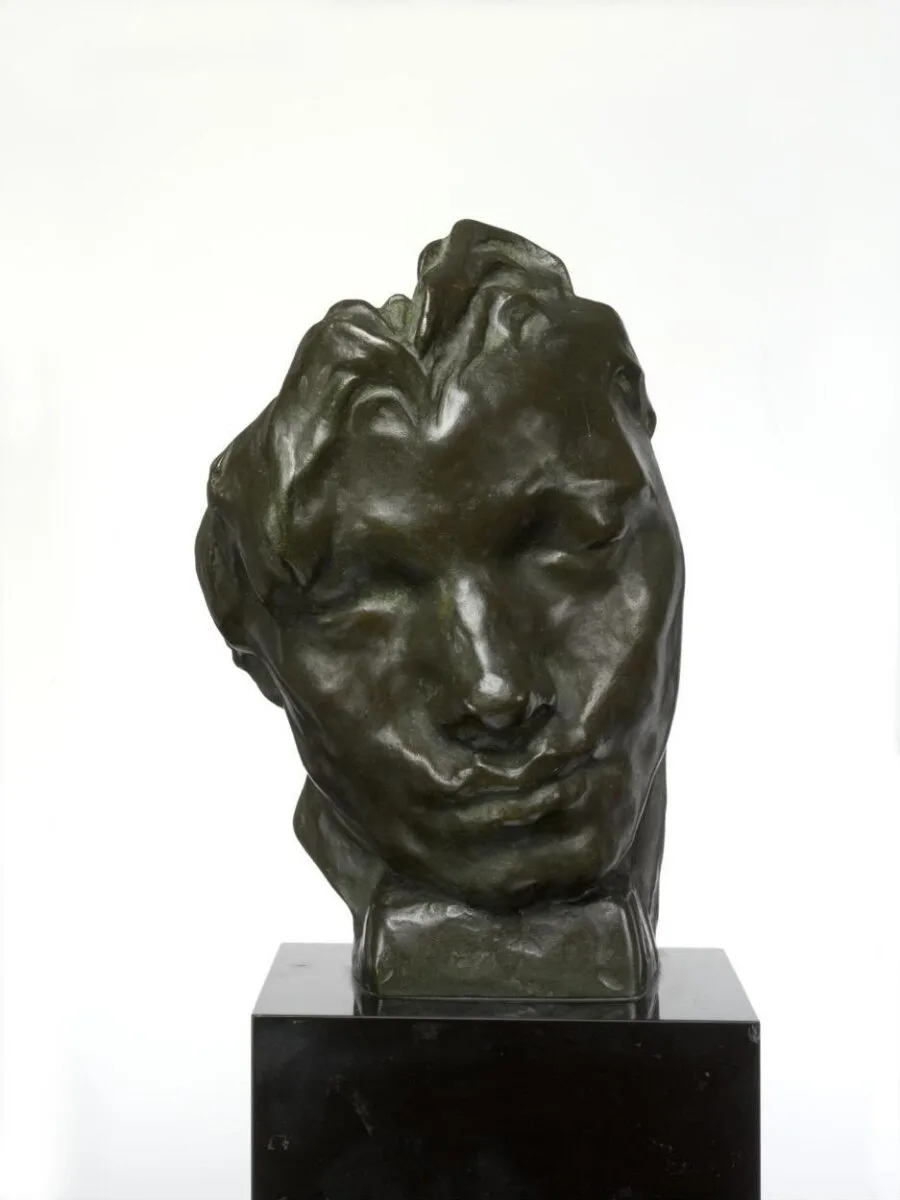
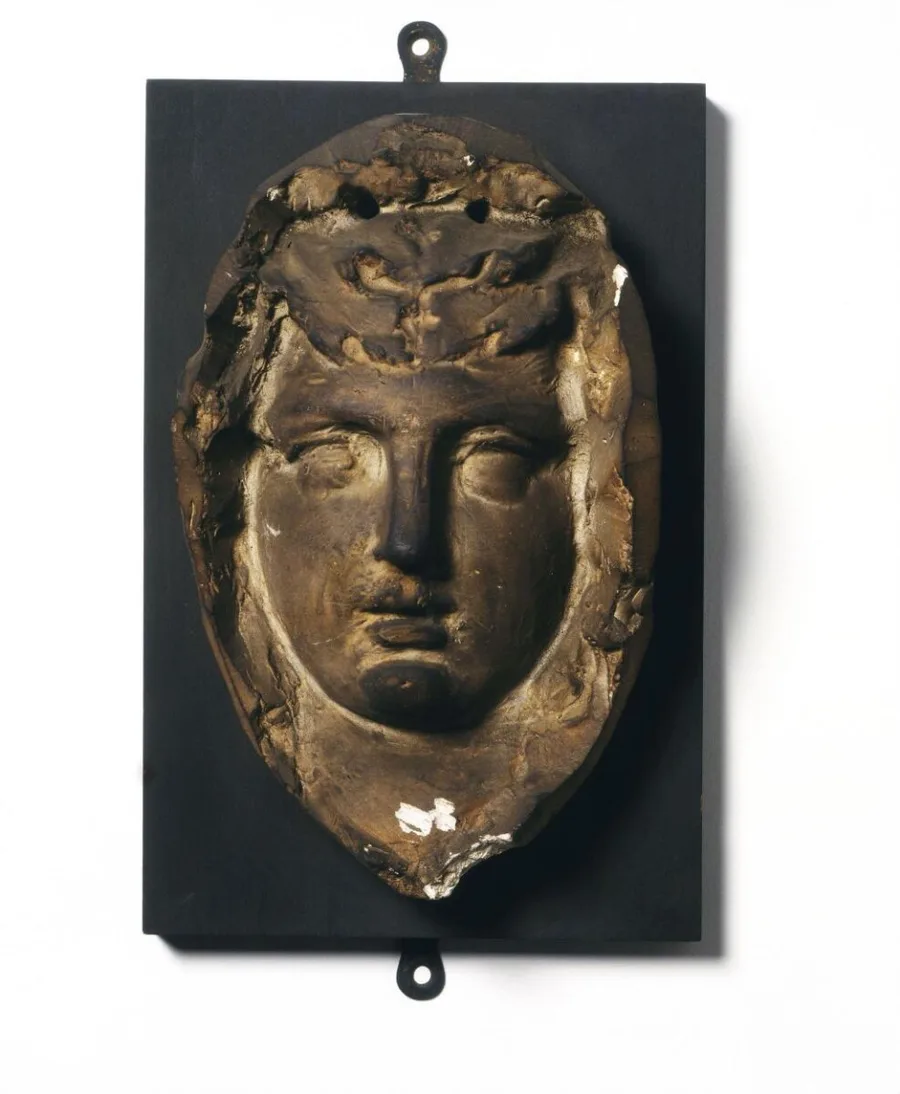
In strict logic, however, the mask is merely a false face modeled by an artist, either to cover the face of a dead person and give the illusion of the mortal remains' permanence, as with the Egyptians or in archaic Greece, or to transform, idealize, and magnify the features of an actor who must for a moment embody some mythical character. Among the Greeks, as with the Japanese, the goal in performances of religious origin was to provide consecrated and characteristic types for heroes or spirits who were always the same.
In Greece, at least, the necessities of theatrical optics—and also of acoustics, for the mask served as a megaphone—justified and maintained the use of the mask throughout the entire evolution of ancient theater. But in Rome, under the Empire, the old theatrical mask had already become a simple decorative element. Painted or sculpted, they are found in quantity in Pompeii, in the very homes of those Roman connoisseurs who prided themselves on illogical tableware, on cups from which it is impossible to drink because they are so overloaded with sculptures.
The Japanese, for their part, kept the mask in the theater until the end of the 17th century; but they continued to produce them without any specific purpose, and they still make them... especially for export.
From Ritual Object to Decorative Motif
In our own culture, the mask is certainly current during carnival time, but I am not aware that this costume accessory has ever given rise to very interesting artistic endeavors. In the past, a mask was also worn while traveling, in the era even before stagecoaches, when the sun and road dust troubled lords and ladies traveling on horseback or in poorly enclosed carriages. Is it not possible that, by a rather bizarre turn of events, automobilism will bring us back to the use of the travel mask? Could we not give the enormous, complicated, and generally hideous goggles with which male and female drivers adorn themselves an acceptable and logical form?
Some have thought so and have sought, in a spirit of artistic rationalism, to give an aesthetic form to a utilitarian object. At the Salon of 1901, we saw two masks for a man and a woman, modeled by Mr. Pierre Roche and executed by Mr. Regius in extremely thin and light repoussé metal. When raised, they were designed to form a decoration on the headwear, like the lifted visor of a helmet. When lowered by pivoting on side attachments fixed above the ears, they were to cover the upper part of the face down to the mouth, reproducing its general features in a simple and energetic modeling. In the artist's mind, variations in formulas and expressions were to diversify these new kinds of masks infinitely. We shall see if the future proves him right.
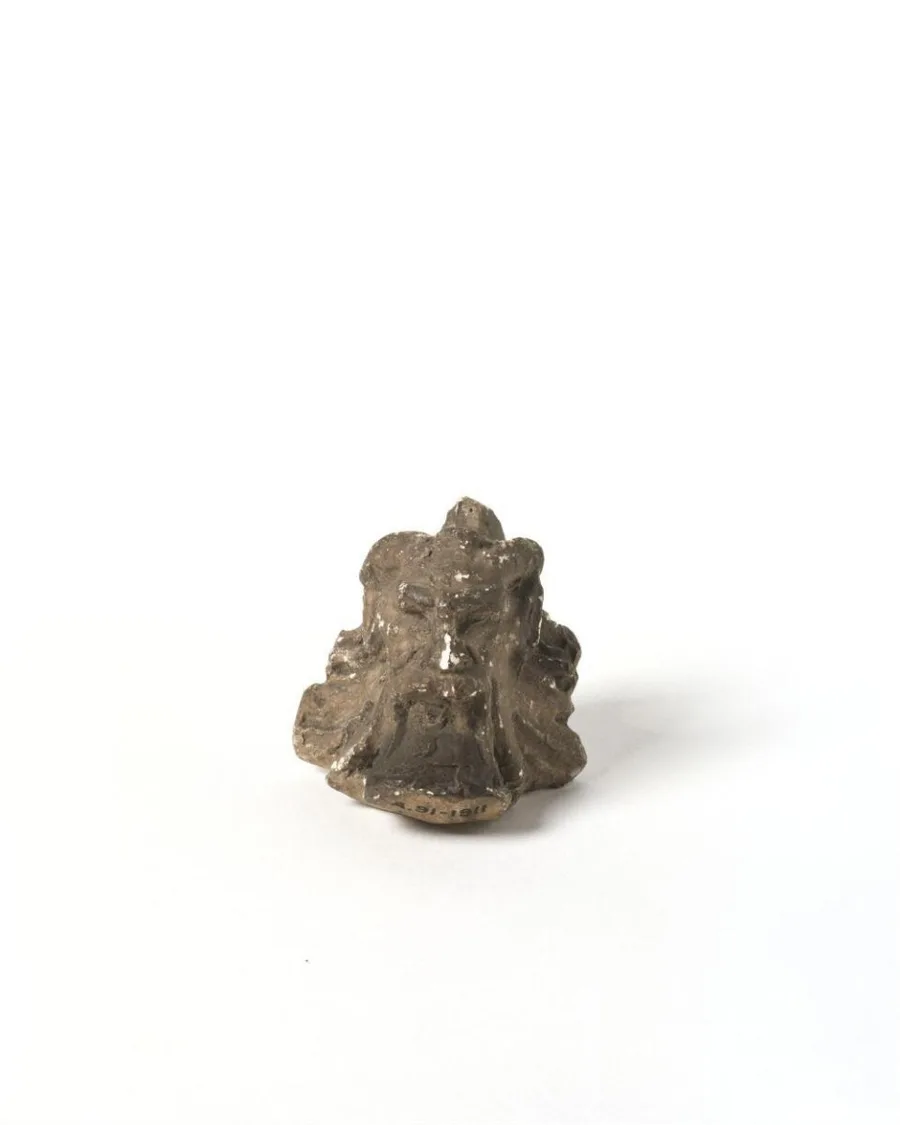
For the moment, the real mask survives among us only as a requisite pastiche of ancient theater accessories. It is part of the common decorative grammar, of the banal symbolism used in the École des Beaux-Arts. The tragic and comic masks used in the time of Sophocles and Aristophanes serve as emblems for our modern theater, in the same way that Jupiter's thunderbolts symbolize our telegraph and Mercury's caduceus represents international trade.
Sometimes an artist tasked with executing these mandatory clichés introduces a bit of his modern verve. Such is the case with Mr. Bourdelle in some of the masks reproduced here, which were made for the Théâtre Grévin. Far from slavishly reproducing the classical template, he has managed to let the gigantic rictus of the wide-open mouths play freely, and to vigorously shake the vine leaves and strands of tow hair that so many others have frozen into august and stiff formulas.
Others, like Mr. Cros in his glass paste mask at the Musée du Luxembourg, with its delicate and rare colors, have succeeded in creating deliberately evocative trinkets. With their pure lines and faded hues, they allow us to glimpse a poeticized and softened vision of a distant antiquity—but a fanciful one, since these masks in particular, like all the decor of the ancient theater and likely all the decor of ancient life, were gaudily painted with brutal and frank colors.
The Influence of the East on Modern Masks
As for the Japanese-style mask, it has obviously not yet had as long and constant a fortune among us, and we almost regret it. For if the infatuation with the arts of the Far East can sometimes lead to somewhat childish imitations, the lessons drawn from these artists, so vibrant and varied, are far from resembling the despotic dogmas imposed on our artists of the classical Renaissance by their admiration for a poorly understood, entirely conventional, and rigid antiquity.
However, one has probably not forgotten the very interesting portrait-mask of Mr. Bartholomé, published in this very journal a few years ago.1 This discerning and curious artist, tasked with rendering the physiognomy of Mr. Hayashi, had the idea, given the ethnic type of his model, to borrow from Japanese art the methods and the type for the portrait requested of him. He succeeded admirably; the very simple modeling of this mask, the decisiveness and accentuation of the features—notably in the eyes, which were slanted and half-open, yet cleanly and deeply cut—made it a remarkable work of intelligence and finesse, though a unique and occasional piece.
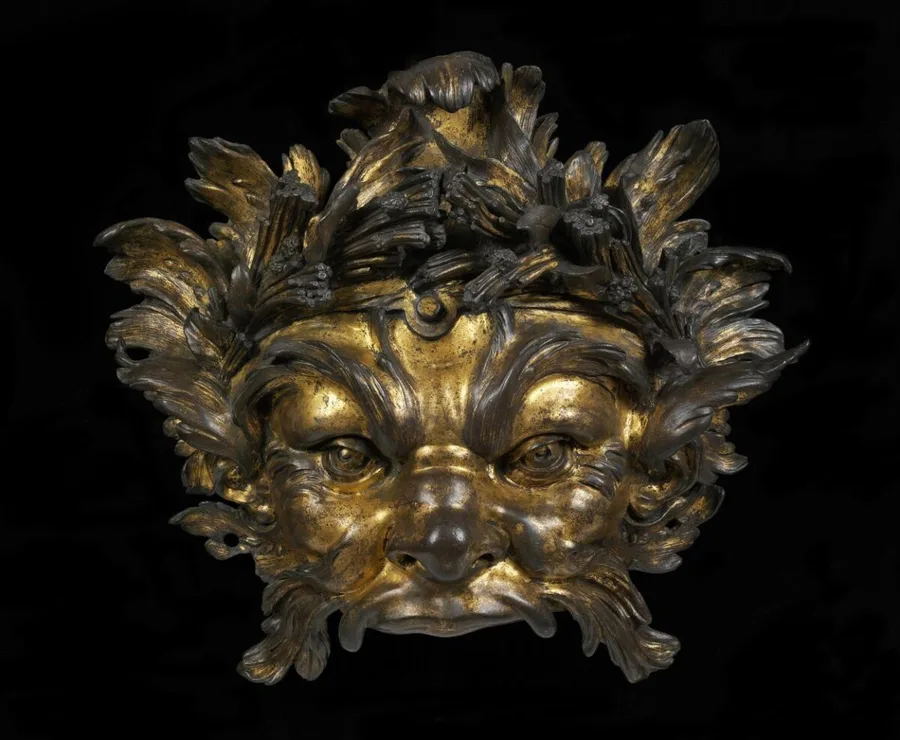
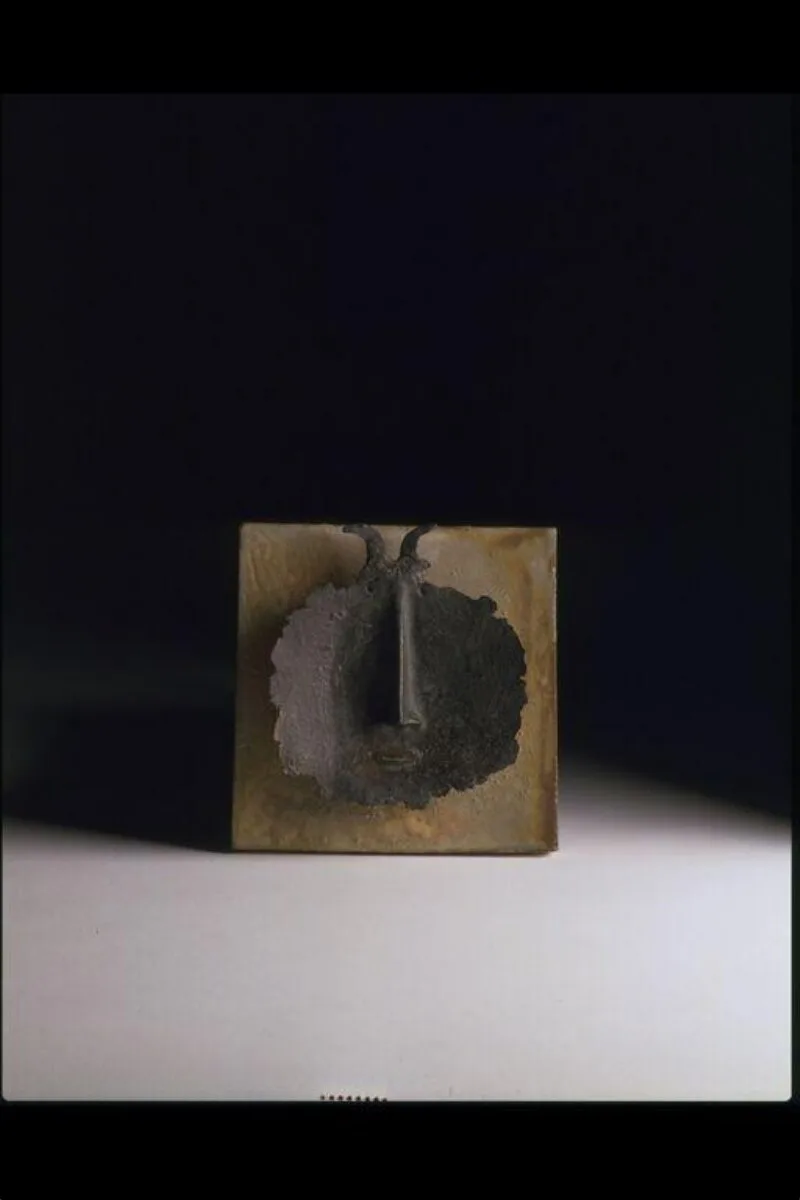
During his fertile and so abruptly interrupted career, the researcher and initiator that was Carriès had executed, mostly in stoneware, a large number of masks in which he had obviously sought to emulate those Japanese artists with whom, as we know, he also dreamed of rivaling in the beauty of material execution, precious glazes, and vigorous patinas. The type of one of the masks we publish here is very precise evidence of this. The slanted, oblique eyes and the flattened nose reveal the intention or obsession with the oriental type, while the general oval shape of the mask and the stylization of the facial lines almost indicate a pastiche of some Japanese mask. This obsession was so strong that one seems to find something of these artistic choices in a mask designated as "Carriès's mother."
The Expressive Fantasies of Jean-Joseph Carriès
Elsewhere, while maintaining an interesting decorative arrangement overall, Carriès remained closer to truth and nature, notably in the somber mask where we recognize his own face, which Mr. Armand Dayot described so well in the notes published here on the artist and his work.2 This "round head with willful jaws," with its "disdainful mouth," this "very pale face, of a nervous pallor illuminated by the cold gleam of two gray-green eyes, full of dreams and at times strangely scrutinizing," this "abundant beard of a silky newness, sister to a bushy head of hair of a very independent cut."
In other works, he starts from observation to create the lamentable or sneering physiognomies of his Bohèmes (Bohemians) and his Désolés (Desolate Ones). But the widened mouths, hirsute beards, overly small eyes, and indescribable wrinkles and puffiness no longer have much in common with nature and reach the extreme limits of the grotesque and the fantastic: faun-like and overflowing laughter, enormous grimaces that would have satisfied the imagination of a Victor Hugo. The features of the human face are overturned by a sovereign fantasy. Carriès's verve was given free rein with a perhaps disconcerting casualness; artists more learned than he in the study of the human form would have undoubtedly been reluctant to consider this form as a simple arabesque. In their greatest debauches of imagination, they would have retained a concern for real construction and natural laws.
Grounded in Reality: Dalou and Rodin
Just as a Leonardo da Vinci knew how to remain a naturalist even in his most fantastic caricatures, so a Dalou or a Rodin, however violently expressive they conceived a figure, would never have exceeded the measure imposed by their very knowledge as anatomists and constructors. Carriès excelled in fantasy, in imaginary reconstruction, and faltered before the pure and simple translation of reality. The others are exalted by contact with nature and are never so great as when scrupulously translating what reality places before their eyes. Even in fantasy and grimace, they know how to remain in contact with truth.
One can judge this by the small study of Dalou's Silène, a terracotta mask of devilish verve that already contains in germ the dazzling poetry of the complete group. Or one might think of Rodin's Pleureuse (Weeping Woman), which is such a tight study of grimacing human sorrow. These two pieces, moreover, are related to the series of masks that concern us here only by their almost accidental presentation. The same is true of Rodin's admirable Homme au nez cassé (Man with the Broken Nose), a tragic and Michelangelesque mask, but one without decorative intentions.
The Diverse Creations of Bourdelle and de Rudder
The same can be said of a certain number of studies by Mr. Bourdelle, whose freedom and supple, learned execution, and at times grandiose manner, allow them to be compared to the masterworks we have just mentioned. Such, for example, is the smiling head of a modern woman with a very distinct profile that we reproduce here. Such also are the laughing or sorrowful masks that the artist has been rendering for about fifteen years in the most diverse materials: terracotta, stoneware, marble, and even wood. And such again is the series of his powerful studies after the mask of Beethoven, which, begun in 1888, continues with relentless determination to one day result in a definitive work charged with thought and will.
Some of these studies by Mr. Bourdelle were translated a few years ago by Mr. Bigot in the form of decorative stoneware masks. The coloration of these already old attempts, of a less rich and brilliant tone than those of Carriès, was discreet and sustained, delicate and intimate. We provide two examples here: two masks of children with expressions full of gentleness and charm. Perhaps these masks, for the decorative role they seemed destined for, still retained a bit too much the air of fragmentary studies. Perhaps some more or less symmetrical arrangement would have been necessary to frame and support these expressive faces.
Mr. Bourdelle has, moreover, proven many times that he understands this necessity. One of his masks of a laughing woman, framed by heavy masses of hair and garlands of flowers, provided a very pretty motif for Mr. Haviland, who executed it in stoneware. Another mask of a woman, of a more serious and contemplative sentiment, framed in the folds of an austere coif, was carved by the artist himself with a vigorous tool from the heart of an oak block. Finally, for the decoration of the Théâtre Grévin, from which we have already cited several masks inspired but not copied from antiquity, Mr. Bourdelle has executed, very broadly and as a true decorator, some more personal masks of well-ordered composition and very successful expression. Examples include a woman's face, calm and pure, framed by symmetrical roses, or a face bursting with gaiety, where the living suppleness of the artist's talent reappears in the animated features.
The ceramic masks of a Belgian sculptor, Mr. de Rudder, are conceived in a similar formula, though closer to the bibelot (trinket) than to architectural decor. One may recall the lovely series of figures of Dutch women, framed by their highly original coifs, which this artist executed in polychrome stoneware and exhibited in 1900. In the same vein, with perhaps a little less success, the artist has executed another series of decorative ceramic masks, a few of which you will find here. The one he titled Pax is, among others, of a very great suavity of modeling and expression and of a completely seductive decorative arrangement. Another woman's face framed in a linen coif is perhaps a little too reminiscent—and it is not the only one in the series—of the decorative mascarons (grotesque architectural masks) of the Middle Ages. The artist was evidently haunted here by the admirable corbels of the old aldermen's hall in Ypres, one of which gives us exactly the same chin-strap and the same smile.
The Modern Mask: An Architectural Fragment
But if there are some similarities in expression, what profound differences exist between the two works! The 14th-century piece was applied to an essential architectural element; it had a determined place in a larger whole. The modern work is an isolated piece that will end up anywhere, hung on a wall between plates one does not eat from and unusable swords or armor. In sum, do not all these studies of human faces, all these more or less decorative masks used as best one can as trinkets to adorn disparate interiors, seem like decommissioned elements of some grand architectural ensemble? Or might one not say that they are ready-made pieces that the master of the work neglected to use in his building?
In fact, our modern architects have contented themselves with immutable clichés that they have traced by laborers from the never-renewed models of the past. The efforts of our decorative image-makers have remained like unused living forces, which either escape into disordered fantasies or are applied to illogical creations—interesting at times, but resting on a false principle. All these masks, in the end, are but unfinished and unused mascarons.
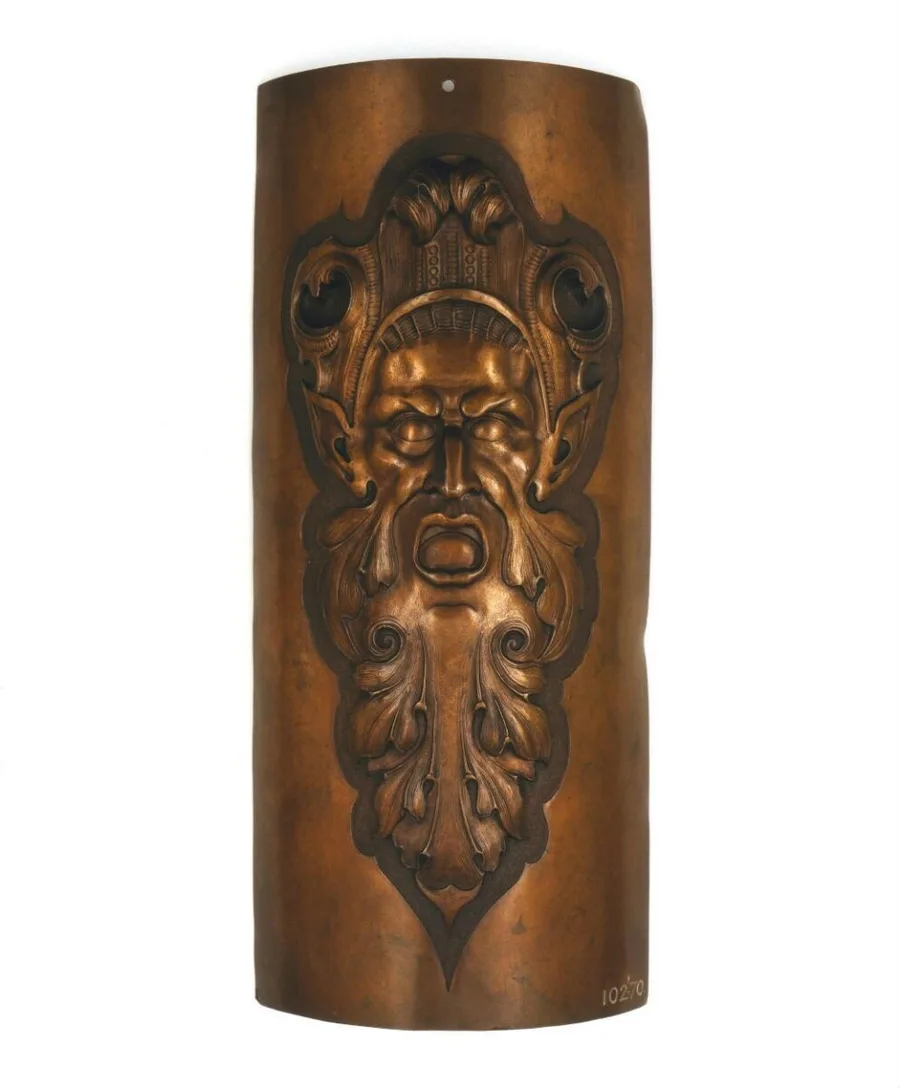
Carriès understood this well when he tried to transform his Japanese-style masks into constructive elements for the monumental door he dreamed of building in the mansion of the Princess of Scey-Montbéliard. Among the studies of grotesque masks we present, could not those by Mr. Jose de Charmoy also provide elements for monumental decoration? There is, in our opinion, in the two figures by this very young artist, a sense of colossal grimace, of enormous caricature, that is extremely curious and well-suited to decoration. Conceived certainly without any reminiscence, his figures make us think of the grandiose and free creations of the image-makers of Reims Cathedral, who, upon reaching the heights of the buttresses or the upper galleries of the nave, gave themselves over to all the verve of their already realistic genius. They created that series of mascarons, corbels, and pendants whose truth, suppleness, and style astonish us today.
But the accord was perfect then between the image-maker and the master of the work, and the result of their efforts was unified and harmonious. It is unfortunately this unity of effort and this harmony that are almost always lacking in the creations of our modern art.