
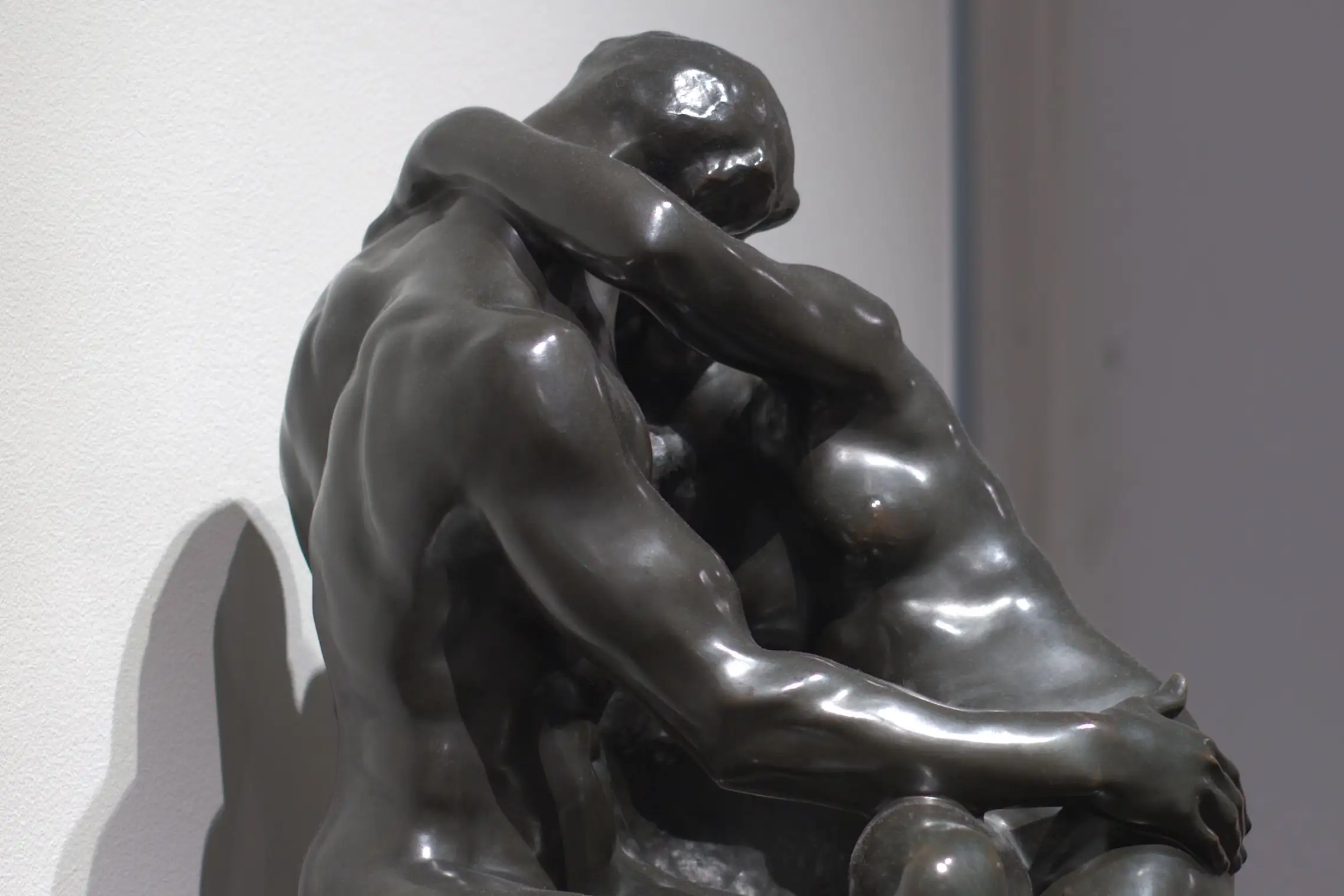

To fully grasp the meaning of Auguste Rodin's work, exhibited for the duration of the Exposition Universelle in the Pavilion at the corner of Cours-la-Reine and Avenue Montaigne, not far from the Pont de l'Alma, one must not only wander through the galleries, rotundas, and naves of the Grand Palais, where the sculptures of the Centennale and Décennale exhibitions are displayed for study, but also recall the sculptural works of all ages. A journey through the history of form is necessary to understand the place of this master in a revolutionary age.
A Journey Through Sculptural History
Go to the Louvre; take a beautiful, swift journey from the halls of Assyrian and Egyptian antiquities to those of Greece and Rome. Visit the monuments of Gothic art that evoke the blossoming of life from the stones of cathedrals, then move on to the statues of the Renaissance, the 17th century, and the 18th century. By doing so, you will easily follow the explorations, the flowerings, the losses, and the resurgences that have succeeded one another from ancient days to the times in which we live.
The Egyptians appear as perfect sculptors who have never been surpassed. Their art expresses immobility and sleep; they enclose life within black, grey, or pink stone. To represent this cessation of movement, this rigidity of the body, this silent vigil of thought, they barely touch the hard material. They rough out the block with a light hand, as if cautiously unveiling the hidden form, a sleeper with wide-open eyes. A few soft reliefs, a few swells, a few inflections—that is all. And that is truly all that matters here, for through these simple forms, we receive a vision of complete truth. This is not a summary truth, a mere abstract that suggests all it implies, but a nuanced truth, a strict analysis of visible aspects and internal volumes, the total form represented through the just distribution of light and shadow.
Then come the Greeks, who unshackle forms and bring them to full bloom. It is no longer the immobility and silence of the necropolis, but life in the open air, under the sun; it is the acceptance of nature, it is freedom and happiness. Yet, while the expression has changed, the sculpture is similar: the monuments of the 5th century, when Greek art was at its zenith, possess the same simple planes, the same luminous unity as the statues of Egypt during the 17th Dynasty. The principle is invariable.
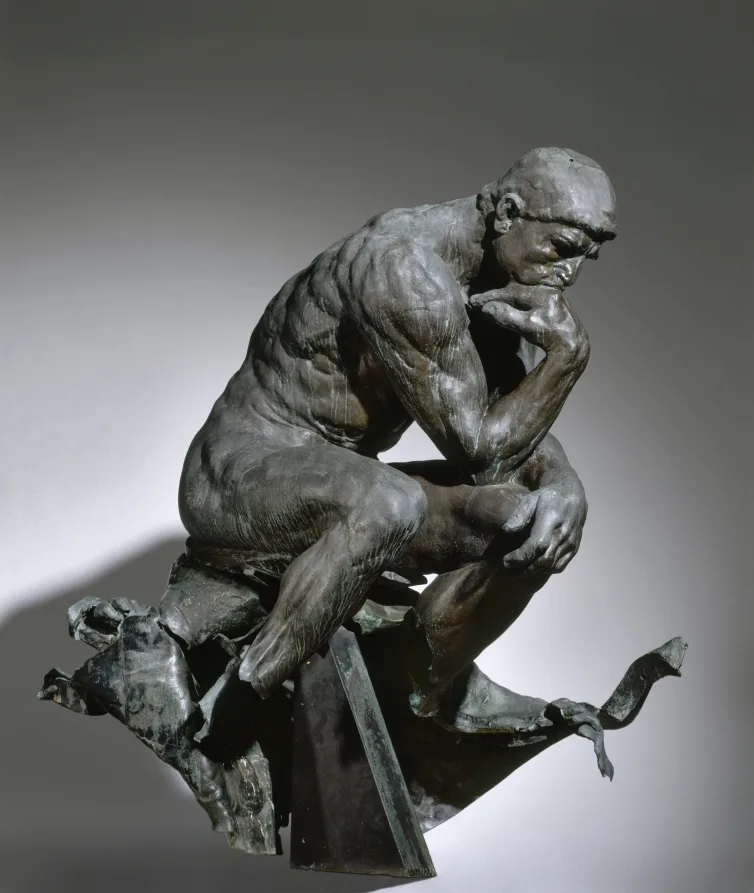
The artists of the Middle Ages did not seek or find anything different, to the point that the entire cathedral is but a single sculpture. The Renaissance, which should not be separated from the Middle Ages, was the joyous explosion of a world in labor, rediscovering the ancient world and learning of an unsuspected splendor of life. Romanesque and Gothic art, however, had descended from antiquity through Rome and Byzantium, but the Greek tradition had been impoverished and falsified in passing through those terrible crucibles of decadence. It required an extraordinary desire to express and an ardor of will from the humble northern artists to make them discover all the life they so movingly and touchingly managed to capture.
Once this conquest was complete, we know what followed. In the 16th century, an administrative system for teaching the Fine Arts was established to preserve formulas. Inevitably, imitation and rules, encouraged and imposed by bureaucracy, were bound to lead to the impoverishment and desiccation of great artistic production. Despite the opulence of the 17th century and the grace of the 18th, it is easy to trace the progression of this morbid phenomenon.
