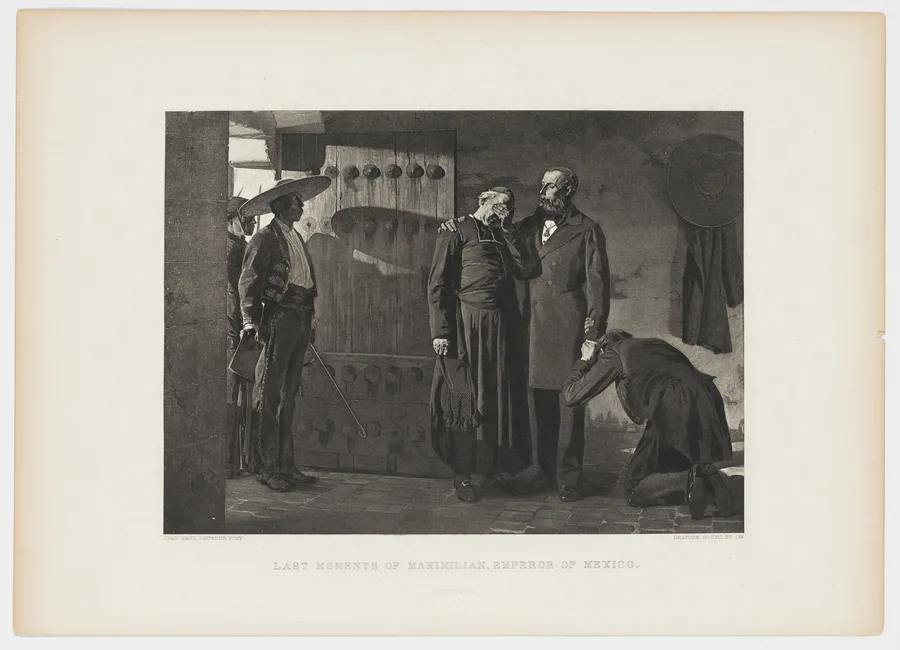
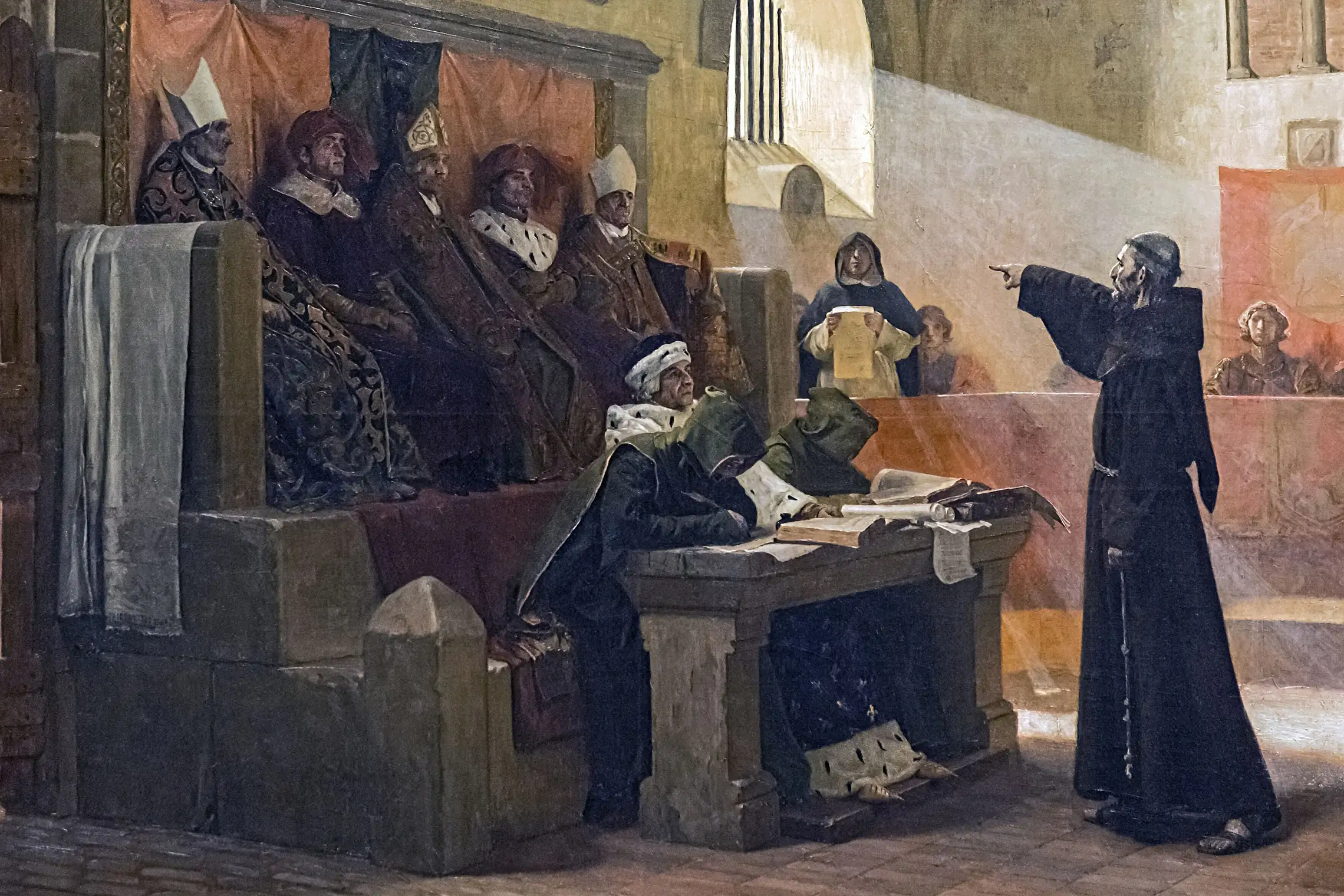

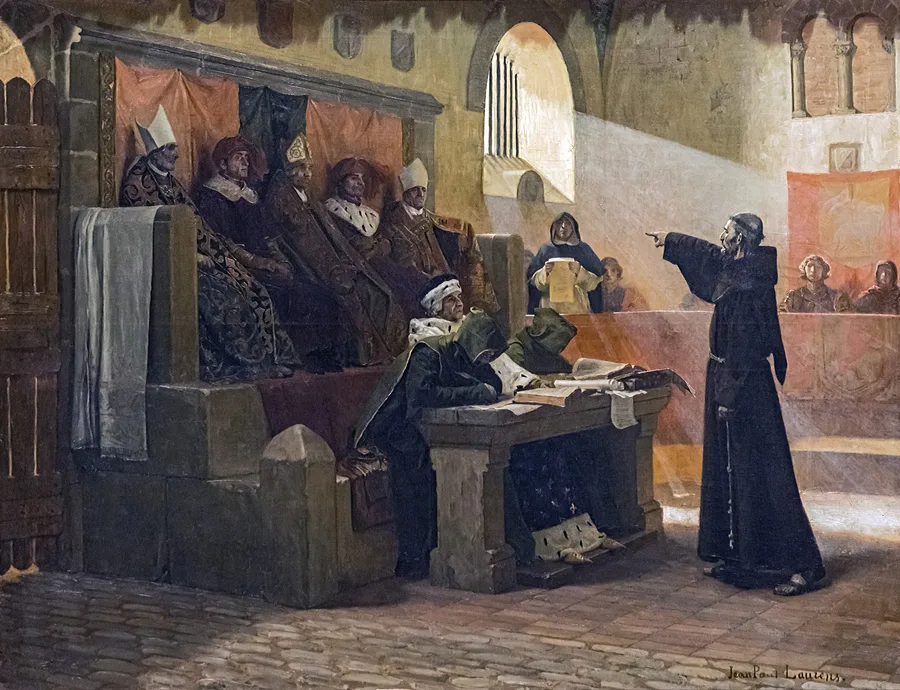
Jean-Paul Laurens’s considerable body of work is so intimately linked to the problem of History painting that one cannot be dissociated from an examination of the other. We live in a period where history painting is vigorously contested, not only in the works of its practitioners but in the very legitimacy of its existence—in its aesthetic and psychological viability. The work of Jean-Paul Laurens so dominates the surviving remnants of this once-flourishing genre that one might wonder whether it confirms its principles with the addition of a very great talent, or if it condemns the genre precisely by elevating an illogical and obsolete form with unusual qualities.
The Paradox of a Modern History Painter
For the most resolute detractors of history painting, the work of M. Laurens is indeed a stumbling block, a contradiction to the thesis that declares this art form null and void. His name obstructs their conclusions. But they would be inclined, transforming this stumbling block into a touchstone, to find in such a body of work a clever argument, declaring it far superior to the genre it illustrates and whose poverty it, by contrast, highlights. Did an artist like M. Laurens find in history painting the grounds for a normal development of his personality, surpassing a bastardized genre by his virtue alone? Does his work create a deceptive illusion about an artistic error? Does he owe it a debt, or is it indebted to him? Is he adding a branch to a living tree, or is he giving a dead root the prestige of a vitality that comes only from himself?
The question is imperiously posed by the work of M. Laurens, and it seems the dilemma can be reduced to a matter of improper terminology. History painting is a detestable genre, but history itself is an admirable source of thought. It is history, and not history painting, that has nourished the mind and talent of M. Laurens—and it is to history painting that the benefit of his great and free personality returns. He honors a genre that did not form him; he has contributed a series of individual elements that the genre’s faithful never introduced before him. In this way, the problem is simplified and the antinomy resolved. And through this, Jean-Paul Laurens appears as an exceptional artist, unscathed by the legitimate criticisms attracted by a form of painting where ridicule, excess, weakness, and vanity have vied in their extremes.
Despite the outward appearance of his situation in the academic world, M. Laurens is no less an isolate. Thanks to his robust and healthy origins, we find in him no trace of the specious mannerisms, the artificial ideas, the vicious postulates that make up that strange mentality known as the esprit d’Institut (the spirit of the Institute). At sixty-eight, the man from Lauragais has remained true to his roots, a stranger to the official milieu, exceptional there as well. The battle against academicism does not catch him in either camp. The attack on history painting, as understood by the École des Beaux-Arts, can find demonstrative weapons in his work. It is a singularly honorable position for a man who is a member of the Académie, yet whose talent, psychology, and personal character are not of it, without, however, bringing to it an anomaly or a protest. It is a situation that would embarrass anyone other than a simple, loyal, thoughtful producer, who does what he wants and maintains the prestige of having entered that institution because he was desired, and of giving prominence to a company without having sought to owe it anything.
Redefining a Failing Genre