
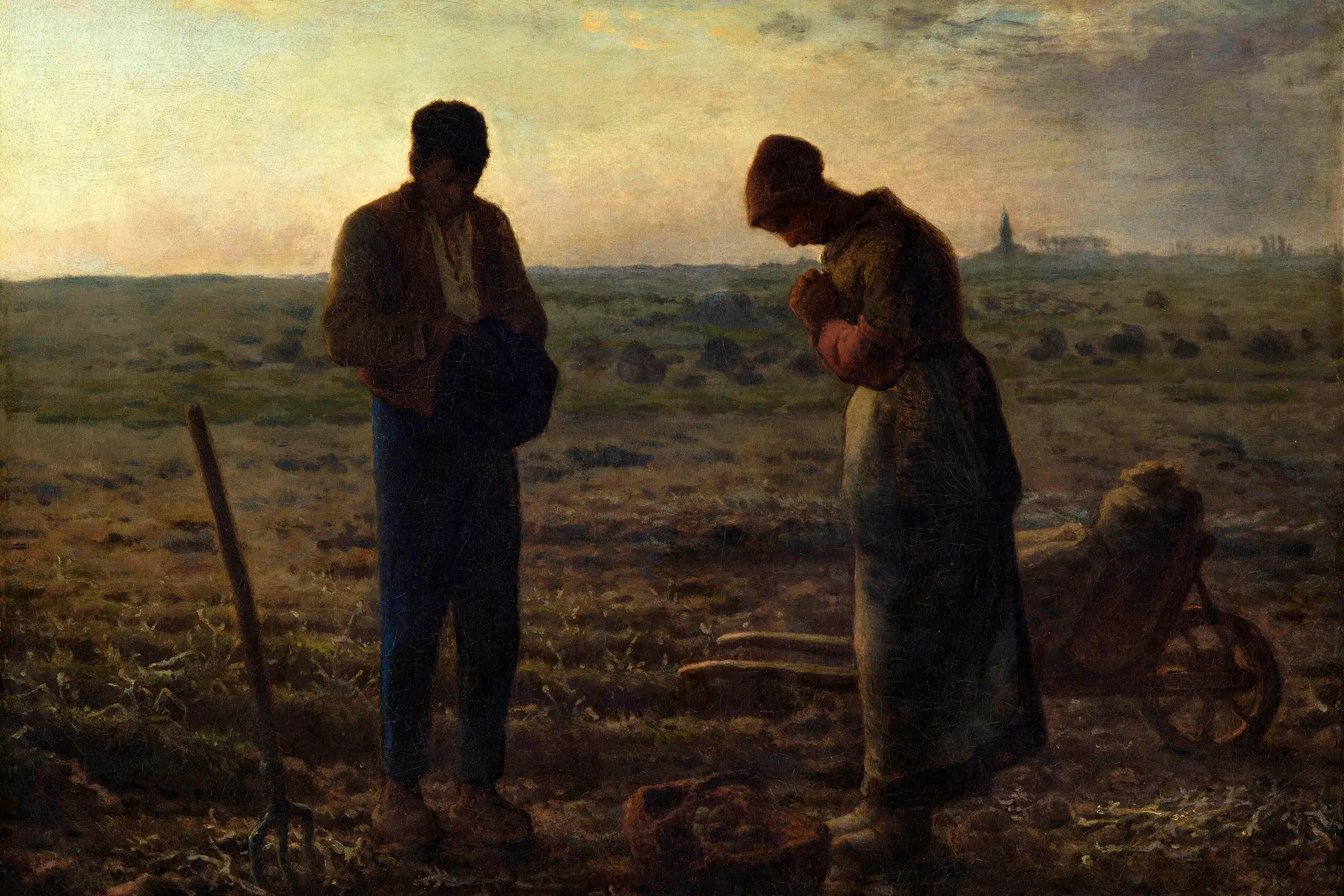
Lame Justice makes us wait; but, limping along, she always arrives in the end. Glory, that goddess with the sad smile, follows her, distributing her belated crowns upon tombs. After Delacroix, Jean-François Millet is now having his moment, and the indifferent of yesterday are acclaiming him. It is true, they say, that certain credentialed representatives of "grand art" are protesting against this posthumous glorification and would like to maintain the harsh verdicts of the old juries. The history of art is full of these denials of justice by artists against one another; unfortunately, it is not only the Adriaen van der Werffs of the world who show themselves to be severe toward a Rembrandt.
The equitable future puts everything and everyone back in their proper place; and then, all want to claim they had anticipated its judgments. Today, we are witnessing the inevitable and amusing parade of those who, forgetting their past rejections, now come to loudly enlist themselves among the friends of the dark days. But what is the use of recrimination? It has been said, with an authority we would not possess, on the first page of the catalogue for this triumphant exhibition: "Victory must be clement." We may at least be permitted to note that the Gazette des Beaux-Arts can join the victor's procession without hypocrisy or remorse. Here is what it published in one of its first issues, on June 15, 1859, under the signature of Paul Mantz: "Witty people may smile, the academies may be mistaken, the indifferent may pass by without looking or understanding; these mockeries, these mistakes, these disdains will change nothing of the final result. In a time that will soon come, which perhaps has already come, M. Millet will be hailed as a master." The prophecy has been entirely fulfilled; the academies were mistaken, the witty people smiled, but the work is there, ever eloquent and decidedly masterful.
The work is there, we say. Let us be more precise and add, alas, only part of the work. Here indeed are The Angelus, the Goose Girl, The Washerwoman, The Gleaners, the Shepherdess Tending Her Flock, The Man with the Hoe, The Spinning Wheel, The Shepherd in the Park at Night, and The Fledglings. But where are the Peasant Grafting a Tree, The Sheep-Shearing, the Woman Watching Over Her Child, The Potato Planters, the great Shearer of 1860, and so many other masterworks? Most have crossed the ocean, snatched up by the fortunate land of dollars where our contributor, M. Durand-Gréville, recently saw them, shining with a pure splendor.
The fate of these precious paintings has been the same as that of so many works by Rousseau and Corot, which we could have had for a piece of bread, which we are no longer rich enough to buy, and which will be forever missing from the great Hall of Modern Art finally opened at the Louvre. If only we knew how to seize the opportunities offered to partially repair the faults of the past. But one has the right to write that the competent commissions or officials do not seem, in this regard, to feel the weight of their duty and responsibility. Was it not last year, at this very time, that at the precise moment nearly fifty thousand francs were found for the purchase of a few pieces—among the weakest and least finished—by the late de Neuville, Corot's The Bridge at Mantes was allowed to be sold to a foreigner for a much lower and relatively minimal sum? This was one of Corot's finest masterpieces, one that the Louvre should have sought both for its intrinsic value and for the documentary interest it will one day hold in the history of our school and its evolution from dark to light. Ah! Let us commend the destiny of the Louvre to the piety and patriotism of enlightened art lovers, for in truth, the administration is not concerned enough with it, or understands its duties very poorly. That said—and it is good to repeat it often—let us return to this exhibition, incomplete, but sufficient to form a just idea of the man and the artist.
I. The Artist's Origins and Moral Biography
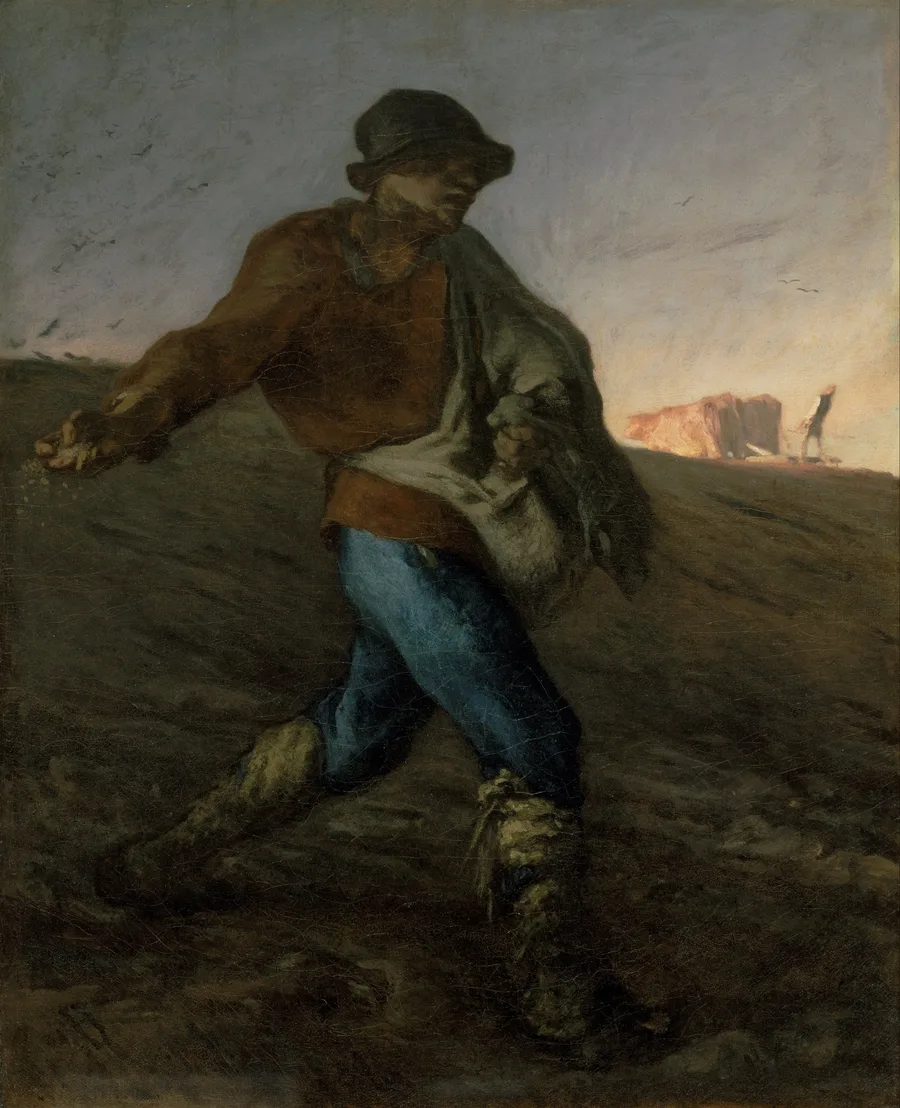
One has barely entered the exhibition before feeling in the presence of someone. Never have the living bonds that unite the work to the man and the talent to the soul, like flesh to skin, been revealed with more intimate evidence. Before one even thinks to inquire about his methods, to analyze his preferred techniques, or to follow the habitual gesture of his hand, one is already imbued with his thought, led as if by the conversation of a grave voice, a little slow, tranquil and emotional, full of certainty, tenderness, and authority. "Woe," he once said, "to the artist who shows his talent before his work. It would be very amusing if the wrist were to lead the way." And each of his works indeed reveals the constant harmony of his ever-virile thought, his ever-present will, and his ever-sincere emotion. With such documents, one could write the moral biography of a man without fear of error.
But we also have that unique collection of direct information, testimonies, and confidences piously gathered by the faithful Alfred Sensier and published by our colleague M. Paul Mantz in a beautiful volume from the publisher Quantin. Without entering into already known details, nor re-writing a biography written here in 1875, we would like to sketch in a few strokes the moral origins of this man, which determined the work that concerns us.