
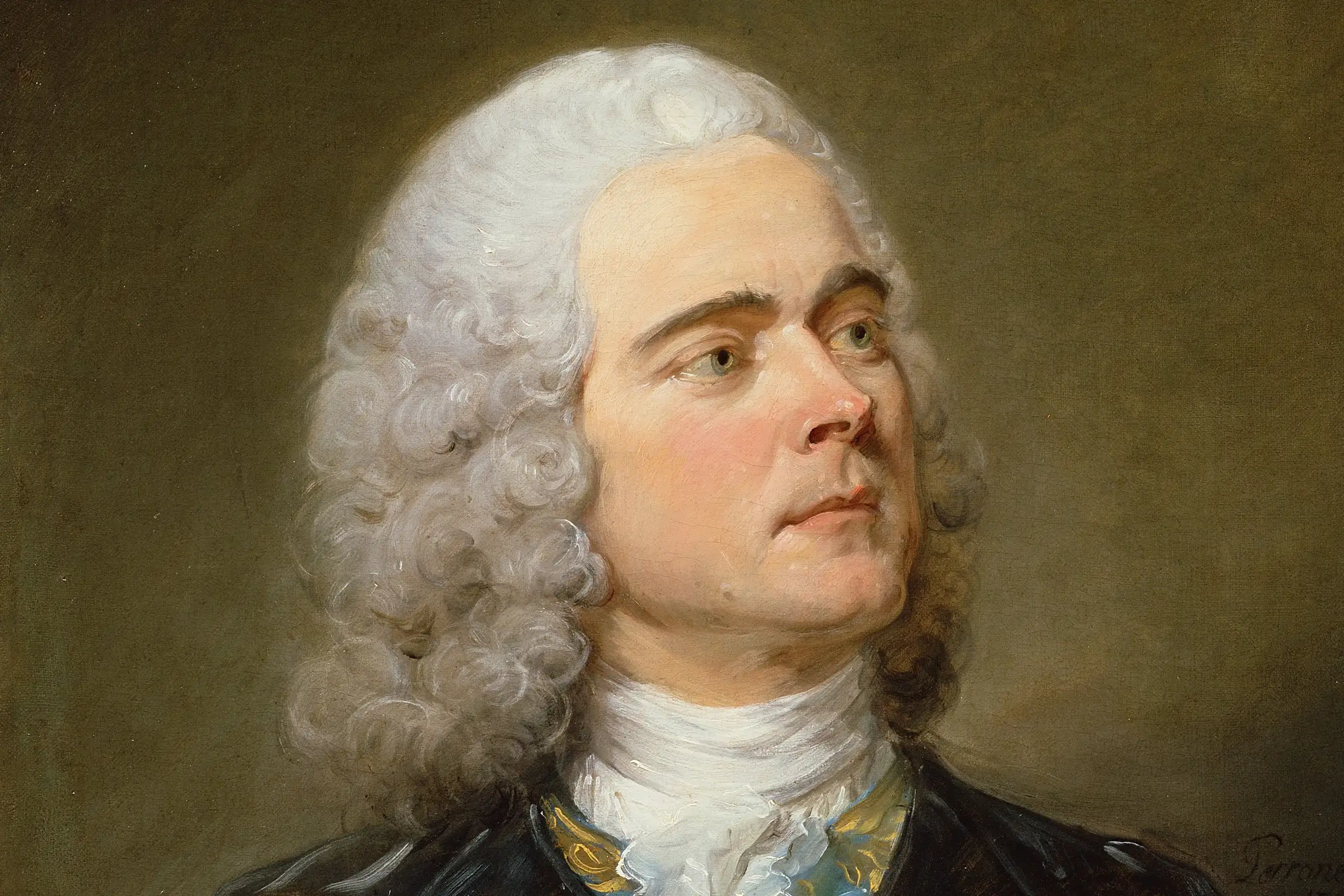
I was about fifteen years old when, during a visit to the Louvre, my father, after having me admire the pastels of La Tour and Chardin, led me to a portrait of a man in a grey coat and said: "Look, here is something that can boldly stand the comparison." I immediately looked for the signature and read on the frame this name: "J.-B. Perronneau (1715?–1783)." I questioned my father in vain; he knew no more. The catalogue of drawings from the French school had not yet been published, and Siret's Dictionnaire, as was its custom, maintained a prudent reserve. But this name, then obscure, lodged itself in my young memory and never left, and I promised myself that one day I would rescue from oblivion the man to whom I owed one of my first and most vivid pleasures as a connoisseur.
I would not have permitted myself to evoke this entirely personal reminiscence if it had not truly been the starting point for the research whose results I now submit to my readers. Will you forgive me for adding that I set to work at once? As one might imagine, a schoolboy's library could not offer much assistance. When, in my youthful enthusiasm, I pointed out to Charles Blanc the regrettable gap in his Histoire des Peintres concerning Perronneau, he replied with an axiom more convenient than generous: "De minimis non curat prætor" (The magistrate does not concern himself with trivial matters).
While the figure was not as insignificant as Charles Blanc claimed in order to rid himself of my importunities, it must be admitted that, apart from brief passages in the Salon reviews of the time, he had not occupied a large place in the writings of his contemporaries. Mariette never once did him the honor of transcribing his name in the margins of the Abecedario. Wille, his colleague at the Académie Royale who, according to Le Blanc, supposedly collaborated on Daullé's beautiful print after the portrait of the Marquis d'Aubais, does not mention him on any date in his precious Journal, not even on the occasion of the election of his successor, Nicolas Guibal. On that very occasion, the official registers grant him only a cold and belated mention. Only the Affiches of Abbé de Fontenay devotes a short notice to him, which was immediately copied by the Mémoires secrets.
In our own time, the Archives anciennes et nouvelles de l'Art français have cited Perronneau only because of his presence on the lists of academicians. M. L. Dussieux published as many as three editions of his Artistes français à l'étranger without granting a single line to a painter whom Abbé de Fontenay depicts as a sort of Wandering Jew of art, literally making him complete a tour of Europe. Thus, when M. Reiset published the second part of his work on the Louvre's drawings, he was forced, by his own admission, "to accumulate question marks" in the biography he had attempted to establish. But he paid tribute to the talent of the poor, unappreciated artist—a tribute all the more precious to me as it corroborated that of other art historians whose aesthetic principles were certainly very different.
Perronneau has neither the strength nor the marvelous truth of La Tour, he said, but his talent is fine and delicate. His manner is truly his own, and if all his portraits had been as beautiful as that of Laurent Cars, the poor painter would have become a formidable rival for the master of pastel... We have the firm hope that the works of an artist so cosmopolitan, so skilled, and so industrious, will gradually be rediscovered in France and in Europe and will bring honor to our school.
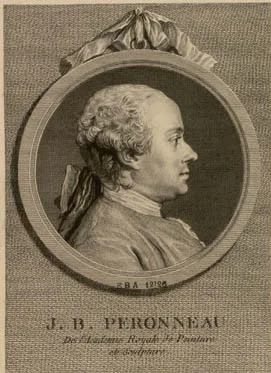
This hope is finally justified. For some years now, Perronneau has gained entry into elite collections, and while the fate of too many of his portraits remains unknown to us, the time has come to draw up an inventory of those that have been saved and classified. In sharing what I know, I especially wish to draw attention to what I do not know, and thus provoke those small discoveries that amply repay long labors. Until now, the task has been most arduous, for everything seemed to conspire to erase Perronneau's memory. Neither his wife, who remarried less than three months after his death, nor his sons, who long outlived him, showed for his memory that piety which, while sometimes mistaken about the very notoriety of the one it celebrates, is no less touching and precious as all direct testimony is.