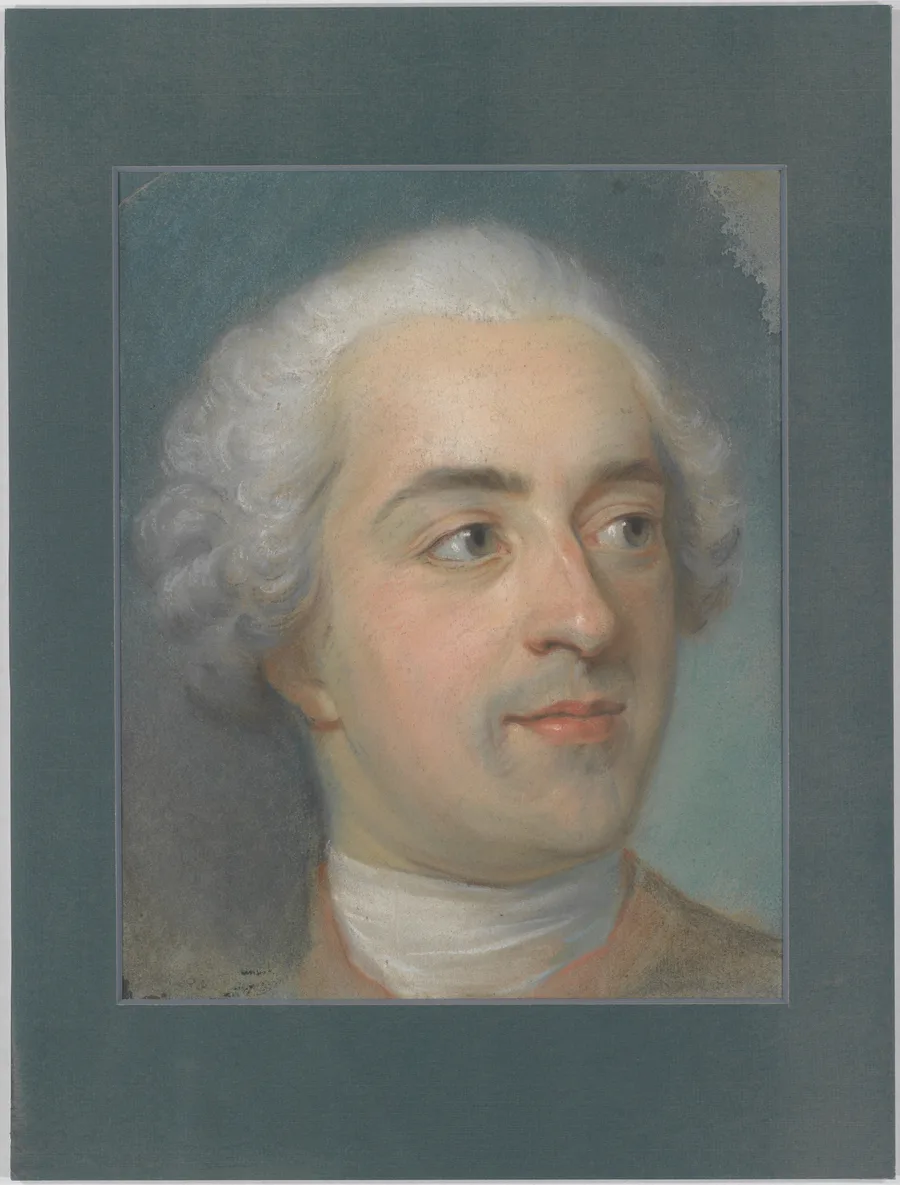
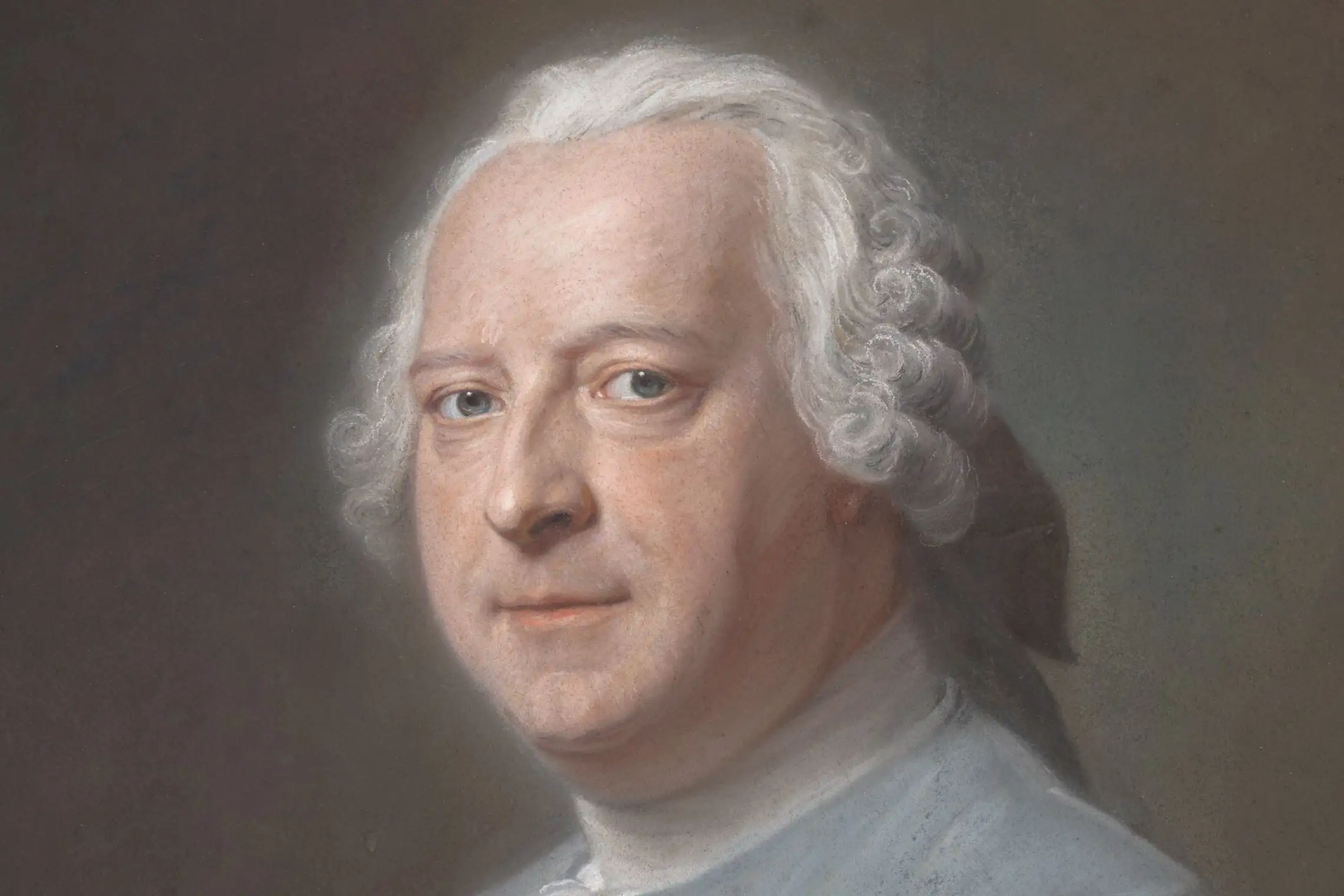
There is no one, among those interested in French art, who has not, at least once in their life, made a visit—I would almost say a pilgrimage—to that lovely Fervaques hall where the city of Saint-Quentin has gathered the eighty pastels by Maurice Quentin de La Tour.1 These works were bequeathed to the city by the artist's brother, known as Latour the Gendarme. There is no one, among these pilgrims of the beautiful, who, if they entered indifferent, did not leave a fanatic of this marvelous artist.
I remember as if it were yesterday the impression these delightful drawings made on me when I saw them for the first time in 1857, the year after the Museum's inauguration. That was twenty-five years ago: a quarter of a century! How time flies, and how old I am! I knew and admired La Tour's pastels in the Louvre and those attributed to him in the private collections of the time. I had read and reread the fine and just assessments of Mariette and the ill-considered and always misplaced praises of Diderot. I knew all the passages that his contemporaries devoted to La Tour's bizarre character, his singular escapades, and at times his unbearable impertinence. And so I entered the lovely little room of the Museum quite prejudiced against him, having privately resolved (in petto) to find La Tour an overrated artist whose masterpieces had been collected by the Louvre, and upon which one should be careful not to judge him if one wished to be fair.
I was on the road to Damascus. The effect was diametrically opposite and has persisted through several subsequent visits to the Museum of Saint-Quentin.
The Revelation of a Master
For more than a year, my admiration took on the character of an obsession, and La Tour became for me what Baruch was for La Fontaine. "Do you know La Tour? Have you seen La Tour in Saint-Quentin?" Such was the refrain with which I ended every discussion started with willing listeners. I was struck by the fertility and flexibility of his talent, the precision of his drawing, the unique alliance of modeling with the elusive charm of color, and the prodigious ease with which he rendered either the charm of a woman—especially the woman of the 18th century—or masculine vigor and accent.
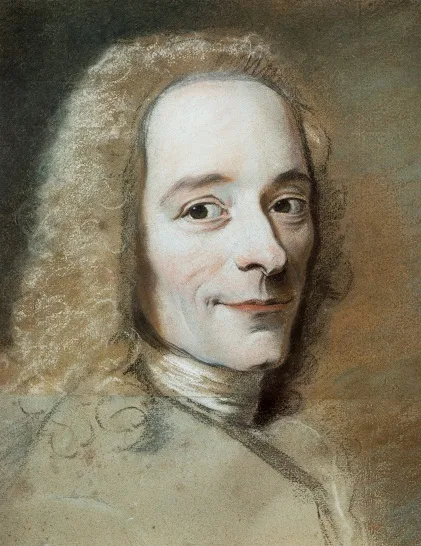
He gave each subject its particular character, modifying and adapting his execution according to whether he was rendering the face of the King, his mistress, a princess, an abbot, a financier, a warrior, an encyclopedist, or an opera singer. He animated with a life just as intimate but in no way identical the features of the Maréchal de Saxe, the Dauphine, d'Alembert, Jean-Jacques Rousseau, Grimod de la Reynière, or Mademoiselle Fel. After two hours of examination in that hall, I was amazed by the merits that, ten years later, the great master on these matters, M. Reiset, enumerated in the Notice des dessins du Louvre (Part 2, p. 349).
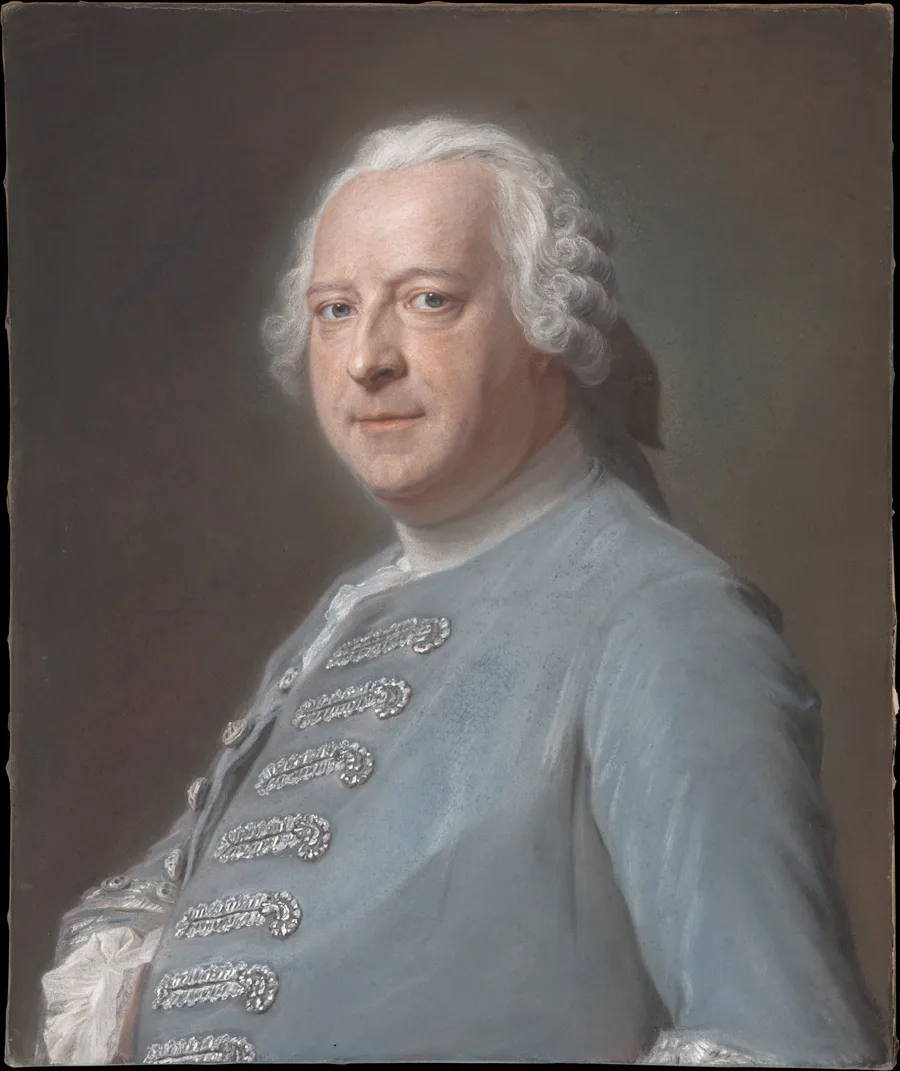
I was amazed by this coloring, so vigorous and so true, by these striking resemblances, by the piquant and ingenious ideas that each new portrait presented. The artist drew no inspiration from any school; he was attached to no master, ancient or modern; nature was his only guide and his only goal. He knew how to capture and render it with a reality that pastel had never led one to suspect, and that oil painting had rarely achieved. Whether it was a young and graceful woman or an old man laden with wrinkles, a philosopher or an artist, a prince or a magistrate, he found the most just and suitable pose, the details and accessories made for the subject, and masterfully overcame all these difficulties. Youth and beauty brought out the freshness and brilliance of his palette; the portraits of serious men, skillfully composed, highlighted the penetration of his mind; all testified to an exact and sure drawing, a true originality, and a surprising skill.
Time has not weakened this impression. La Tour seems to me to have been, for his era, exactly what Titian was for the world of Charles V, Clouet for that of Charles IX, Van Dyck for that of Charles I, and Rigaud for the end of Louis XIV's reign: the master of elegance, the magician who lights the spark of life in the eyes of the figures who pose before him.
He took up and continued the French tradition of the creators of crayons (chalk or pastel drawings) who, from the Clouets, through the Quesnels, the Dumonstiers, the Vivens, the Corneilles, the Nanteuils, and the Lagneaus, have transmitted to us the physical and moral physiognomy of the two greatest centuries in the history of France. La Tour was a sad character: he lived three-quarters mad and died completely so, but he was a great artist who had received the Muse's kiss. This is what my visit to the Museum of Saint-Quentin had just revealed to me. I have not forgotten it, and I am still under its spell.
The Challenge of Reproduction
One of our best young etchers, an engraver with a witty and brilliant touch, an artist whose talent and reputation grow with each Salon of engraving, M. Lalauze, has evidently experienced the same impression. He has conceived the idea of reproducing each of the eighty-three pastels of Saint-Quentin with the etching needle. The idea presents itself naturally, and M. Lalauze's mind is not the first in which it has germinated.
But, despite all his goodwill and undeniable talent, one may ask if it is as easily executable as it seems at first glance. For my part, I doubt it. Is there any relationship between the interpretive process and the object being interpreted? Do the sharp, precise, and hard edges, the accentuated contrasts of etching, lend themselves to rendering the colors of pastel, which proceed by half-tints, resolving into elusive nuances where light plays as it does on the neck of a pigeon or the wings of a butterfly? Whatever talent, whatever skill in using the resources of one's art one may be endowed with, can one manage to resolve this difficulty? Is it not to enter a struggle where the chances are not equal? I fear so; and I add at once that if anyone can even the odds, it is unquestionably M. Lalauze. A thousand picturesque publications, each more successful than the last, are there to prove it.
A Critique of the First Etchings
M. Lalauze has already published the first installment of his work. This installment contains etchings of the portraits of Quentin de La Tour himself, J.-J. Rousseau, Madame de Pompadour, Mademoiselle Fel (the painter's so faithful and touching friend), Mademoiselle Camargo, Louis XV, Madame Favart, M. de la Reynière, and Madame de Mondonville. It is difficult to be more exact in the interpretation of the figures' modeling, to give more accent to the facial features, more life to the eyes, or to modify the work of the needle with more flexibility according to the particular type of each character.
Wherever strength and character are required, the execution is flawless. The portrait of d'Alembert is a masterpiece that cannot be praised too highly. But is it the same when charm must dominate? For example, in the portrait of Mademoiselle Fel, has the engraver truly conveyed to the spectator's eye the devilish grace, the inescapable seduction that emanates from that frame? It is true that the portrait of Mademoiselle Fel is, along with Leonardo's Mona Lisa and Reynolds's Nelly O'Brien, the third face that, to my knowledge, cannot be interpreted by engraving; but it is no less true that we can hardly judge the character of La Tour's work from M. Lalauze's.
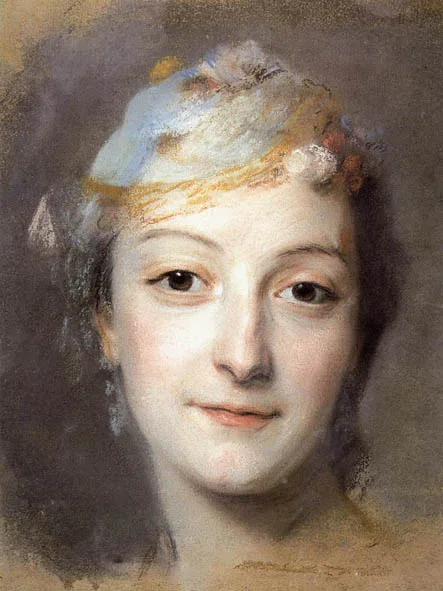
Furthermore, the portrait of J.-J. Rousseau and that of Madame de Mondonville do not have the same intensity of originality; they are charming as etchings, but do they render the character proper to the originals? Who would dare to answer affirmatively? I repeat: it is not the artist's talent that I contest, far from it; I have long been one of his fervent admirers. It is the instrument itself that seems ill-chosen, and I fear it will not live up to all the artist's goodwill or all the public's just demands.
An Unsurpassable Original
"You are very hard to please," I will be told. That is perfectly true; I am undoubtedly too much so. And since I am in a confessing mood, I will make two more admissions. If I were asked which of the engraving processes—drypoint, etching, aquatint, lithography—seems to me the most suitable for properly interpreting La Tour's talent, I would answer plainly: None of them. If one were to add, "Is the public therefore condemned, if it wants to get an accurate account of La Tour's talent in its full extent, to make the trip to Saint-Quentin?" My God, yes.
However, as one must be fair above all, I add that, judging by the ten portraits already published, there is a greater chance that the continuation of this publication will prove me wrong than right, and that M. Lalauze will overcome the difficulties of the heavy task he has set for himself. Even if he were vanquished by them, it would still be glorious to have attempted such a struggle. Whatever happens, M. Lalauze will leave behind him what can be called a true work, in the full sense of the word, and he could place upon it the epigraph:
I will at least have the honor of having attempted it.
CLÉMENT DE RIS