
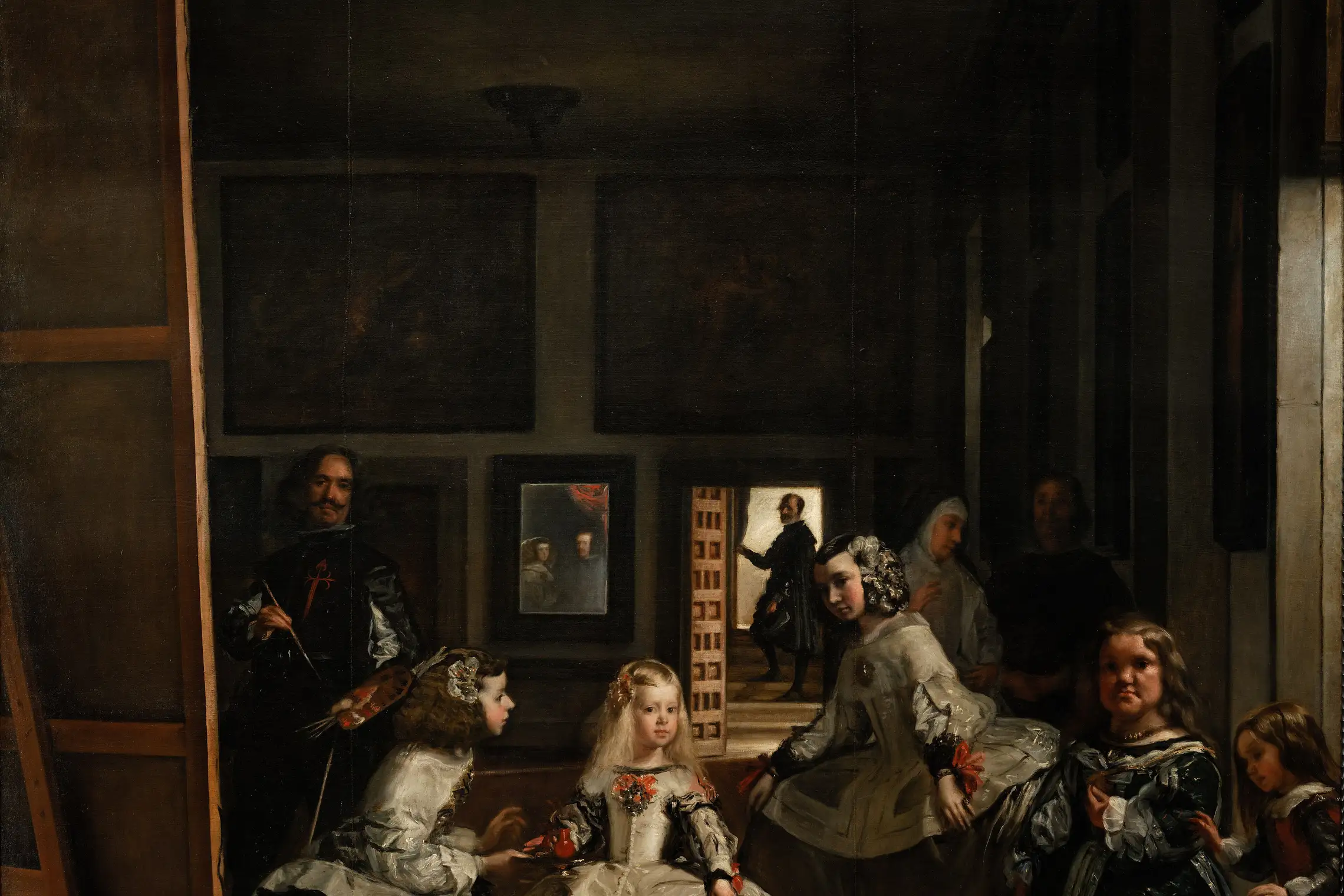

Last September, M. Paul de Saint-Victor and I traveled to Spain to see the one great European museum we had not yet visited: the Prado Museum in Madrid. To be truthful, it was Velázquez who drew us there, almost single-handedly, as the other Spanish painters were already sufficiently known to us. One can form a fair idea of them without undertaking the journey; but Velázquez, or so we believed, could only be judged in his own home.
The Landscape of Velázquez
One has barely left the Basque provinces and set foot on the soil of Old Castile before feeling oneself in the land inhabited by Velázquez's models. The landscape is bare, scorched, and deserted, much like the background of almost all his paintings. A shrub is a rarity; a human being, an exception. A few hovels appear from time to time, with no one to be seen before them, seeming only to deepen the solitude of these provinces.
One must love painting with a robust passion to travel eighteen leagues through such a country in a diligence that leaps over dreadful roads. It is true that one is carried along by twelve mules, drunk with speed, chased by three or four postilions, drunk with fury, who run on foot as fast as the animals, overwhelming them with blows, shouts, exhortations, caresses, and insults.
Thus jolted repeatedly between two sections of railway, we arrived in Madrid, overcome with fatigue, devoured by dust, battered, exhausted, and aching. An hour later, however, we were at the Museum.
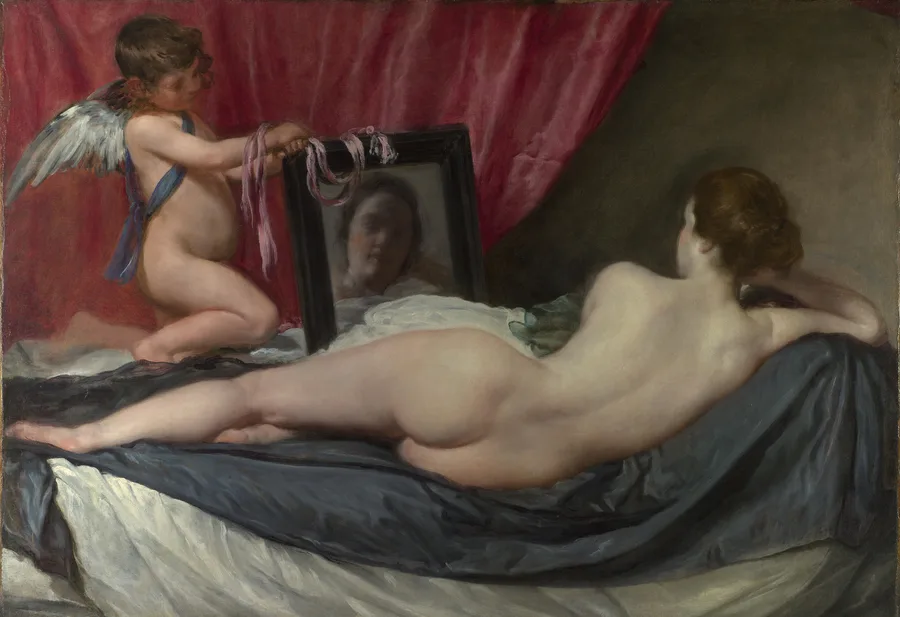
The joy we felt at reaching the object of our desires was, for me, slightly troubled by a secret feeling of anxiety. Having written the life of Velázquez in the Histoire des Peintres, I feared I had not appreciated him at his true worth. Before composing his biography, I had certainly seen superb pieces by his hand in Brussels, in the gallery of the Prince of Orange; in London, at the National Gallery and at Lord Ashburton's; and finally, in Paris, in the Spanish Museum of the Louvre.
However, I knew the great equestrian portraits of Philip IV and the Count-Duke of Olivares, the painting of The Lances, The Spinners (Las Hilanderas), and that other famous painting called Las Meninas only through lithography or engraving. Thus, as I made my way to the hall dedicated to these masterpieces—a space in Madrid equivalent to the Tribune in Florence or the Salon Carré in the Louvre—I felt a dual emotion: I was delighted by the marvels I was about to behold, yet trembled at the thought of having perhaps spoken of them poorly.