
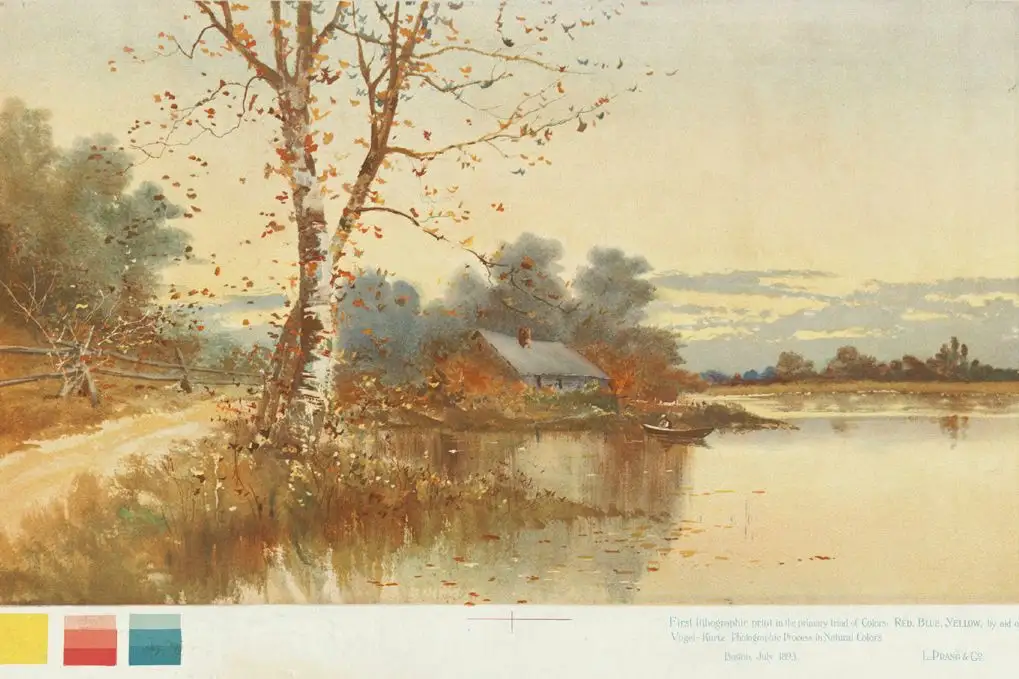
The art of color illustration, which has undergone such considerable development in recent years, is a very recent art in its practical applications. Its modern form, capable of faithfully reproducing paintings and watercolors, relies on a scientific method that combines optics, photography, and mechanical engraving. This process, known as trichromy, achieves a full spectrum of color through the precise layering of just three primary inks.
The Dawn of Color Illustration
Barely thirty years ago, line photoengraving, followed by halftone engraving—which allowed for the mechanical reproduction of wash drawings—had already revolutionized the art of the book. Wood engraving, the only method used until then to translate the compositions of artist-illustrators, was gradually abandoned for a process that, while certainly less artistic, was also infinitely less costly and much faster. Illustrated books multiplied as soon as these new methods made it possible to fill them with an economical profusion of illustrations, lending them a charm previously unknown.
Color, little by little, began to timidly emerge. Around 1880, we see the first attempts. Gillot, the engraver to whom photoengraving owes so much, produced several books illustrated and engraved in color at this time. Two of them were adorned by Eugène Grasset with compositions of a completely new aspect, and their appearance marks something of an epoch in the history of the book.
Le petit Nab presents us with beginnings that are still clumsy, though interesting. Subsequently, the beautiful edition of Les Quatre Fils Aymon, which has remained famous, shows the process gradually gaining confidence in its own strengths and discovering the new resources it contained.
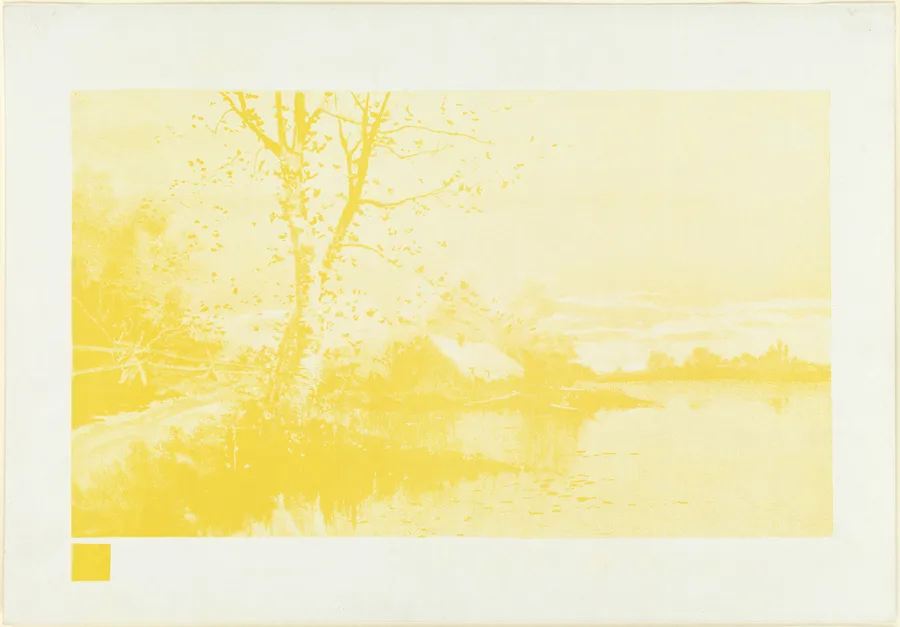
But given the state of photoengraving at the time, and although this new process was rapidly improved, the limits assigned to it were quickly reached. Moreover, this was not yet a direct process for color engraving. The yet-unachieved ideal was to be able to reproduce any enhanced drawing, any watercolor, any painting presented, through a succession of photographic and mechanical operations with the least possible intervention from the photoengraver's hand. The method then employed was very far from this result. It consisted of the following steps:
The artist would first create a line drawing of their composition with a pen on white paper. The photoengraver would make a standard line plate from this and pull proofs, which were given back to the artist. On these proofs, the artist would apply their watercolor, which necessarily had to be simple and consist mainly of flat tints.