
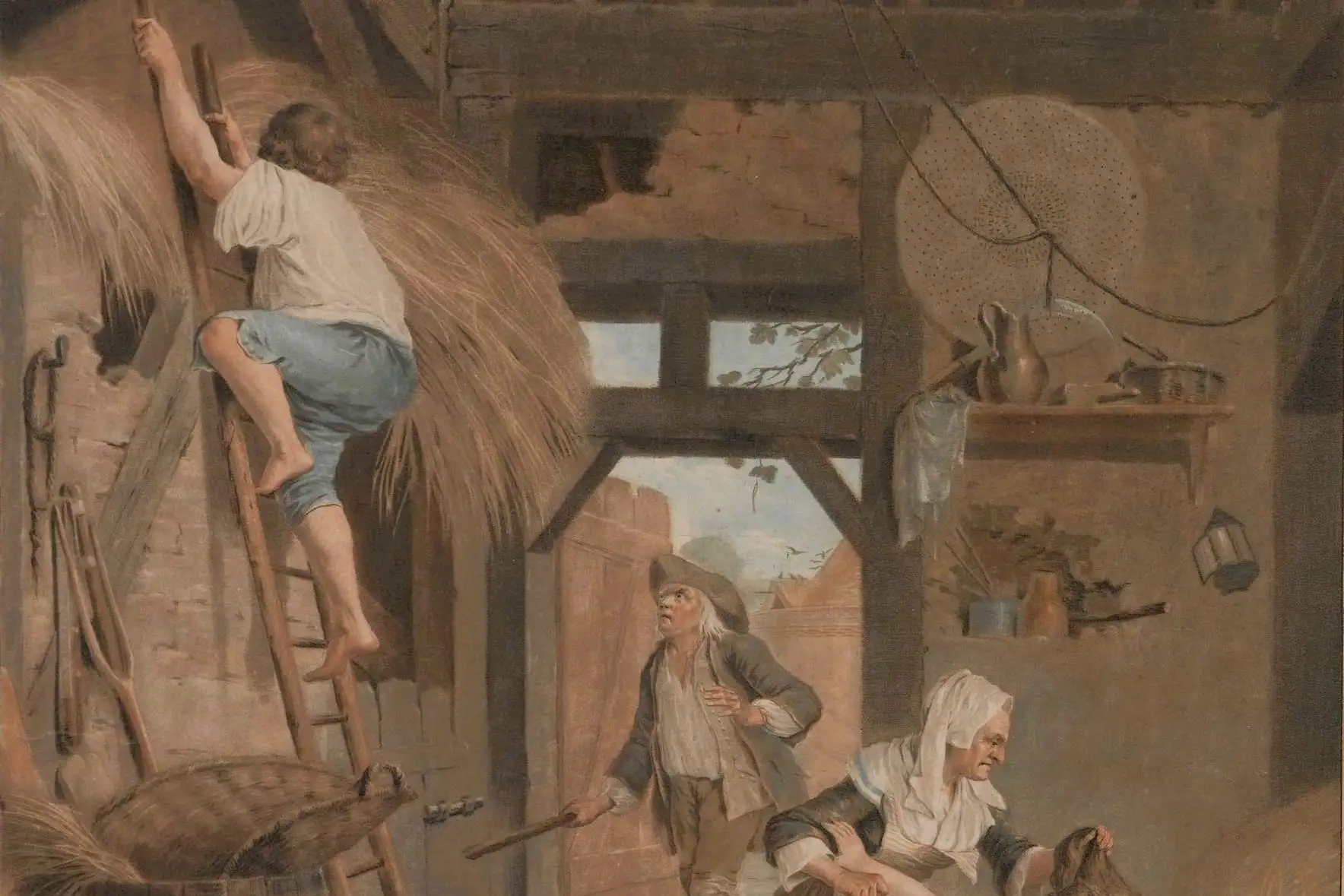
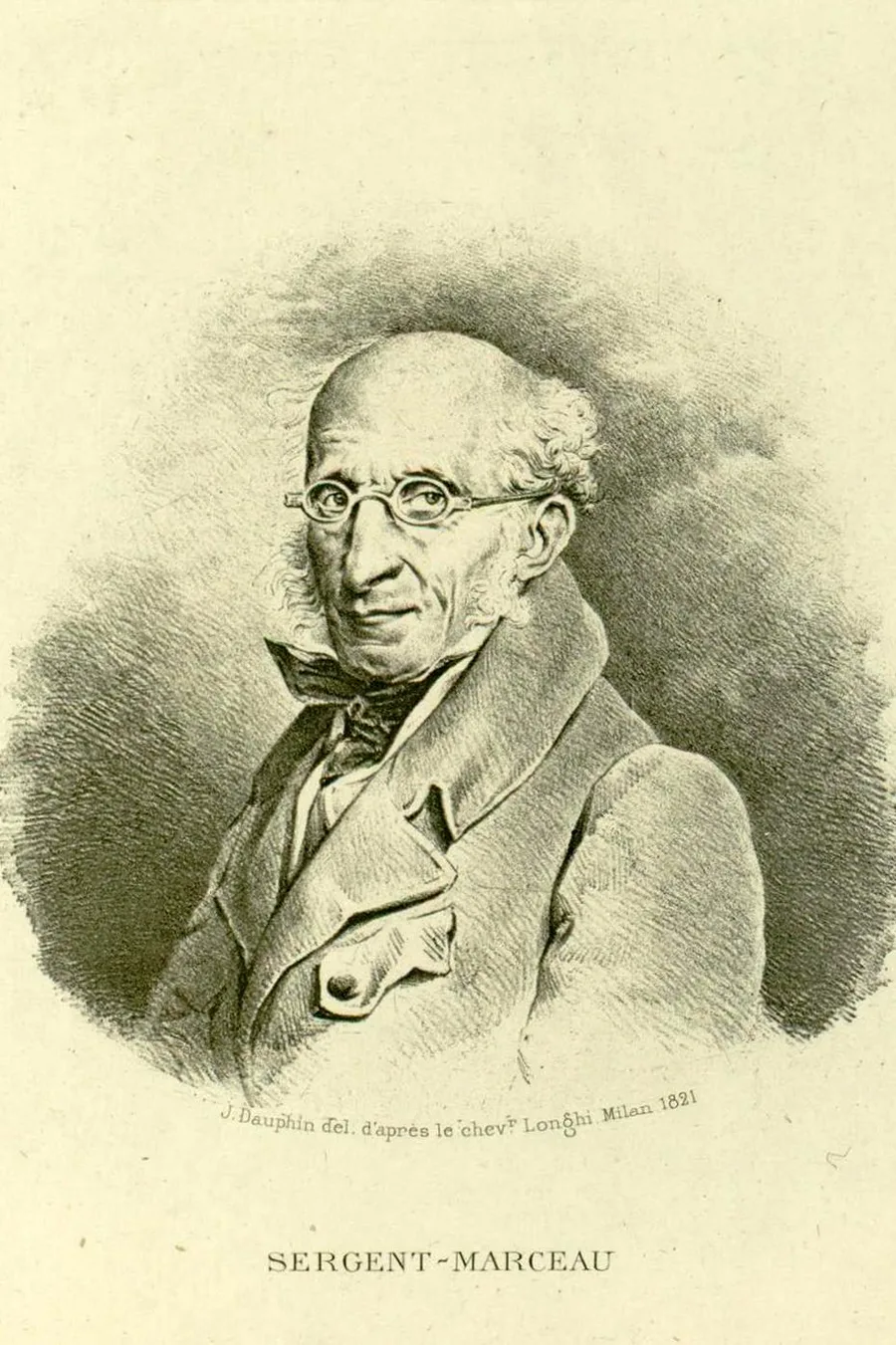
Towards the end of his life, Sergent published his intimate memoirs, Fragment de mon album et nigrum. He signed it: Antoine-François Sergent-Marceau, "artist, engraver, man of letters, member of the Athénée de Brescia, former member of the Convention, deputy of Paris, creator of the Museum of Painting and Sculpture." And yet, despite all these titles, to which he even added "aged 87," his name and especially his work are very little known.
He has been treated with considerable neglect. The day after his death, Noël Parfait published a biographical study in a Chartres newspaper, a tribute that was a somewhat too obvious product of his admiration, but a conscientious collection of accurate documents. Later, H. Herluison and P. Leroy published a more specifically artistic study, interesting for the letters it included, written during Sergent's exile in Italy. But apart from them, no one has been tempted to dedicate a comprehensive work to this artist.
Historians of engraving, on the other hand, have paid him some attention. Renouvier reserves a laudatory page for him. While Duplessis is severe in his judgment, M. L. Rosenthal, without taking his admiration too far, does him approximate justice. It is Baron R. Portalis and M. P. Beraldi who have studied him most extensively. In truth, their investigation did not cover the entirety of his work, and it also contains some errors. Besides, for some unknown reason, Sergent has had bad luck with almost everyone who has written about him.
A Neglected Legacy
A catalogue raisonné of Sergent's work has yet to be compiled. The only real attempt, by Baré in the Bulletin des Beaux-Arts, which follows N. Parfait's Notice, is not methodical, is sometimes erroneous, and is incomplete. The majority of his surviving engravings are held at the Cabinet des Estampes (Department of Prints and Photographs) at the Bibliothèque Nationale. However, the library of Chartres preserves some that are missing from the national collection. The library of the Société archéologique d'Eure-et-Loir holds a fragment of the city map drawn by Sergent. Finally, private collections still contain more drawings, watercolors, and pastels than one might think. Compiling this catalogue would require extensive research.
Sergent has been criticized for not being very prolific, a point made by Duplessis, Portalis, and Beraldi. To the extent that this opinion is not false, the shortcoming seems excusable. Sergent-Marceau spent some of the years of his maturity not engraving and drawing, but taking action. As a municipal officer in Paris and then a deputy to the Convention, he turned his energy toward administration and, above all, toward the organization and defense of the arts. He is not given enough credit for the numerous initiatives he undertook or prompted, some of which were of the first importance. He knew how to show both taste and courage at a time when the former was quite rare and in circumstances where the latter was rather dangerous.
M. L. Rosenthal wrote that Sergent was a man of "excessive temperament as well as an excellent artist." He was indeed a passionate man. But he was passionate in everything except his art. His "sensibility" cannot help but amuse us today, for it led to a most unusual sentimental life. He loved his Emira for about eighty years, and he loved her at once like a burning schoolboy and like a character from Diderot who grows tender with great solemnity. Not only did he draw the "charms" of this virtuous wife, but he could not resist describing them, accompanying his description with a commentary of savory and indiscreet candor.