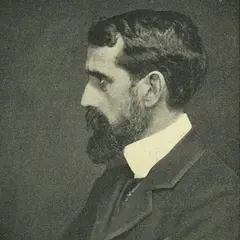
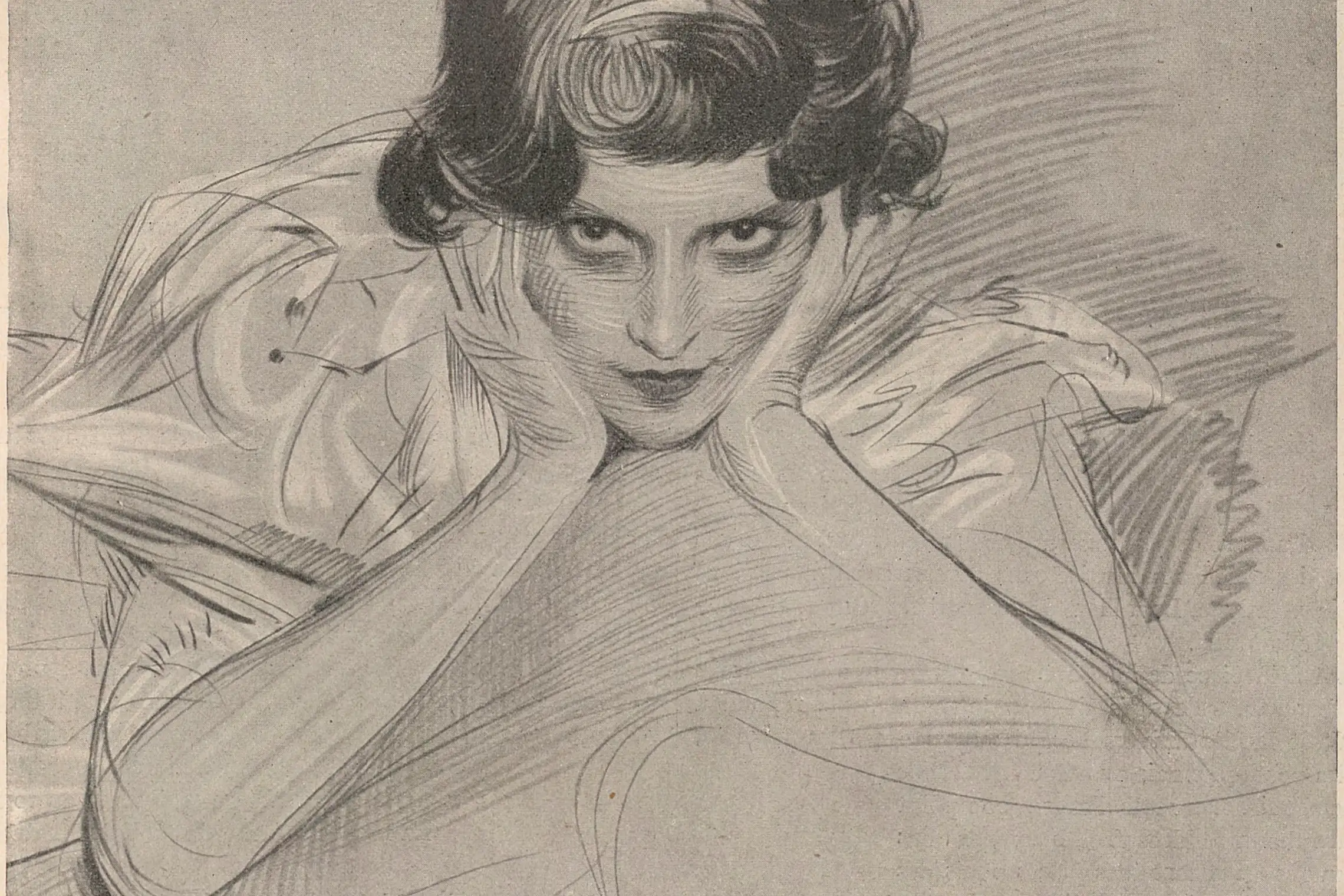

Paul César Helleu, a delightful artist, plays with promise as he does with his drypoint needle—that is, with such grace that one could hardly hold it against him for not having kept it. I do not know him; I have never seen him. This has not prevented him from being a masterful creator, nor from making a certain pledge.
For Helleu swore to the Cabinet des Estampes that he would give it his work. This exquisite, charming body of work, which only the fortunate of the world have the leisure to possess, is what official repositories can only hope for, unable as they are to compete with American billionaires. And in a breath, between two pretty faces glimpsed and sketched on the fly, the artist forgot the long, somewhat dark gallery where Cardinal Mazarin presides.
Perhaps he thought that all the rays of sunlight that had emerged from his hands, all the pretty, fresh, and brilliant butterflies he had fixed on paper, would find themselves in old-fashioned and smoky company there. He may have felt the time had not yet come to retire there, to await later resurrections. For Helleu's art is of the present hour, of the fleeting instant; it is a momentary brilliance. After two years, he himself would say, this whole coquettish and dapper microcosm has lost its bloom. The smocks have become ridiculous; the hats, the leg-of-mutton sleeves, the giraffe-style combs have all become old, old, obsolete, odious.
A similar story was once that of the divine Watteau, of Boucher, and even more so of Moreau le Jeune. When David, after the Revolution, saw again the marvelous plate of Les Petits Parrains or that of La Grossesse, he would burst into a mad rage. It was a bad time for these masterpieces, which have since enjoyed a singular revenge. Monsieur Helleu will share this destiny, and when he is revived, it will be through the Cabinet des Estampes, where the marvels that the artist will surely give it one day will have been kept intact.
The Chronicler of a Fleeting World
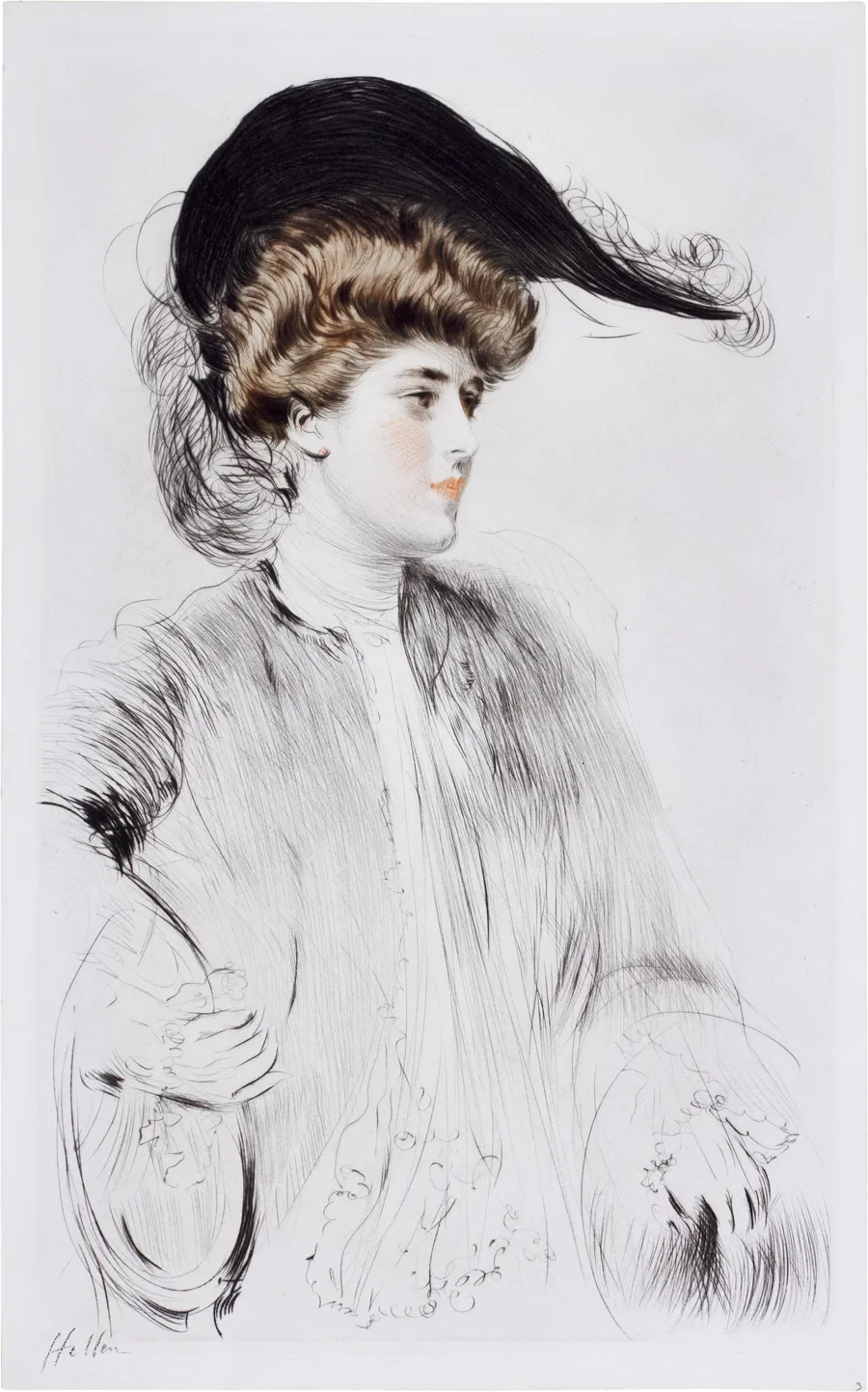
Doubtless, he is not the first to have had the idea of finding his contemporary adorable and worthy of portrayal. But he adores all ladies, and since the figures he has drawn of them on paper have a dated costume, and since this costume and especially the hairstyle go out of fashion, he restyles the ladies to the taste of the moment! One must imagine that, however far back we are in the mists of time, under Louis XIII, in the great era of the beautiful Mademoiselle de Hautefort, when the Three Musketeers were rampant, Monsieur Helleu received an atavistic teaching from Dumonstier.
From nearly three centuries ago, a kind of hereditary transmission of a tendency has come down to him, passing through a host of other gentlemen—sometimes lesser, often more considerable than Dumonstier. It is a taste that is essentially French: gallant, perfumed, dandyish, perhaps a little foppish at times, but in any case, infinitely gracious and light. I dare not speak of Watteau anymore; the comparison has truly been overused with regard to Helleu. Pleasant approximations have been made, much wit has been displayed, but if Helleu ended up looking at Watteau quite closely, he did not begin with that guitar.