Modern Japanese individuals, who come to France to learn our language and so rapidly assimilate Parisian customs, do they read our 16th-century authors? I hope not, for their respect for our historical knowledge would be singularly diminished. They would be quite scandalized to learn from Montesquieu that their compatriots are an obstinate, capricious, determined, and bizarre people, who defy the rigor of the laws with the atrocity of their customs, and are ready to slit open their bellies "for the slightest fancy" (The Spirit of the Laws, VI, 13).
If they moved on to Voltaire, they might feel a bit more reassured. "I do not know why," says the author of the Essai sur les mœurs (chapter 142), "the Japanese have been called our antipodes in morality... They differ from us, in morality, only on their precept of sparing animals." But what follows is less fortunate; one finds there the singular opinion that the arts of the mind and hand are in complete decline in the Far East. There is no salvation outside the countries where Bramante and Michelangelo built, where Raphael painted, where Newton calculated, where Corneille and Racine wrote. "The other peoples are, in the fine arts, but barbarians and children, despite their antiquity and despite all that nature has done for them."
Voltaire was unlucky, for it was precisely in the 17th and 18th centuries that the greatest flowering of the "arts of the hand" took place in Japan.
A Newfound Appreciation
Our fin de siècle has been kinder and more just toward Japan; it is in the process of bestowing upon it the honors of a veritable apotheosis. One of our most cherished writers has dedicated several travel volumes to the country, mixing a religious respect for its temples and idols with more profane attentions toward the charming mousmés (young Japanese women). He recounts with emotion the death of the forty-seven Samurai who killed themselves after avenging their assassinated lord, and he teaches us, while piously plucking a chrysanthemum from their tomb, that a Japanese gentleman does not slit his belly open lightly, as Montesquieu would insinuate.
His books are on every table, next to trinkets and ivories from Kyoto or Edo.
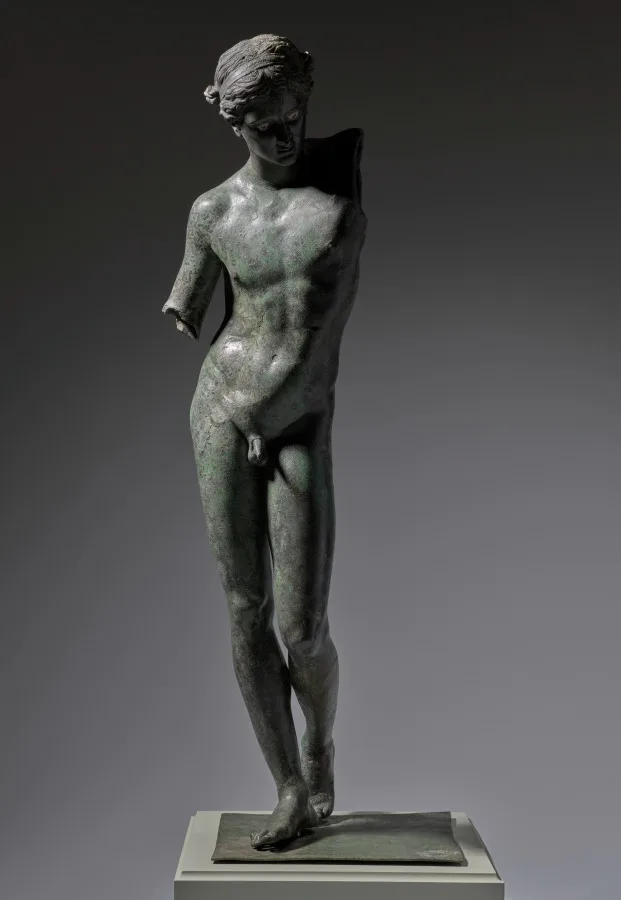
Japan has been systematically harvested; everything that could be bought—albums, bronzes, pottery—has been exported. Shops are filled with these items, and they adorn our mantelpieces and shelves. Perhaps there is some infatuation and passing fashion in this rehabilitation, but the movement is, at its core, sincere and laudable. We now realize that the Japanese have created artistic formulas that are absolutely original and exquisite, combining the surest taste with the most whimsical imagination, and realizing the dreams of poets in tangible form. Our curiosity, eager for new sensations, turns toward them; the current generation is completely under their spell, and will undoubtedly remain so for many years to come.