Ancient Greek Art
1 articles
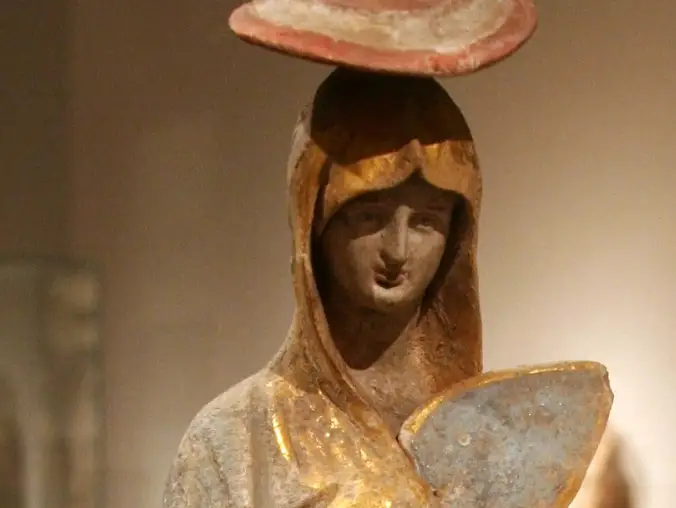
Emerging from the Greek Dark Ages around the 8th century BCE, Ancient Greek art, deeply rooted in its Minoan and Mycenaean antecedents, flourished as a profound expression of a civilization marked by radical political developments, increased prosperity, and unparalleled intellectual achievements in philosophy and literature. Its defining characteristic lies in the relentless pursuit of an idealized, naturalistic depiction of the human form, particularly the nude male, emphasizing proportionality, balance, and aesthetic perfection, a concept termed Anthropocentrism. Across the Geometric, Archaic, Classical, and Hellenistic periods, artists such as Phidias, Polykleitos, and Praxiteles evolved from rigid, stylized figures to dynamic compositions that captured movement, emotion, and unparalleled grace. This remarkable stylistic progression, exemplified by masterworks like the Parthenon, the Doryphoros, and the Aphrodite of Knidos, established a visual language that would profoundly influence Roman art and fundamentally shape the trajectory of Western art history, from the Renaissance to the modern era.