
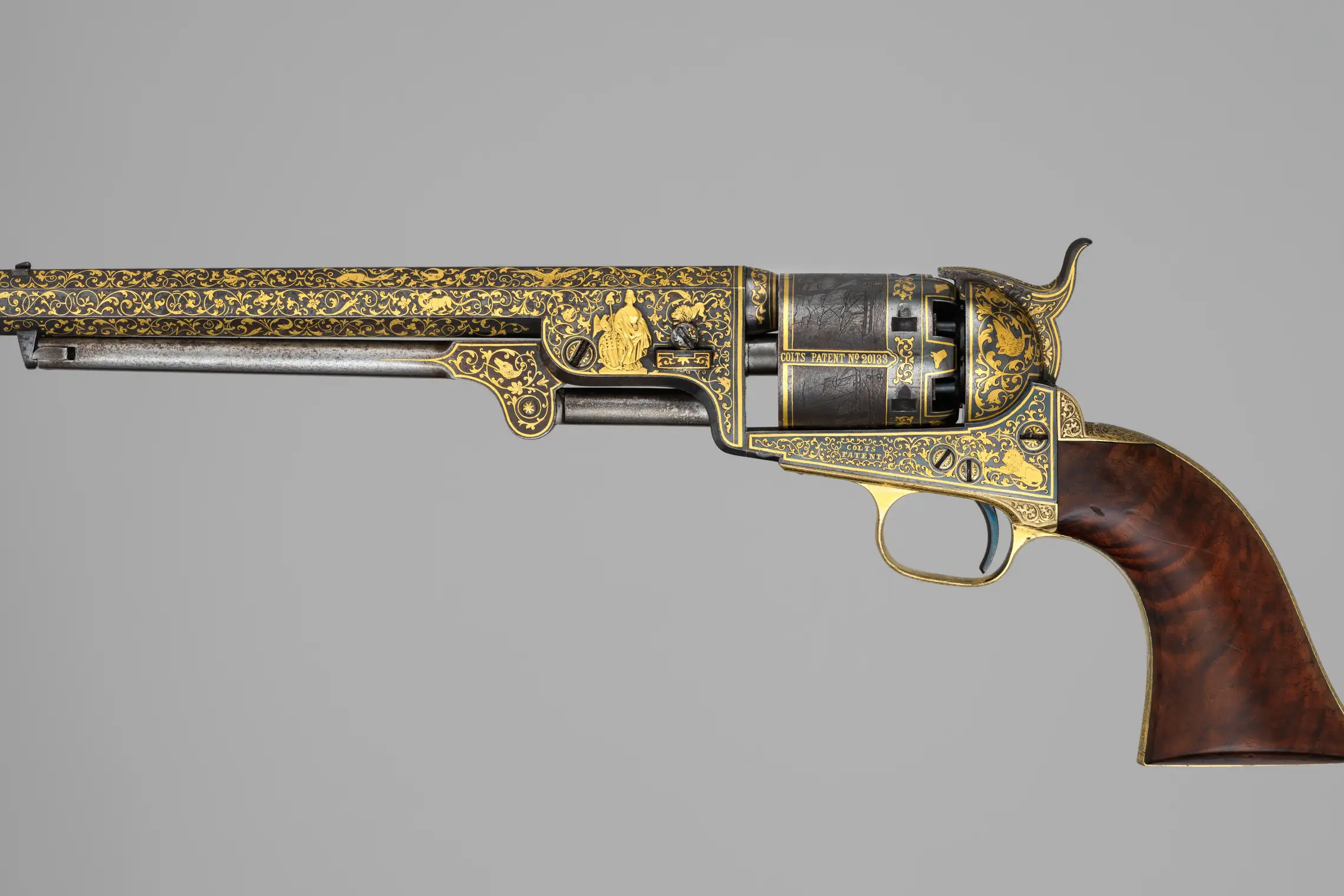
Damascening is the art of inlaying one metal into another in the form of fine threads or ornaments which, when hammered and sometimes riveted, become one with the metal being decorated. In practice, the damascener is limited to inlaying gold or silver onto the surface of iron, steel, bronze, and occasionally, as in jewelry, aluminum. This system of ornamentation, particular to the East, takes its name from the city of Damascus in Syria, from which many damascened objects were introduced to Europe during the Crusades, and where Arab damasceners brought the art to its ultimate perfection.
But let us not get ahead of ourselves, and instead examine this art from its beginnings. The taste for mixing the different tones of metals has been evident since the most remote antiquity. The peoples of the East, who were always so skilled at seeking the effect produced by their contrast, undoubtedly provided Europe with the first models.
The Ancient Origins of Metal Inlay
Homeric descriptions provide proof that the juxtaposition of differently colored metals was appreciated even in that era. As Mr. E. Saglio notes, in the art preceding the classical period of Greek art, one can find bronzes adorned with inlaid gold threads.1 Such is the case with the gold-inlaid bronze sword in the Copenhagen Museum. Furthermore, the doors of the Memnonium, or temple of Memnon, in Egypt, were furnished with bas-reliefs of "Asian copper" with gold inlays. At the 1867 Exposition Universelle, the hinges from the doors of the temple of Tanis were displayed; they were made of bronze adorned with fine silver inlays, as was the dagger found in the tomb of Queen Aah-Hotep (1703 B.C.). The cutting edge of the weapon was gold, surrounding a central blade made of a blackish bronze, upon which inlaid inscriptions and figures stood out.
From the highest antiquity, various kinds of inlay seem to have been practiced equally in Assyria, India, China, and in almost the entire East. Philostratus reports, in his Life of Apollonius of Tyana, that the philosopher, after crossing the Indus and arriving at Taxila, capital of the ancient kingdom of Porus, visited a temple at the city gates. Inside were bronze tablets where "the great deeds of Porus and Alexander were represented in orichalcum, in silver, in gold, in black bronze; one could see elephants, horses, soldiers with their helmets, their lances, their javelins, their swords all in iron—like a famous painting where the hand of a Zeuxis, a Polygnotus, or an Euphranor would have delighted in rendering the effects of shadow and light, the atmosphere, the projecting and receding planes, so much did the materials here employed have the transparency and blending of colors." These pictures were executed after the death of the Macedonian conqueror, but what is said of their perfection attests to a consummate experience in an art that had long been practiced.
The Craft in Greece and Rome
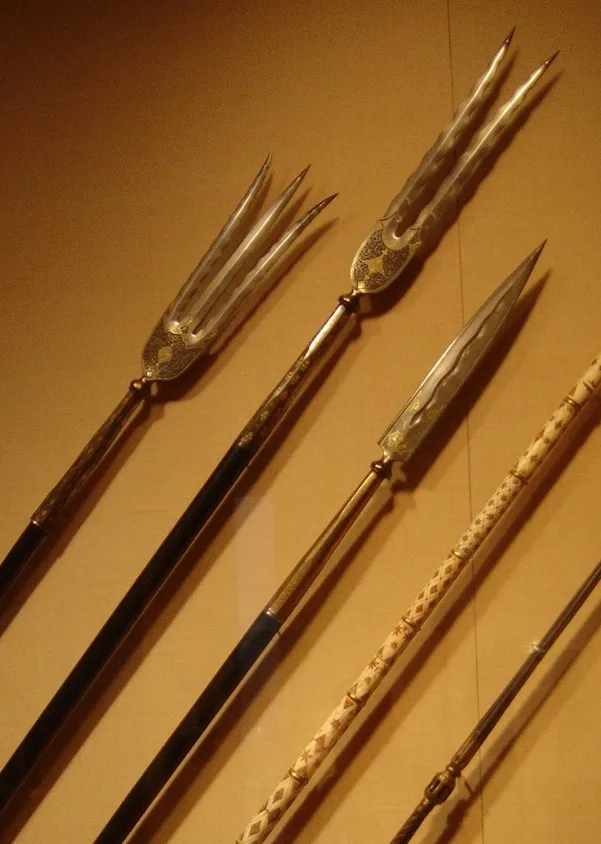
Through models from abroad, Greece thus became acquainted with the art of tracing ornaments on metalwork using damascening techniques from a very early time. But it was only later, adds Mr. Saglio, that Greek artists applied themselves to these kinds of works, as demonstrated by a copper vase plated and damascened with gold and silver, found in Hungary and preserved in the museum of Pesth.