
On the 16th of this month, one hundred years will have passed since the Queen of France ascended the scaffold. In observance of this centenary, others have recounted the life and final moments of Marie-Antoinette. We do not wish to repeat their accounts. It is fitting on this occasion, however, to recall the tastes of this unfortunate queen. Without undertaking a complete study of her artistic role or retelling the story of her life, it is possible to contribute some new elements to the history of the arts at the end of the 18th century, elements with which her memory is intertwined.
The most curious documents concerning Marie-Antoinette are now known, and those that remain unpublished are not of a nature to significantly alter the judgments of history. Yet, by constantly delving into old papers, one sometimes manages to find overlooked items whose interest, though limited, remains keen for those who know how to appreciate them. Such is our case here: to offer the readers of the Gazette des Beaux-Arts the first look at these documents is the purpose of this article.
The Dauphine's Arrival and a Legendary Gift
Marie-Antoinette's arrival in France was a true triumph. She was still a child, not yet 15 years old. She was not yet as beautiful as she would later become, but she was found to be charming, gay, cheerful, carefree, and amiable; in a word, she possessed all the graces of childhood.
The people of Paris, in particular, were infatuated with their new Dauphine. One recalls the famous words of the Duke de Brissac, gesturing to the crowd acclaiming the princess: "Madame, you have there a hundred thousand lovers." Alas, those lovers of that moment would, twenty-five years later, form a very different procession for the queen as she traveled from the Conciergerie to the scaffold.
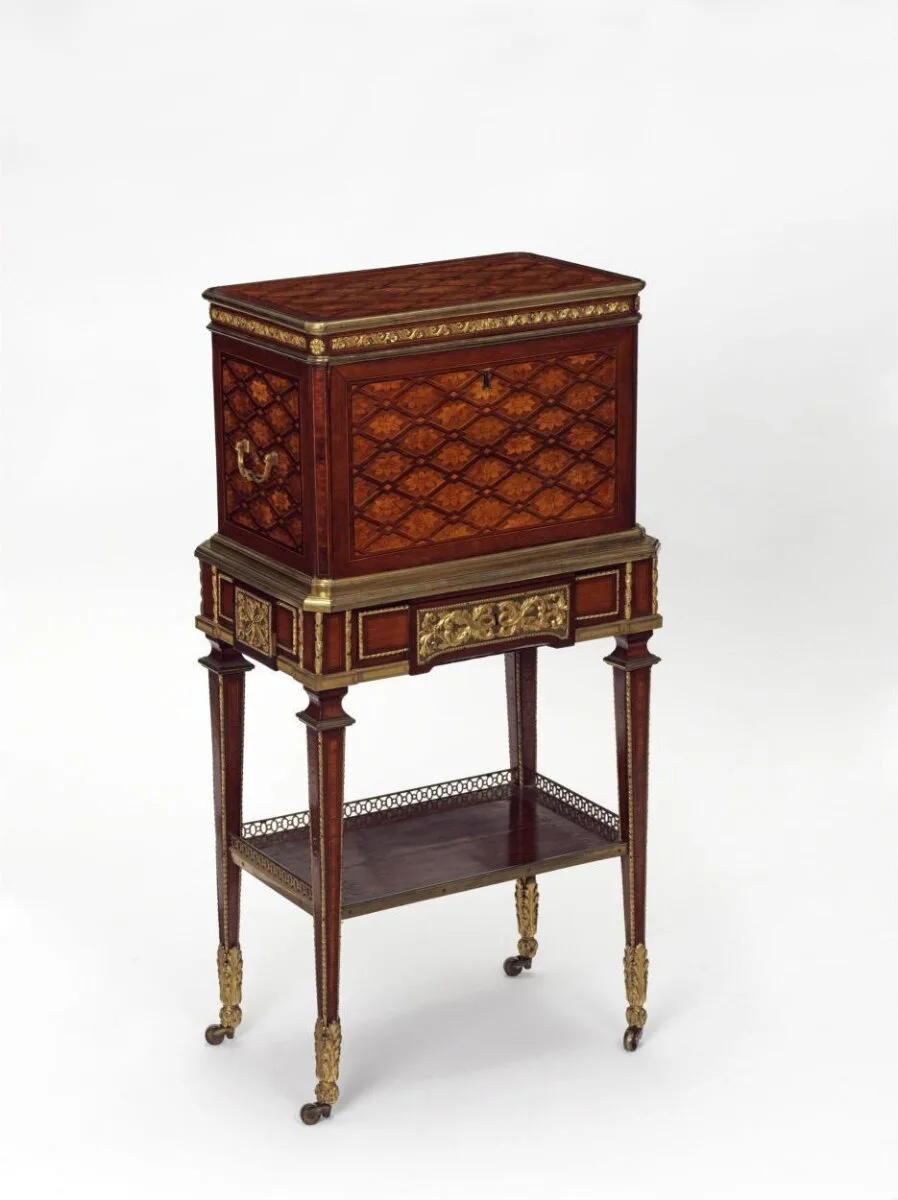
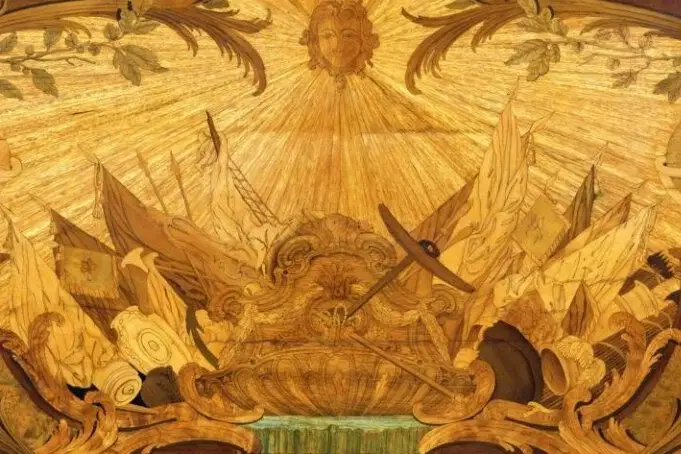
At the time of her arrival, the young princess was entirely absorbed in her happiness and in the admirable gifts she had just received from Louis XV and her husband, the Dauphin Louis, who in four years would become Louis XVI. Among the gifts, the most beautiful was the jewelry chest—not the one now seen at the Petit Trianon, a sort of stiff, severe Greek temple that looks as if it were made for the Empress Joséphine or Marie-Louise. No, the jewelry chest given to the Dauphine by Louis XV for her wedding has disappeared; we will explain the circumstances of its loss later. Its destruction was a true misfortune, for this chest was a genuine marvel. Let us judge for ourselves.
The Duke d'Aumont, the famous connoisseur and the preeminent collector of his era, was tasked with overseeing the design and creation of this piece of furniture. He approached Bocciardi, the skilled draftsman of the king's cabinet, to commission the design. From the various sketches presented by the artist, the Duke chose the one that pleased him most and, after suggesting a few changes, ordered the final plan to be drawn up.