
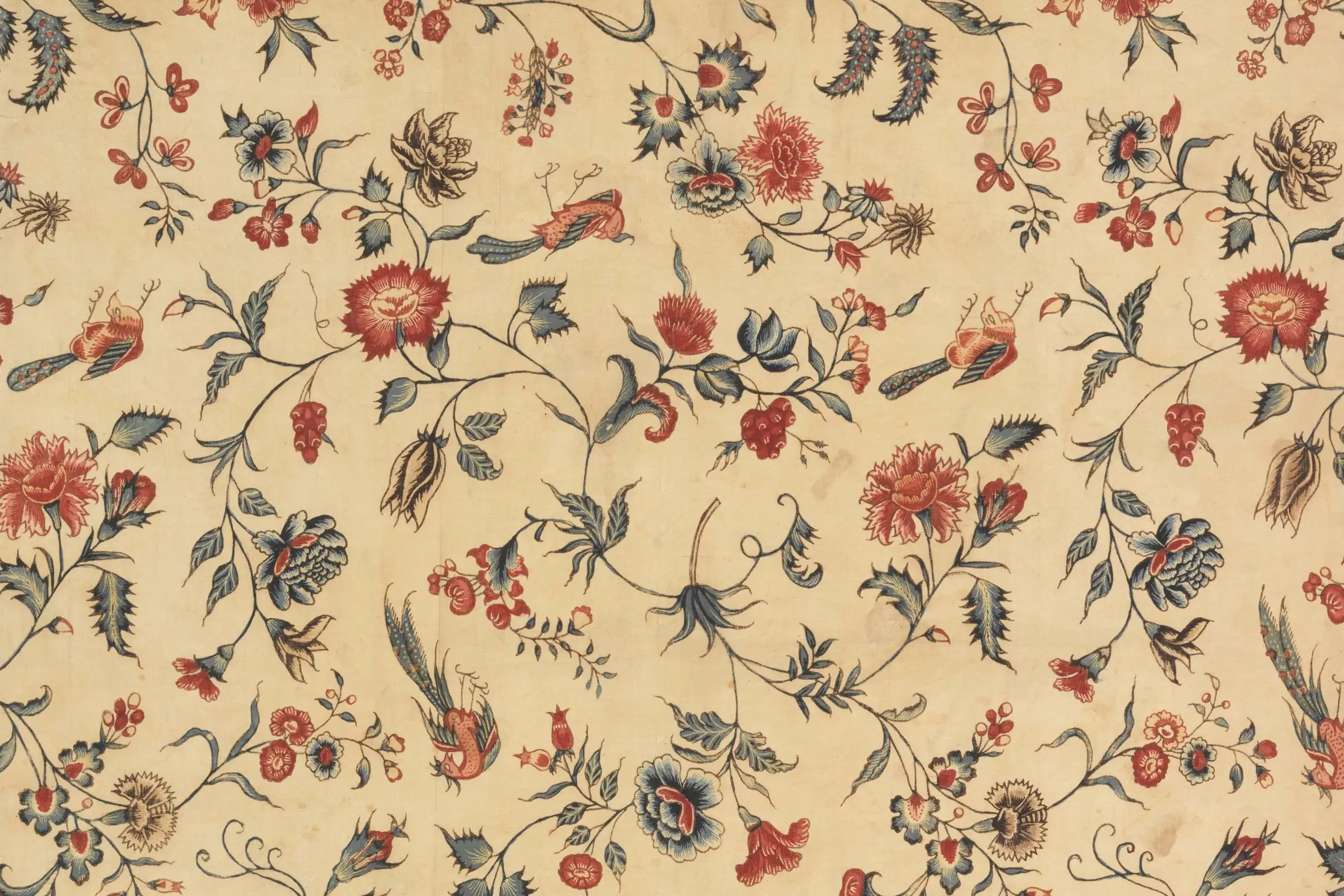
This exhibition at the Pavillon de Marsan, following the 1907 consolidation of the Musée Galliera, is the first to bring new material to the history of 17th and 18th-century painted and printed textiles. This time, however, the focus is not on the creations of Oberkampf and his rivals. Instead, the Union Centrale des Arts Décoratifs has dedicated several rooms of its Persian Art Exhibition to the very models from India and Persia—the chittes (chintzes) and calencas (a type of calico) so admired at the courts of Louis XIV and Louis XV. The specimens gathered by Messrs. Arthur Martin, Albert Chanée, Combé, Delaforge et Le Manach, Jacques Martin, Izart, Chatel et Tassinari, Bouix, d'Allemagne, the Société Industrielle de Mulhouse, and several other collectors offer a fine lesson in decorative art, as well as a rich harvest of documents. We must congratulate the organizers: their work is in every way deserving of our praise.
Shall we, however, express our full thoughts? With a slightly different presentation, the lessons to be drawn from this exhibition could have been more profitable. It seems that at the Pavillon de Marsan, too much was sacrificed to the pleasure of the eyes. As we navigate this unfamiliar territory, we would have liked to find some attempts at classification, or at least at comparison between the models. The picturesque quality of the rooms would have suffered, but the documentary interest would have gained significantly. In a subject about which we are so poorly informed—we might as well say we know nothing—we could have ventured a little more than mere conjecture about decorative styles and manufacturing processes.
Let us try, nevertheless.
The Challenge of Provenance
From the outset, we encounter an almost inextricable confusion. Where are the textiles of India? Where are those of Persia? Are there two distinct centers of production, or should we assume a common origin and use the convenient formula "Indo-Persian textiles"? A catalog would have informed us, especially one written by knowledgeable professionals like Mr. Arthur Martin or Mr. Henry Algoud. But since we are deprived of this guiding thread, let us abandon the present for the past and seek some light from the documents of the era.
### Early Sources and the "Indiennes"
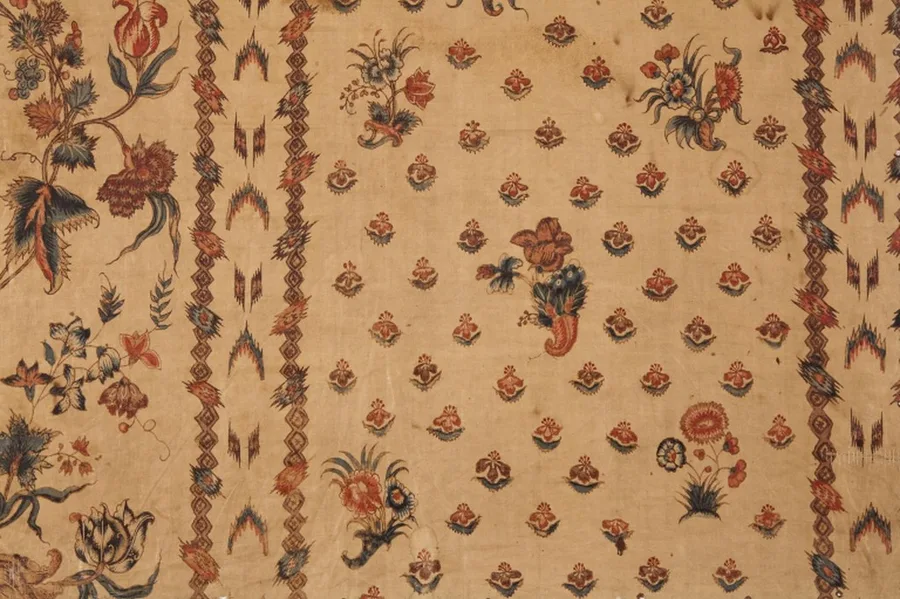
The first painted textiles imported into France—this fact is undeniable—were sold as products of India. In the 17th century, they were known only by the name indiennes (Indian cottons). This is how the gazetteer Loret describes them in his account of the Saint-Germain fair in 1658. Twelve years later, Molière's Bourgeois Gentilhomme, who wears them, calls them by no other name: