
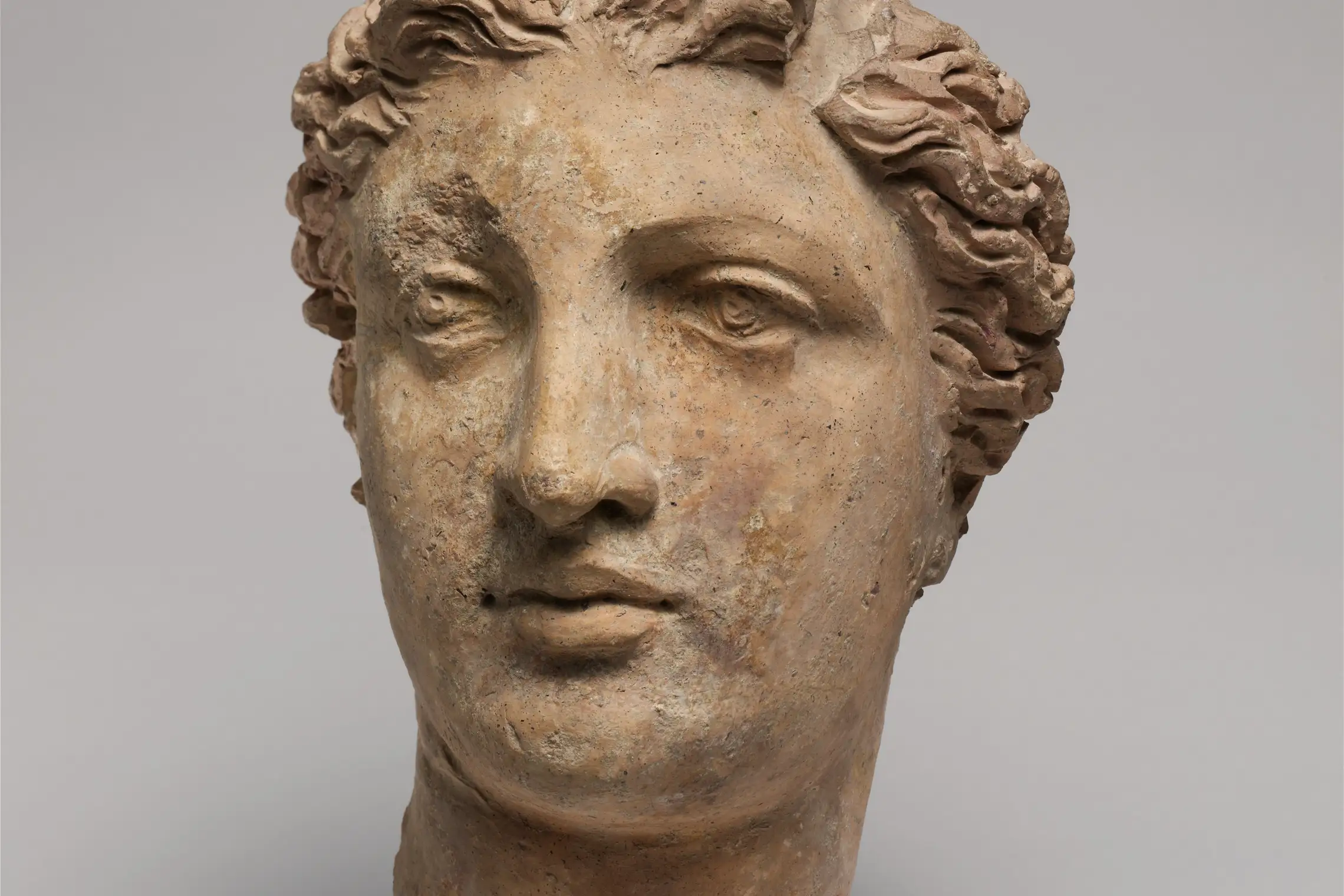
While organizing the terracotta artifacts from Tarsus for the Louvre Museum's catalogs, I was led to make a series of general observations on the technique, style, and age of these fragments, as well as the principal subjects they represent. These observations, I hope, will allow us to assign the ceramics of Tarsus their true place in the history of art. I will begin by briefly recalling the location of this famous city and the historical and religious role it played in ancient times, in order to explain the environment in which the abundant production of these small monuments, the subject of the present study, was formed.
The Ancient City of Tarsus
Tarsus, in Cilicia, was considered one of the most ancient cities in the world. Some confused it with the famous Tarshish of the Scriptures; Eastern legends claimed it was the first place where the earth dried after the Flood. These legends attributed the founding of a city on this site to Sandan, the Assyrian Hercules, who was undoubtedly the same figure that Cilician traditions associated, under the name of Sandacus, with the lunar goddess Pharnake.
The city's location was incomparable. One must picture the maritime plain of Cilicia, backed by the slopes of the Taurus Mountains, crossed by the icy, rapid, yet navigable Cydnus River, and entirely covered with crops and a rich vegetation of fruit trees—a true garden under a burning sky. Tarsus extended along both banks; its inhabitants were compared to aquatic birds, clustered on the river's edge, delighting in the coolness of its waters. This admirable city was situated a short distance from the sea, near the point where the coastline curves deeply between Asia Minor and Syria. It is understandable that such a place would quickly become a major center of exchange and relations between the diverse and fascinating populations of these ancient regions: Phrygians, Leucosyrians of Cappadocia, Semites of Syria and Mesopotamia, Phoenicians, and Cypriots.
Several traditions, along with the name Hypachaeans initially borne by the inhabitants of Cilicia, also seem to attest to the mingling of certain Greek or Pelasgian racial elements who had traveled, from a very early period, to this far corner of the Mediterranean.
 of a Seated Woman. Hellenistic Period](/_ipx/w_900&q_82&f_webp/api/content/artwork/c71a0c05-49c7-43b6-8d24-db905de39024.jpg)
The strong strategic position of Tarsus, on the great road to central Asia between the Cilician Gates and the passes of the Amanus, must have also attracted the attention of the masters of the East early on. According to the very serious testimony of Berossus, it was Sennacherib, king of Assyria, who in the 7th century BCE made it a first-rate military stronghold by surrounding it, following the Babylonian system, with a great square of walls bisected by the river. He had built a temple there, and likely a palace as well, and had his own image erected, bearing an inscription in Chaldean letters that recalled the city's founding and the conquest of the coast from the Greek fleets that roamed those waters.
Perhaps the legend attributing the founding of Tarsus to the problematic Sardanapalus is merely a popular memory of these same events.