
The Double of Rome
Every great city has its double. There is the city of stone and traffic, of daily commerce and fleeting lives, and then there is the city of the mind—a vast, intricate architecture of memory, desire, and myth. For Rome, the capital of the world, this second city is perhaps more potent than the first. For nearly three centuries, its principal architect was not an emperor or a pope, but a Venetian engraver who worked with a copper plate and a bottle of acid. His name was Giovanni Battista Piranesi, and the Rome he built on paper proved more influential, and in some ways more eternal, than the one he walked every day.
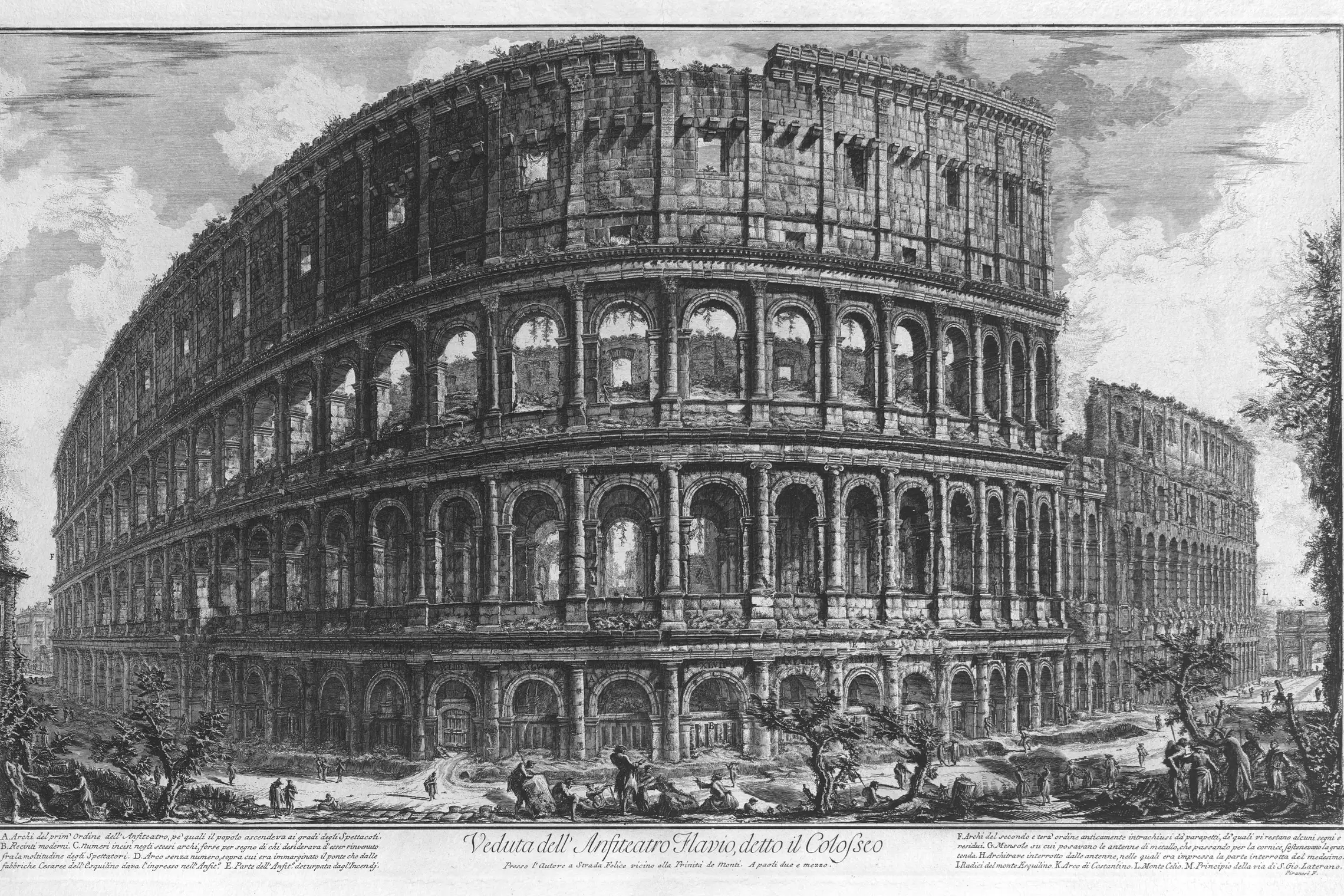
His work, a monumental collection of etchings known as the Vedute di Roma (Views of Rome), was ostensibly a record of the city’s splendors, ancient and modern. Yet to see it as mere documentation is to miss the point entirely. Piranesi was not a topographer; he was a dramatist. He took the bricks, marble, and travertine of Rome and recast them in a theatre of spectacular light and fathomless shadow. He exaggerated scale, manipulated perspective, and suffused his scenes with a brooding, melancholic grandeur that spoke of time, decay, and the sublime power of history. This was not the Rome that was, but the Rome that ought to be—a city worthy of its own legend. The print of the Villa Pamphili, a sprawling aristocratic estate outside the Porta San Pancrazio, is not one of his famous ruins, yet it perfectly captures his method. It is a key to understanding how he constructed his vision, transforming even the living, breathing city into a monumental idea.
The View as Theatre
When Piranesi etched the plate for the Villa Panfili fuori di Porta S. Pancrazio in the early 1750s, he chose a perspective no ordinary visitor would ever find. From an impossibly elevated viewpoint, the entire estate unfolds like a map brought to life. The Casino del Bel Respiro, the villa’s central pleasure-house, sits nestled in its elaborate parterres and formal gardens, a testament to Baroque order and human control over nature. The geometric precision of the hedges and pathways is rendered with an architect’s eye for structure.
But this is not a placid scene. Piranesi stages a profound visual tension. In the right foreground, a gnarled, ancient tree erupts into the frame, its wild, untamed branches clawing at the sky. Its dark, chaotic form serves as a powerful counterpoint to the manicured elegance of the villa. It is a classic Piranesian device: the juxtaposition of civilization’s transient order with the eternal, indifferent power of nature. The small human figures scattered throughout the composition—strolling aristocrats, gesturing gardeners, lounging peasants—are dwarfed by their surroundings. They are not masters of this landscape; they are temporary actors on a stage set by history and nature, their presence only serving to amplify the monumental scale of the architecture and the vastness of the Roman Campagna stretching into the distance.
This theatricality was no accident. Piranesi’s early training in Venice was not just in architecture under his stonemason uncle, but also in stage design. He understood the power of the set, the way perspective could create not just an illusion of depth but an emotional response. His Rome is consistently presented as a grand opera. He uses plunging diagonals, stark contrasts of light and dark (chiaroscuro), and a low point of view that makes his buildings soar and loom, imbuing them with a psychological weight that transcends mere representation. He was, as the French novelist Marguerite Yourcenar later wrote, the “consummate director.” In the Villa Pamphili print, he directs our gaze, forcing us to see the celebrated estate not simply as a piece of property, but as a drama about order and wilderness, permanence and fragility.
The Commerce of Grandeur
Piranesi's dramatic vision found a ready and eager audience. Eighteenth-century Rome was the indispensable climax of the Grand Tour, the educational rite of passage for wealthy young men from across Europe, particularly Britain. They came not just to see ancient ruins but to acquire a classical polish, to connect with the very foundations of Western civilization. They were collectors, and they needed souvenirs—not trinkets, but objects that would testify to their taste, learning, and worldliness.
Piranesi’s workshop on the Via del Corso was a crucial stop on their itinerary. He was a canny businessman who understood his market perfectly. The Vedute di Roma, which grew to encompass 135 plates by the time of his death in 1778, was a commercial masterpiece. Each print, executed on a large folio sheet of heavy laid paper measuring roughly 50 by 70 centimeters, was an impressive object in itself. Sold individually or in collected volumes, these etchings were not just pictures; they were portable monuments. They allowed the traveler to take Piranesi's sublime vision of Rome home, to bind it in leather and place it in a library, where it would serve as a permanent touchstone to the experience.
His subjects were carefully chosen to appeal to this clientele. He etched the Colosseum, the Pantheon, the Forum, and the great triumphal arches, but also the major basilicas, piazzas, and aristocratic villas like the Pamphili. It was a visual catalogue of Roman magnificence, both ancient and papal. The prints were a form of branding, establishing a canonical set of views that defined what was important to see. In doing so, Piranesi did more than just cater to the tourist market; he actively shaped it. Visitors arrived in Rome with his images already in their minds, seeking out the real places that corresponded to the prints. They saw the city through his eyes, looking for the dramatic angles and melancholic atmosphere he had so masterfully conveyed.
The Eloquence of Decay
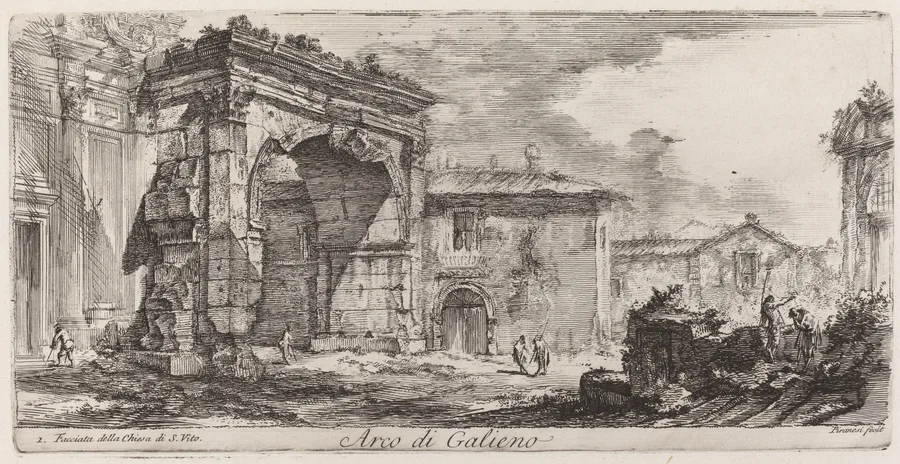
While he captured the grandeur of contemporary Rome, Piranesi’s most profound and lasting contribution was his portrayal of its ruins. He was not the first to draw the broken monuments of antiquity, but he was the first to infuse them with such terrifying and beautiful life. In his hands, the ruins were not dead relics but “speaking ruins” (rovine parlanti), eloquent witnesses to the vanity of human ambition and the relentless passage of time.
His etchings of the Forum show cattle grazing among shattered columns. He depicts the Baths of Caracalla not as a neat archaeological site but as a colossal, crumbling mountain, overrun with vegetation, its cavernous vaults seeming to groan under their own immense weight. This was a radical departure from the precise, measured drawings of earlier antiquarians. Piranesi, though deeply knowledgeable about Roman engineering—a skill learned from his uncle and honed through personal study—was ultimately a poet of decay. He understood that the power of the ruins lay not in their reconstruction but in their fragmentation. The broken arch was more moving than the complete one because it forced the imagination to work, to contemplate the civilization that had fallen and to feel a shiver of the sublime—a mix of awe and terror in the face of overwhelming power.
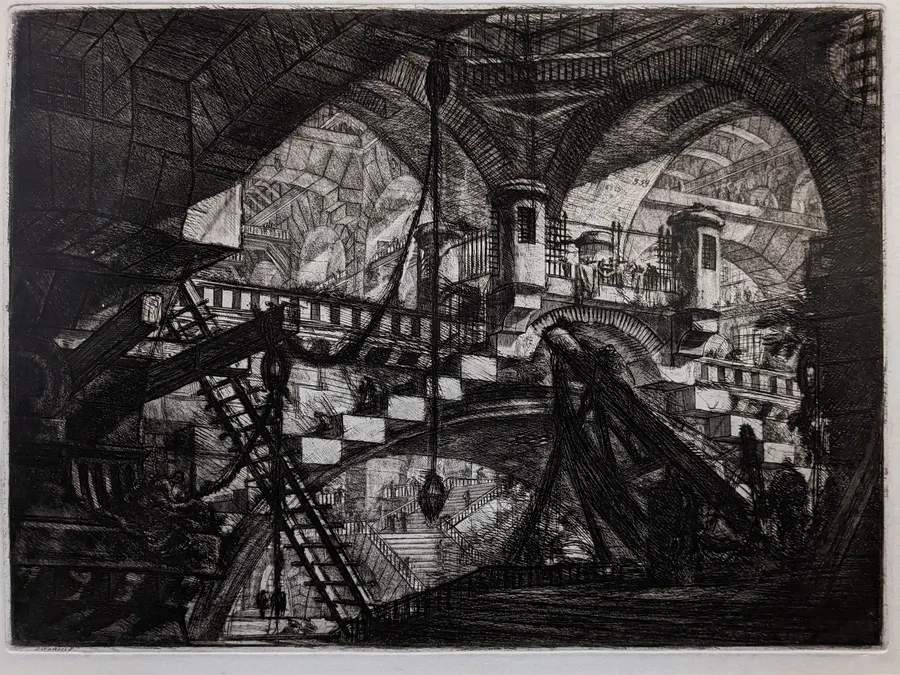
This aesthetic resonated powerfully with the burgeoning Romantic movement. Writers and poets like Goethe, Byron, and Shelley saw in Piranesi's Rome a mirror for their own preoccupations with emotion, individuality, and the forces of nature. His prints provided a visual vocabulary for the Romantic imagination. His other great series, the Carceri d'invenzione (Imaginary Prisons), with its labyrinthine staircases, mysterious arches, and sense of infinite, pointless structure, delved even deeper into the architecture of the subconscious, influencing centuries of artists from the Surrealists to modern filmmakers.
An Inheritance in Copper and Ink
Piranesi worked tirelessly until his death in 1778, constantly reworking his copper plates, adding new details, deepening the shadows. His sons Francesco and Pietro continued to print from them, eventually taking the plates to Paris after the fall of the Papal States. Today, this priceless artistic patrimony resides at the Istituto Centrale per la Grafica in Rome, a testament to one man’s obsessive, lifelong project to capture a city’s soul.
But his true legacy is not in the metal plates. It is in the world’s imagination. Piranesi’s vision was so powerful that it shaped not only art but reality itself. Neoclassical architects like Robert Adam in Britain studied his prints to understand the scale and ornament of Roman building. Landscape designers of the Picturesque movement in England sought to recreate his compositions of rugged nature and artful ruins in the gardens of country estates. His dramatic sense of space influenced theatrical set design for generations.
His influence is so pervasive that it can be hard to disentangle our idea of Rome from his. We arrive at the Forum and instinctively seek out the dramatic, shadowed viewpoint we know from his etchings. Modern conservationists and archaeologists sometimes speak of the
Seen at auction: Trillium Antique Prints & Rare Books