
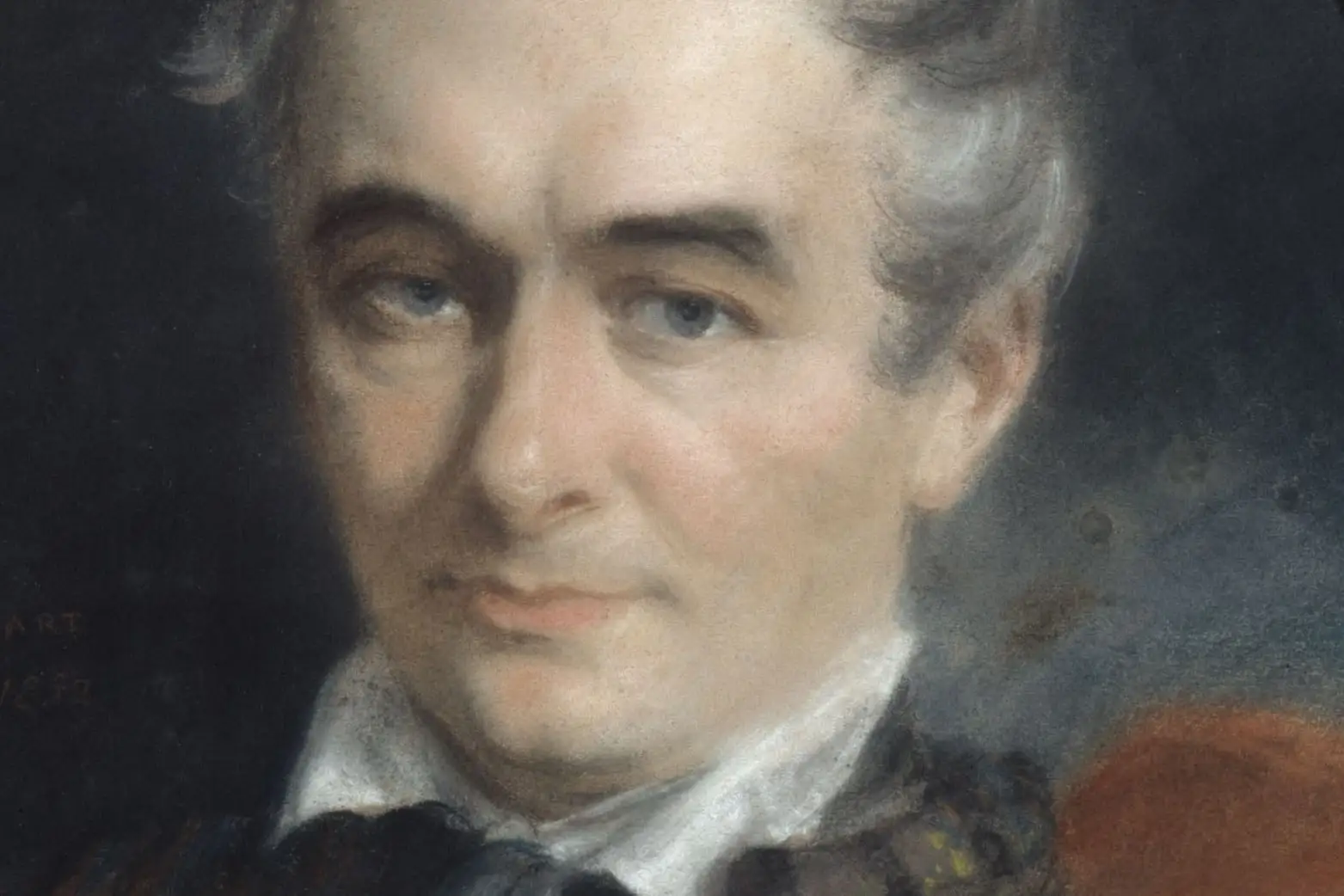
While the letters of Prosper Mérimée provide useful information about Simon-Jacques Rochard, they are far from offering a complete picture of this energetic, bold, and enterprising painter. He surpassed the ordinary qualities of a miniaturist, knowing how to achieve greatness in a minor genre. Endowed with a precocious understanding of portraiture and grasping the salient features of the human face from childhood, he spent some time in an engraver's studio. However, his independent temperament could not long accommodate the patient art of a copyist and interpreter. He then dedicated himself to the delicate art of the miniature under various masters, learning the necessary techniques of the trade in their schools but reserving the right to soon infuse them with his own originality.
The English Influence
Rochard's truly personal career began in 1815, although the influence of his French training still betrayed itself. In a charming bust of a young woman from 1816, one can recognize the lessons of Jean-Baptiste Jacques Augustin and the example of François Gérard, who, in his famous portrait of Madame Récamier, had established a sort of canon of contemporary beauty. Upon arriving in London, Rochard must have been astonished and initially a little disconcerted by English art, which was free and independent, lacking any collective education, common tradition, or academic precepts, and consequently full of unsettling surprises for a French eye.
But Rochard quickly recovered from this initial astonishment. Whether he had natural affinities with the painters from across the Channel, or whether the daily sight of their works converted him to their autonomous aesthetic, he very promptly became English. Sir Joshua Reynolds soon seduced him; he admired in him the strength and felicity of invention, the consummate skill versed in all techniques, and the arrangements of a supreme distinction, made of grace and charming spontaneity, which make the master's portraits true paintings. The aristocratic elegance of Reynolds's women and children, always placed amidst accessories and dressed in costumes adapted to the model's physiognomy and rank, would reappear more than once in Rochard's miniatures.1
After Reynolds, it was his brilliant pupil, Thomas Lawrence, who most attracted the young émigré. Although much inferior to his master, whose profound knowledge and creative power he lacked, Lawrence captivated Rochard with his facile coloring, his sense of feminine attire, his abundant arrangement of fabrics and draperies, and his luxuriant staging—all things that hold such a large place in his portraits. Rochard naturally had a very refined taste for the picturesque. Thomas Gainsborough and John Constable did not leave him indifferent either; one finds echoes of them in some of his landscape studies. Is it any wonder that his association with these painters made Rochard a truly English artist? He became so British that one might take him for a native; he thoroughly penetrated the English type, grasping its distinctive features, familiar gestures, and special bearing. Even the cloth with which he dressed his models, the armchair in which he seated them, and the landscape that framed them—everything is fundamentally English. However, he shows himself less Anglo-Saxon in his figures of women, which reveal the artist of Latin heritage, interpreting feminine beauty with a sentiment too personal and subjective to be dominated by ambient influences.
Artistic Vision and Technique
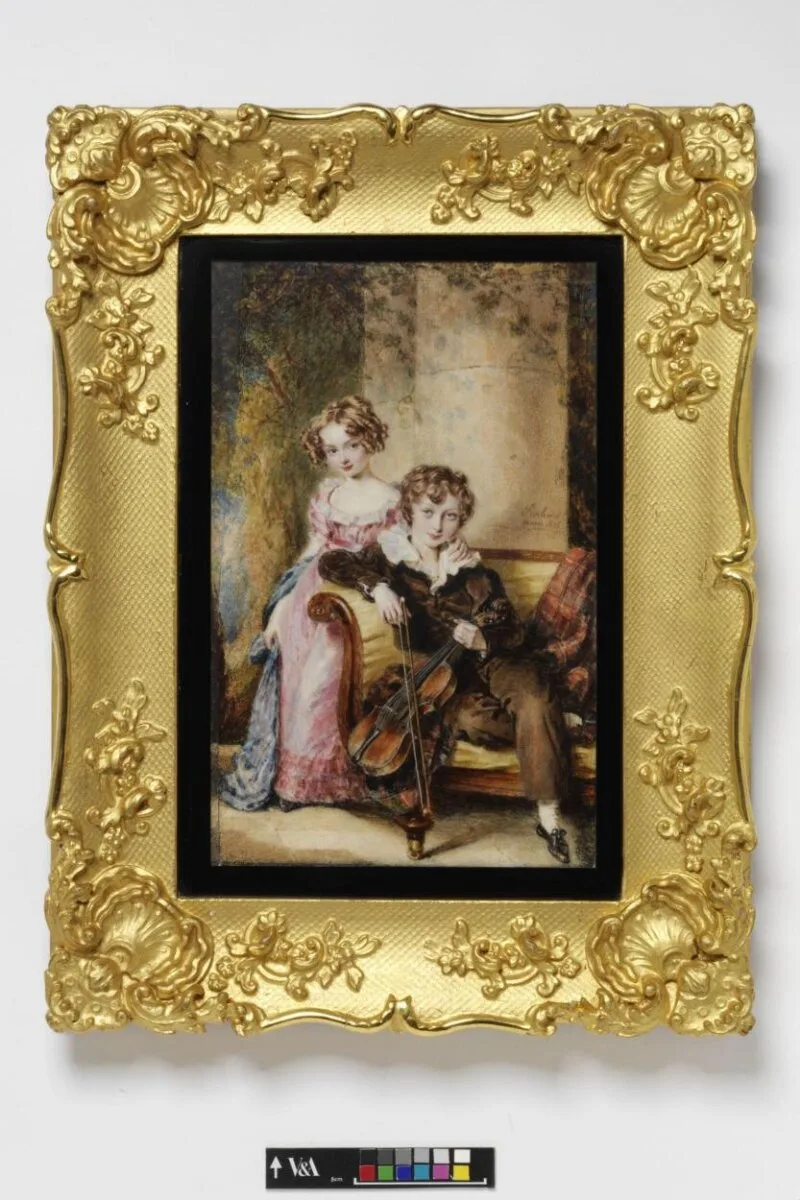
What Rochard especially gained from his commerce with the English was the will to repudiate any general type or conventional ideal. In his work, there is no uniform conception of a determined model like those imposed by Jean-Marc Nattier in the 18th century and Pierre-Paul Prud'hon at the beginning of the 19th. To be sure, he gives his female portraits that sentimental air, that veil of melancholy and sadness, which was then in fashion in literature and art, and which clients seemed to consider an obligatory complement to their charms. But most often, he stops short of this Romantic morbidity and contents himself with an expression of soft reverie or vague contemplation, free of affectation and full of seduction. He knows how to preserve his models' own physiognomy, their individual character, something natural and true even in the unexpected, with gesture and attitude always in perfect harmony with the facial expression.