When Nicolas Poussin finally left for Italy in the spring of 1624, after many years of longing and several failed attempts, he was nearly thirty years old, having been born in June 1594. His career began in 1611, when the painter Quentin Varin, passing through Les Andelys, encouraged his first efforts. The following year, the young Norman, then eighteen, followed this first master to Paris. From that time on, he worked with all his might, first under one master and then another, and finally alone. He moved between Paris and other parts of France, accepting the rare and poorly paid commissions offered by chance patrons, sparing himself neither physical nor mental fatigue, sustained only by the passion for his art.
The Search for Poussin's Pre-Roman Works
The biographers, particularly Giovanni-Pietro Bellori and André Félibien, have listed some of the works he produced during this early period.1, 2 These include works, the specific nature of which remains unknown, in the château of a young nobleman from Poitou who, having met Nicolas in Paris and noticed his talents, was moved by his destitution. Then, in 1621, came a modest collaboration with Nicolas Duchesne, painter to Queen Marie de' Medici, who had been entrusted with the ornamental part of the Luxembourg Palace's decoration.
In 1622, Poussin executed six large tempera canvases, commissioned by the Jesuit Fathers for the celebrations honoring the canonization of Saint Ignatius of Loyola and Saint Francis Xavier.3 The "Cavalier Marino," the poet then famous throughout the world and celebrated at the French court, was struck by the talent apparent in these occasional works and took an interest in the young artist; Poussin composed a series of drawings to illustrate Marino's epic poem, Adone. The Bishop of Paris, Jean-François de Gondi, commissioned a "may" painting for Notre-Dame, for which Poussin painted The Death of the Virgin. According to the testimony of Germain Brice, author of a Description de la Ville de Paris published in 1717, a chapel in Notre-Dame may have contained another painting by Poussin depicting Saint Mary of Egypt in the Desert.
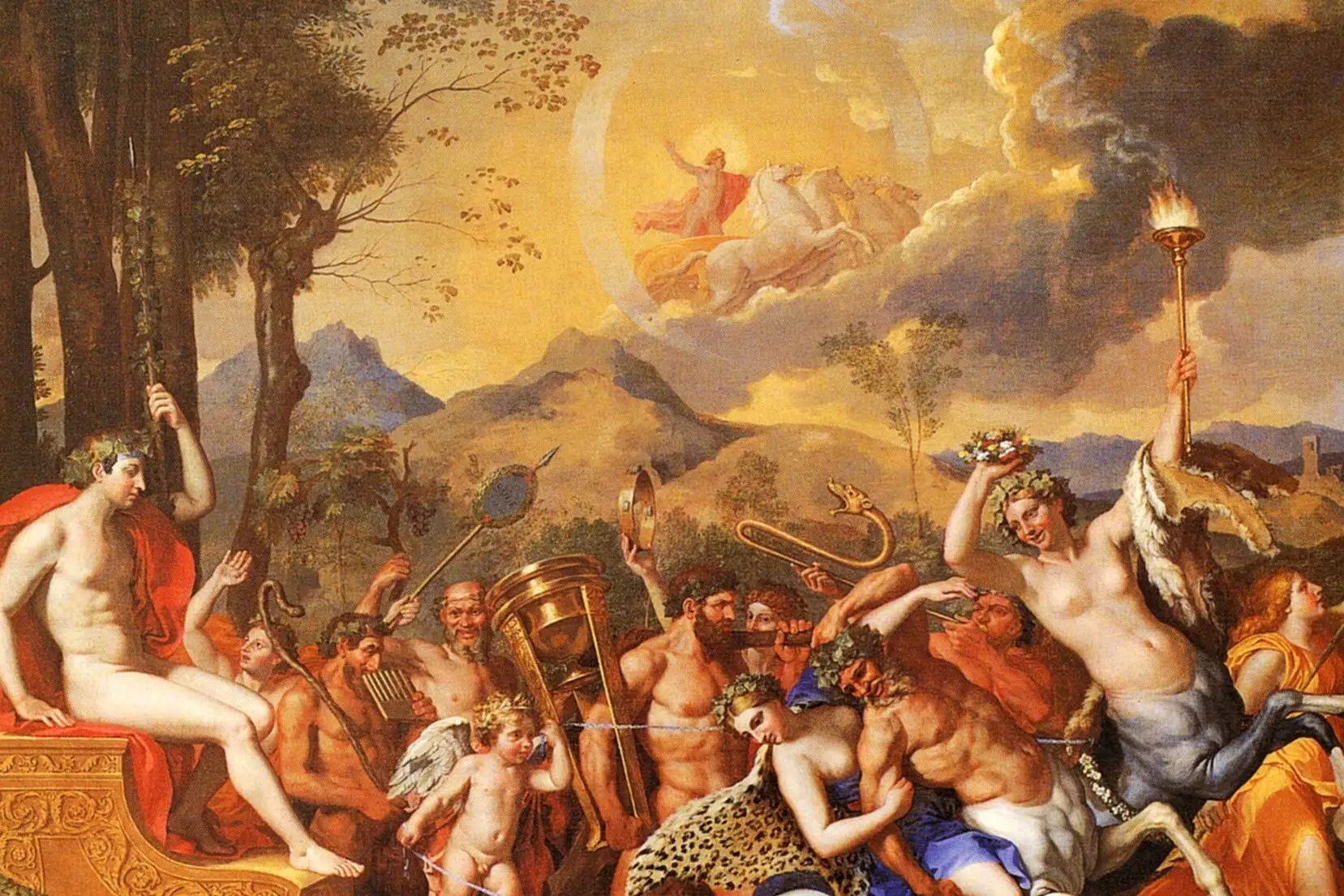
Soon he was traveling again. He executed a Saint Charles Borromeo and a Saint Francis for the Capuchin church in Blois.4 He decorated a small pavilion near the Château de Chiverny with Bacchanals.5 Finally, back in Paris, despite his lack of inclination for such work, he painted a few portraits.
The Lost Paintings of the French Period
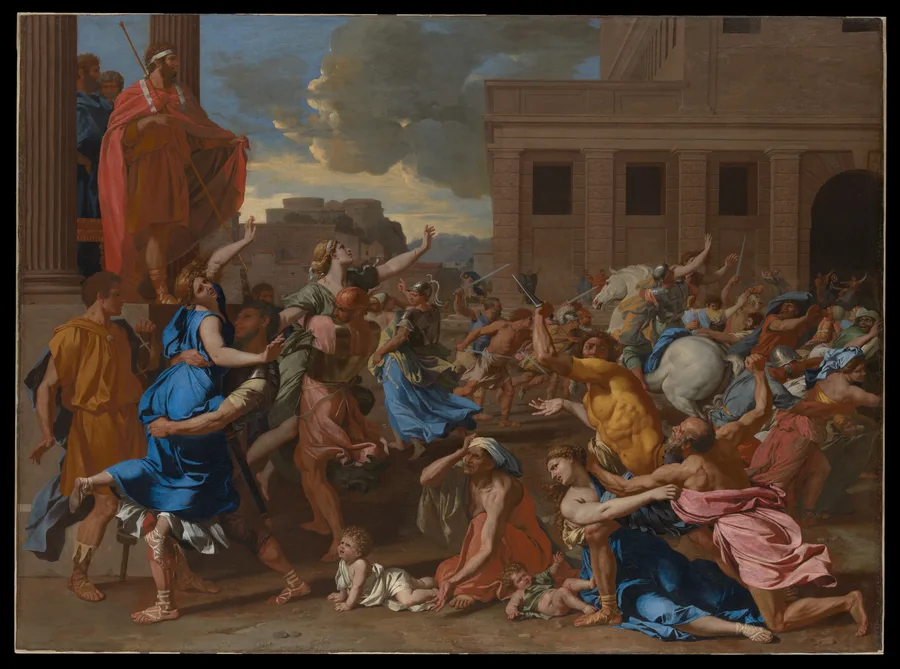
With the exception of the Adone drawings, all of this is lost. We are left with names; the works themselves have vanished without a trace. The Death of the Virgin was still in place at Notre-Dame at the time of the Revolution. It was then collected by Alexandre Lenoir, who mentions it in his catalog of the Musée des Petits-Augustins. Then, after passing through the hands of a restorer, it disappeared. Elizabeth Denio believed she had found it in Bonn in the Wesendonck collection.6 However, the painting she attributes to Poussin, which now belongs to the Museum of Bonn, is merely a reduced copy of a canvas by Carlo Maratta located in the Villa Albani in Rome.7