Whenever I hear of a painter's death, I cannot help but conjure a sad vision in my mind, the most acute sensation of human annihilation. I imagine his corpse at the center of a studio, its walls hung with the masterworks of the one being mourned, all within the splendid radiance of his personality. He is pale and already stiff, arms crossed on his chest, head nestled in the pillow, eyelids lowered heavily over his final gaze. Friends, relatives, and fellow artists enter and bow their heads, devoted to his memory, seized with admiration for his works. The beauty of these paintings has never seemed so commanding; it now shines with a definitive, almost triumphant brilliance. He, however, stretched out on his funeral bed, pays no heed to the praise. His inert mouth no longer knows words or smiles, and his eyes, his frozen eyes, are empty of sight.
Yesterday, those pupils possessed the sun! Those eyelids, under their veil of flesh, absorbed all of nature and its spectacles! The active penetration of that gaze could surprise the intimate life deep within things. Give this painter a piece of board or a scrap of cloth, and he would make it pulse with what had moved him. His abundant vitality poured into his works, and never have they seemed so alive as since his death. I do not think there exists anywhere a more telling image of a man struck down, annihilated, while his thought, unshakeable in his creations, protests against the void.
The poet can rest his head on his poems, the musician on his symphonies. Their genius has exploded only in the minds or hearts of others. The painter's art, more external, has vanquished, charmed, and conquered the eyes of the passerby. His power asserts itself where that of other arts fades and restrains itself. Because the master of the palette illuminates his dramas with a superior human light, because he pours his soul into the forms he reproduces, one is tempted to believe him beyond death. His corpse is a painful astonishment: one believes it a mistake of destiny; one almost imagines he will rise, feverishly take up his brushes, and once more flood with fluid air and truth the thousand sketches turned against the wall—dreams asleep like him, awaiting his awakening.
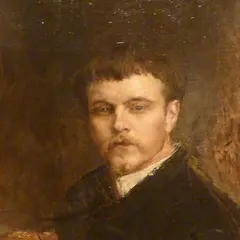
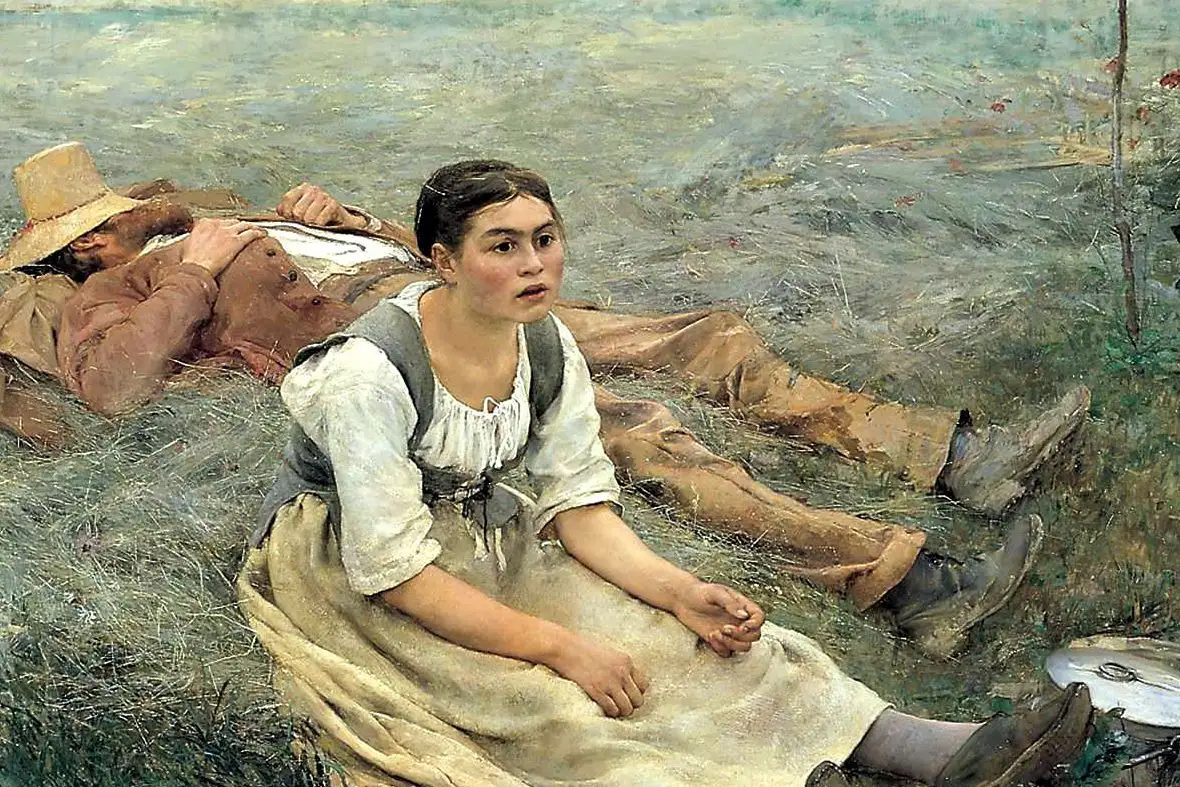
Alas, barely a month ago, we followed the funeral of Jules Bastien-Lepage, just as we recently followed that of Édouard Manet and, last season, that of Joseph De Nittis. For two years, an unknown illness had been consuming him, sometimes allowing for illusions, but not for hope. He passed away one winter evening, on December 10, 1884, an original and melancholic figure who will stand tall before posterity. I had known him for a long time; I admired him and I loved him. He was a master in talent, a man in character, and I cannot evoke here without emotion that beautiful youth, so soon withered, so soon cut down. The creator of Haymaking and The Potato Gatherers had only just reached his thirty-sixth year. What a great loss for the French school!
First Encounters and Artistic Credo
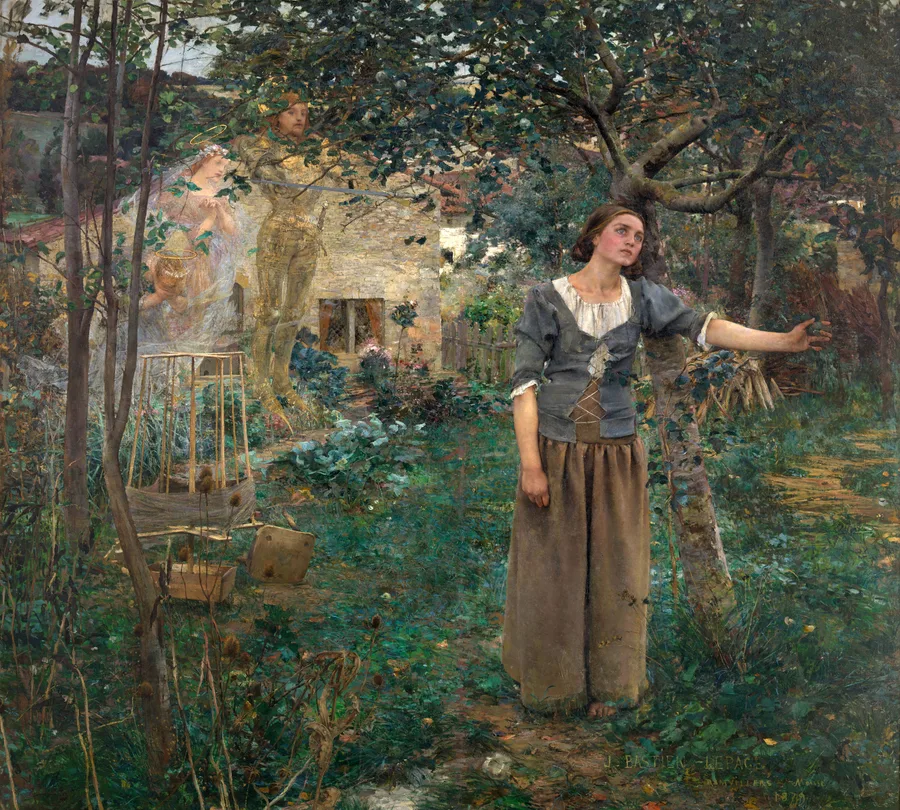
Our acquaintance was forged, by chance, at a commonplace evening gathering, just after his first competition for the Prix de Rome. The Académie, that year, had given the contestants this subject: Priam at the Feet of Achilles. I remember Bastien-Lepage's Priam, seen from the back, covered in a large, rich black cloak enhanced with gold ornaments, his long white hair streaming from his diadem, joining his old, trembling hands before a savage, half-naked Achilles. One could already sense more than just studio skill in this painting of strong intention and vigorous execution.
As I write, I can see the young artist again, seated to my left, small and energetic, very frank, very direct, rolling a piece of red chalk between his fingers as we talked. I asked him if the Prix de Rome meant a great deal to him; he answered with extreme simplicity: "Not in the least. If I want it, it is for my parents, who have made every possible sacrifice for me and whose pride would be flattered. For their sake, I promise myself I will compete one more time, but if I do not succeed, I will quit the game."