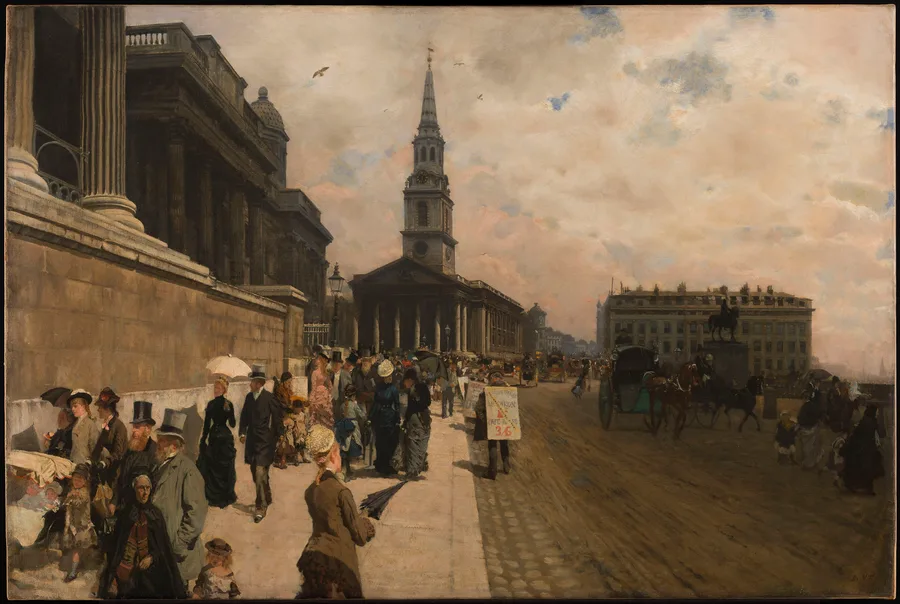
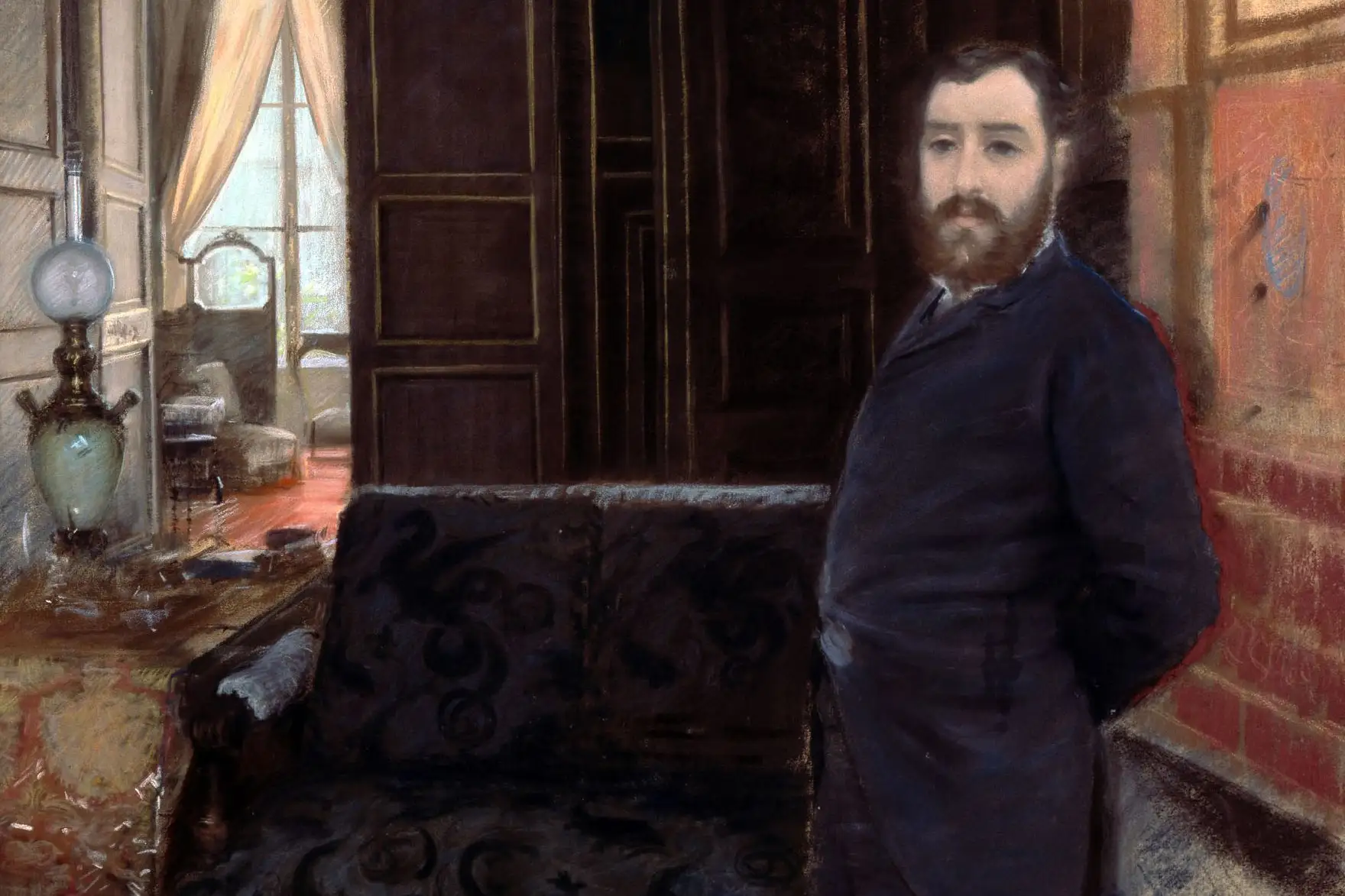
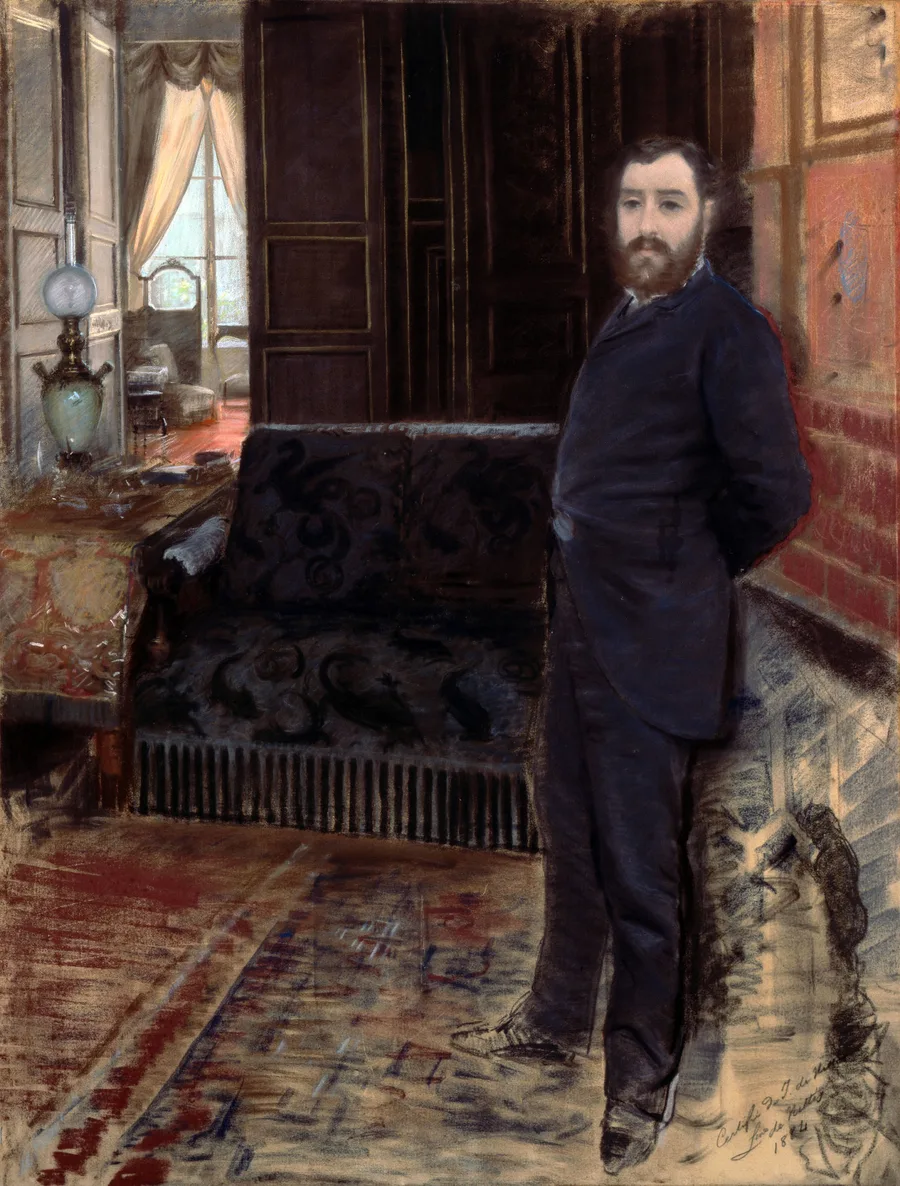
In Joseph De Nittis, we have lost a young, fertile, and original talent, a gallant man and a gallant artist. We feel his loss keenly, so suddenly did it occur; we will feel it for a long time to come, because he had taken a place in French painting whose importance will become increasingly apparent, and he occupied that place with a rare tact and a very personal feeling for modern art. We say "in French painting" along with the public at large, for De Nittis, already one of us by virtue of his instinctive attachment to our country, was destined to yield to the mutual sympathies that kept him here, following the course that the promises he had already kept had laid out for his brilliant career. At thirty-eight, it is death that gives him his final consecration; it is death that draws our attention to the real interest of the efforts that filled his short life, and recalls to our memory his frank and limpid successes.
From Naples to Paris
Giuseppe De Nittis, born in Barletta in 1846, had poor and obscure beginnings. He received little artistic education other than what he gave himself or gathered by chance along the open roads. The young man's excursions into the open countryside, and even his naps in the warm, mirage-filled open air of the Neapolitan region, taught him more than the provincial instruction he had the docility to endure. One morning, the meager scraps he was meant to be fed at the Naples school seemed insufficient for his robust appetite: he broke with this regimen to return to the great open spaces, to the horizons that excited his earliest impressions. This free life of an artistic odd-jobber was the inauguration of a talent built on independence; it was a repertoire of memories unconsciously amassed; it was also the sign of a flexibility of manner and taste that would lead him to a kind of cosmopolitanism, to an easy eclecticism, and would prevent him from ever being out of place, ill at ease, or hesitant.
Thus, De Nittis felt at home wherever there was something new and seductive for the mind and eye of an artist. It had been three years since he had left the school in Naples, and in those three years, he had already exhibited three works in that city that were acquired by museums: a View of Barletta, a landscape of the Environs of Naples, and a view of the Crossing of the Apennines. It was then that a sudden resolution threw him into the life of the Parisian studios. This was in 1868. It quickly became clear how substantial his vocation already was and how refined his taste. In this environment where extremes, opposites, and likes engaged in frenzied competition, one had to excel at something or risk remaining in a sickening mediocrity. Financial hardship in Paris was a very different thing from indigence in Naples; even with modest tastes, one did not have the freedom to live on a slice of cocomero (watermelon) or to wander the great city without losing one's credit and compromising oneself. Gérôme and Meissonier welcomed De Nittis and supported him with their authority; he was helped, but above all, he helped himself and single-handedly determined his own fortune by continuing to follow the sound-minded fancy that had inspired him until then.
At that time, everything in Paris seemed to draw him toward the art of the recognized masters with whom he associated, toward the intimate and concentrated art of historical costume, toward the restoration of the past, toward the retrospective anecdote. Everything, that is, except a small bit of pride that one day made him prefer another art, one he had already tasted, an art where he felt he had more elbow room. On the surface, it seemed like preferring the rut to the well-trodden highway. But events proved him right. Consistent with his own nature, without fatigue, and always with the same success, he went and sat himself down in the middle of Paris, on the very roadway we all walk every day, and later in the heart of London. There, amidst the crowd that is us, he soon felt the same independence he had felt on the open plain.
An Italian in Paris