The new Hôtel de Ville in Paris features an interior decoration that is truly the most disparate collection of paintings imaginable. The most opposing works, in both tendency and appearance, are placed side by side; the most diverse talents are neighbors, and they do little to enhance one another. Too many of these pages are decorative in name only; in short, while there is good, even excellent, work to be found, one often encounters the mediocre and sometimes the worst.
An Overlooked Masterpiece in a Disparate Collection
These are criticisms already made, well-known, and easy to repeat and expand upon; it is useless to insist on them further. However, once one has duly lamented the complete lack of general harmony among all these decorations, the strange juxtapositions resulting from the haphazard allocation of wall surfaces to artists of vastly different temperaments, and the final result that one was entitled to expect would be better for such an exceptional occasion, justice must be done to the successful parts, which are all too rare in the general disarray. This is particularly true when a talented and truly decorative artist, given a room or a gallery to adorn on his own, has been able to create a work that is his own and to show his full measure.
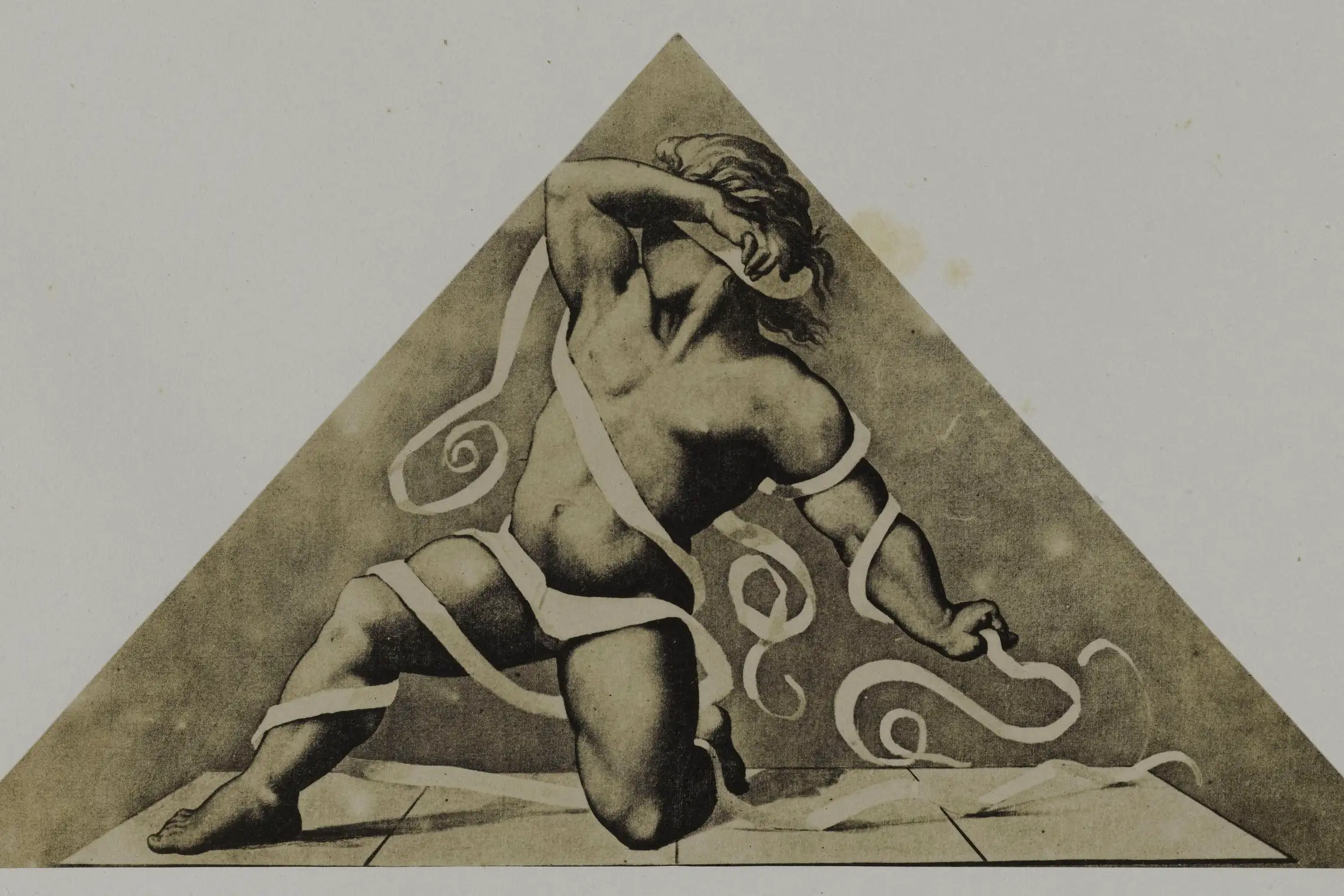
Such is the case with the series of cupolas painted by Georges Picard in the small gallery that flanks one of the long sides of the grand ballroom. This work is little known to the majority of visitors to the Hôtel de Ville, who are drawn instead to the large-scale "machines," already seen at the Salons and frequently reproduced in illustrated periodicals. On the other hand, there is hardly an amateur or connoisseur of modern art who does not know, and appreciate as it deserves, the small gallery.
Its compositions of discreet tonalities and its quiet, distinguished demeanor contrast so fortunately with the overabundantly charged and deliberately heavy ornamentation of the large neighboring hall. There, a diversity of paintings is embedded in gold, sculpted figures, coffers, bosses, and reliefs of all kinds. While the eye of the common visitor is attracted by more violent means of expression, rarely in harmony with the necessities of good decorative arrangement, one is happy to savor the full charm of the cupolas in the small gallery. One enjoys detailing the qualities of a work of this kind; it is a delicate pleasure, and one is glad to know it and to know how to appreciate it.
This significant ensemble was painted entirely on-site. Its author has, for all intents and purposes, never exhibited his work, which is why both the work and the artist are too little known. The public is generally familiar only with the Salons and with paintings of specific subjects. For us, on the contrary—at a time when too many painters become decorators only by occasion, and often, despite undeniable talent, end up with decorative misinterpretations—we should congratulate ourselves on encountering an artist like Georges Picard. While remaining a true painter, he has built his career in decorative painting without concern for exhibitions.