By Jean Laran
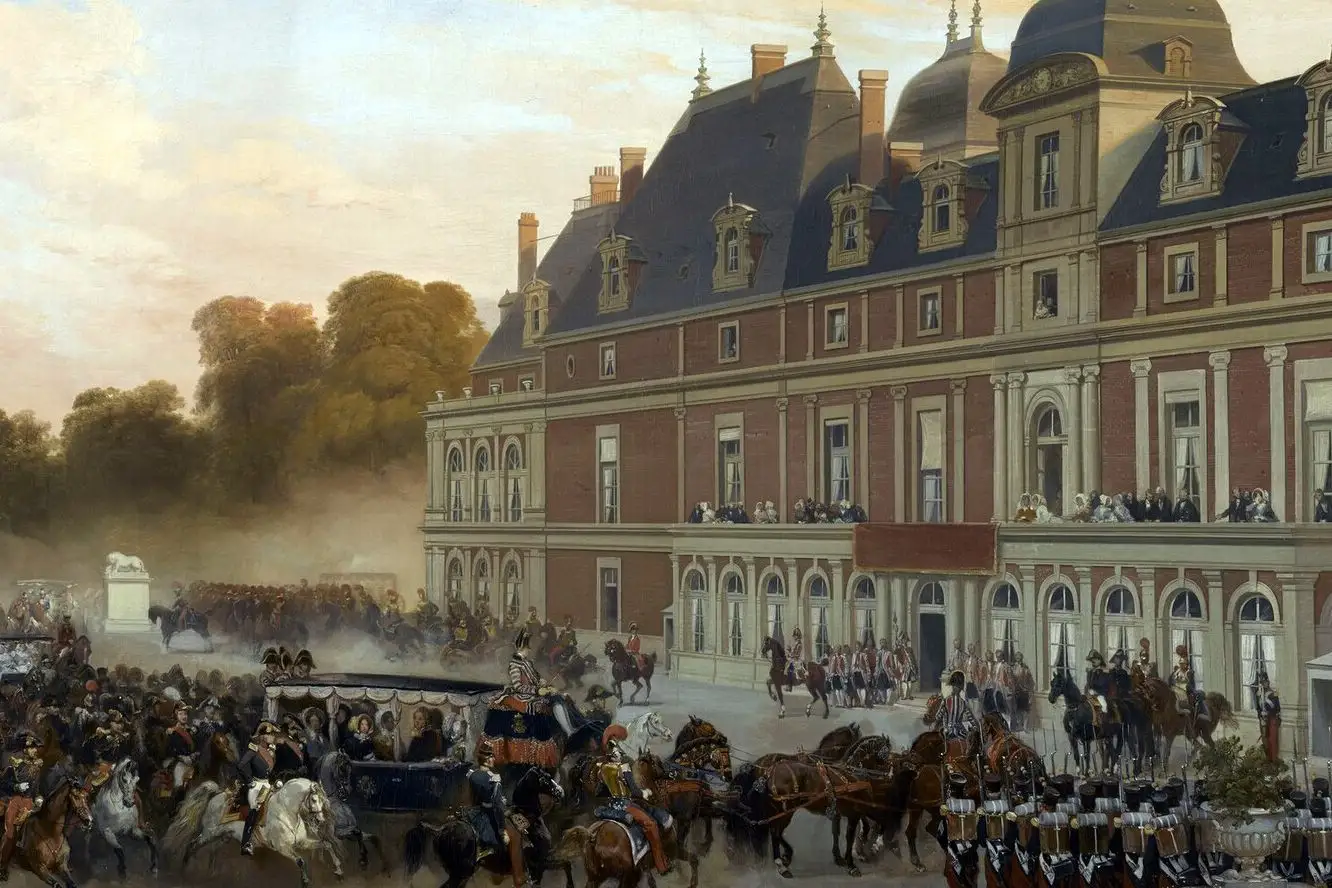
The Arrival at the Château, watercolor by Eugène Lami (Collection of Baron Creuzé de Lesser).
Among the minor masters one consults most readily because they were a faithful reflection of their time, Eugène Lami has acquired a privileged place. It is not that he is easy to classify within one of the aesthetic factions that vied for dominance last century—a century his laborious life almost entirely spanned. He never, on the contrary, shut himself away in proud isolation. Instead, he moved through political revolutions and revolutions in taste alike, attending, with sketchbook in hand, popular uprisings as well as the galas of kings and emperors. He skirted the Romantic battle, the Realist battle, and the Impressionist battle, without ever being carried away by the fever of his neighbors, whether they were aggressive innovators or embittered conservatives.
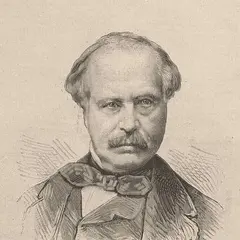
Lami was a man as amiable and balanced in his life as in his art—a charming man, a loyal friend, a dependable comrade, grateful to his masters, and benevolent toward young artists. He was as modest as he was distinguished, with a sense of propriety that made him shun publicity and a horror of art critics. He never knew the torments of those who had to forcibly impose their aesthetic and technique on a surprised public, for he had the good fortune to find his formula and his path from the very beginning. He tirelessly created works that were, for his contemporaries as for himself, a perpetual amusement.
A Definitive Chronicle
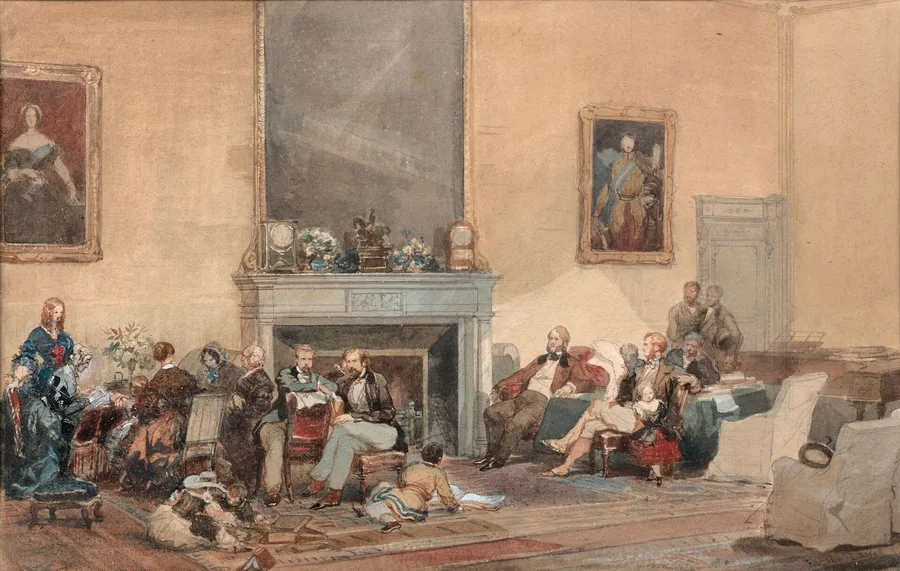
Death did not interrupt the pact Lami had made with good fortune. This master, perfect in his genre, has just been honored with a book of a quality that few artists have deserved, thanks to our contributor M. Paul-André Lemoisne, a librarian at the Cabinet des Estampes (Department of Prints and Photographs).¹ The demands of publishing give rise to so many provisional monographs that a definitive study, such as this one, must be noted with gratitude. The subject was fresh, and the materials were not the kind one can assemble without leaving one's armchair.
With a scholarship all the more pleasant for its lack of ostentation, the author has masterfully navigated the innumerable difficulties inherent in his work. Using often unpublished documents, he has drawn a faithful portrait of the man and his era, guiding us through the century in the company of its painter with the simplicity, grace, and goodwill of the painter himself. In the least-visited museums and the most jealously guarded collections, he has discovered and consulted hundreds of works whose histories he has patiently and confidently reconstructed. The conscientiousness and reliability of this work will be felt even more keenly when we have in hand the catalogue of some two thousand entries that M. Lemoisne is about to publish in the Archives de l'Art français. We should add that the publisher, as is his custom, has made this volume a most sumptuous monument. Lami was a born illustrator, and his works fit into a book as if they were made for it—all the more so when, as in this beautiful volume, the richest resources of modern printing have been lavished upon them.