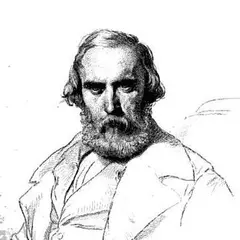


A painful charm clings to the memory of those artists who, suddenly snatched from their nascent work, die without having had time to express the intimate secret of their dream. A kind of mystery protects them; what we regret in them is not only the talent their youth demonstrated, but also the unknown their future held. For these artists who disappeared before their time, one wonders what path they would have taken, what would have become of their talent, and how, in an era where the face of art changes so quickly, the originality of their nature might have reconciled with new fashions or reacted against the tendencies of those who outlived them.
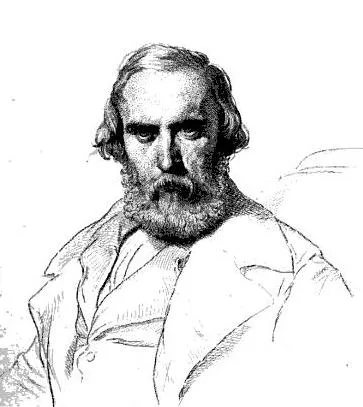
These questions, and others still, naturally arise in connection with the regrettable artist whose portrait the Gazette des Beaux-Arts publishes today: Eugène Buttura. Some may have already forgotten him, for we live in a time when mourning is brief, but our faithful criticism remembers him. We know the value of Buttura's talent and have kept the memory of his successful endeavors. We believe, moreover, that it is good to revisit from time to time the masters the French school has lost, especially when, like the one we are about to discuss, they deserve to occupy, if not a chapter, at least a page in the history of contemporary art.
Academic Training and Early Success
Eugène-Ferdinand Buttura was born in Paris on February 12, 1812, but he had Italian origins. He was the son of the learned Lombard critic Antonio Buttura, who came to France after the Treaty of Campo-Formio, entered the Ministry of Foreign Affairs, taught at the Athénée, and attached his name to many fine editions of Italian poets. Having shown a keen taste for painting from an early age, Eugène Buttura entered the studio of Victor Bertin, who was then the high priest of the heroic landscape. He later took lessons from Paul Delaroche, for Buttura wanted to learn to draw the human figure; in his generous ambitions, he believed that a landscape painter must know everything.
This was a time when the academic school was being challenged by a new principle. Painters who were already making a name for themselves—Cabat, Paul Huet, Jules Dupré—were inaugurating a manner in art that threw Victor Bertin and Bidault into singular astonishment. Criticism itself seemed to admit that a cottage shaded by an apple tree, or a Norman meadow dotted with white sheep, could hold as much interest as the View of the Temple of Minerva Caphies or the steep perspectives of Mount Cithaeron, which Valenciennes had studied in the environs of Paris.
The cause of the "stylish landscape" (paysage de style) was compromised, and one could already wonder if a long life was promised to this somewhat artificial genre, of which Roger de Piles so aptly said:
The sites in it are all pleasant and surprising; the buildings are only temples, pyramids, ancient tombs, altars consecrated to deities, or pleasure houses of a regular architecture; and if nature is not expressed in it as chance shows it to us every day, it is at least represented as one imagines it ought to be.