
Like his contemporary and friend Paul Baudry, Élie Delaunay was a Breton. One could find more than one analogy in their character and talent stemming from this common origin. Both were tender of soul and proud of spirit, with a very keen sensitivity and great outward reserve. They were captivated by their art to the very end, with the same anxious conscientiousness. Both were hardworking and determined, yet beneath a more or less worldly and casual appearance, they knew how to live silently in a century of clamor and remain independent amidst intrigues.
An Auspicious Beginning in Brittany
Paul Baudry, the man from Vendée and son of peasants, had, it is true, a rougher start in life; from it, he retained a more decisive, almost military bearing, and deployed a more ardent and thoroughly plebeian energy in the pursuit of his noble ambitions. Delaunay, the man from Nantes, came from good bourgeois stock and was accustomed to well-being from an early age. With a more complex physiognomy, he seemed to approach his work with a certain nonchalance, a kind of detachment. Both, however, brought the same thoughtful and disinterested convictions to the practice of painting. Both founded these convictions on a fervent admiration for and attentive study of the Renaissance masters, toward whom they maintained an attitude of grateful veneration until their deaths.
The premature passing of Delaunay, following so closely on that of Baudry, without either having completed his life's work, was a great loss for the French School. In the noisy period of frivolous anarchy it was traversing, there had been some chance of seeing the most serious minds of the new generation rally around these somewhat haughty, but learned, dignified, and modest artists.
A Vocation Nurtured and Defended
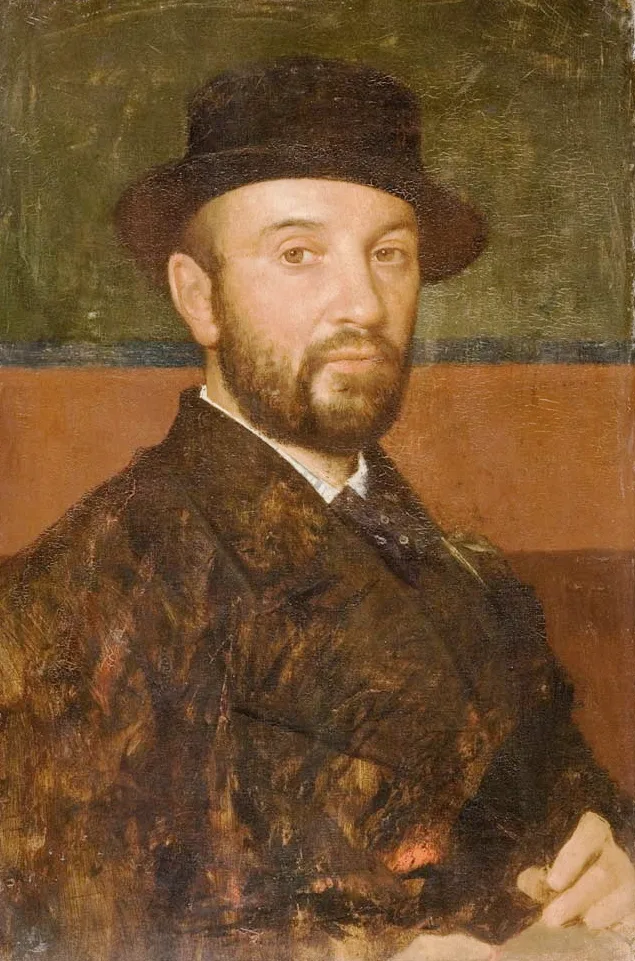
The patriarchal and religious environment in which Delaunay grew up predisposed him from an early age to all the pieties of the heart and mind. His family had long lived in Nantes, in the parish of Saint-Nicolas, where he was born on June 12, 1828, and whose church proudly preserves works from both his youth and his mature years.1 His father, who had been a prisoner for a long time on English hulks during the wars of the First Empire, worked as a wax-chandler. The child received his first education at an ecclesiastical institution, the Institut Pratique. It was there that he soon manifested, through naive attempts, his aptitude for drawing and painting.
As soon as these dispositions became known to his father, and especially as they seemed to take on the character of a determined vocation, Monsieur Delaunay senior resolutely opposed them. Painting was, at that time, still a despised and unprofitable art that rarely provided a living. Fortunately, the young boy found three patient and faithful allies within his own home: his mother and his two aunts, who better understood his desires and his pain and never ceased to work on his behalf. The brother of these three excellent women, Monsieur Leroy, also sided with his nephew in family councils.