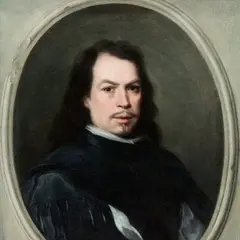
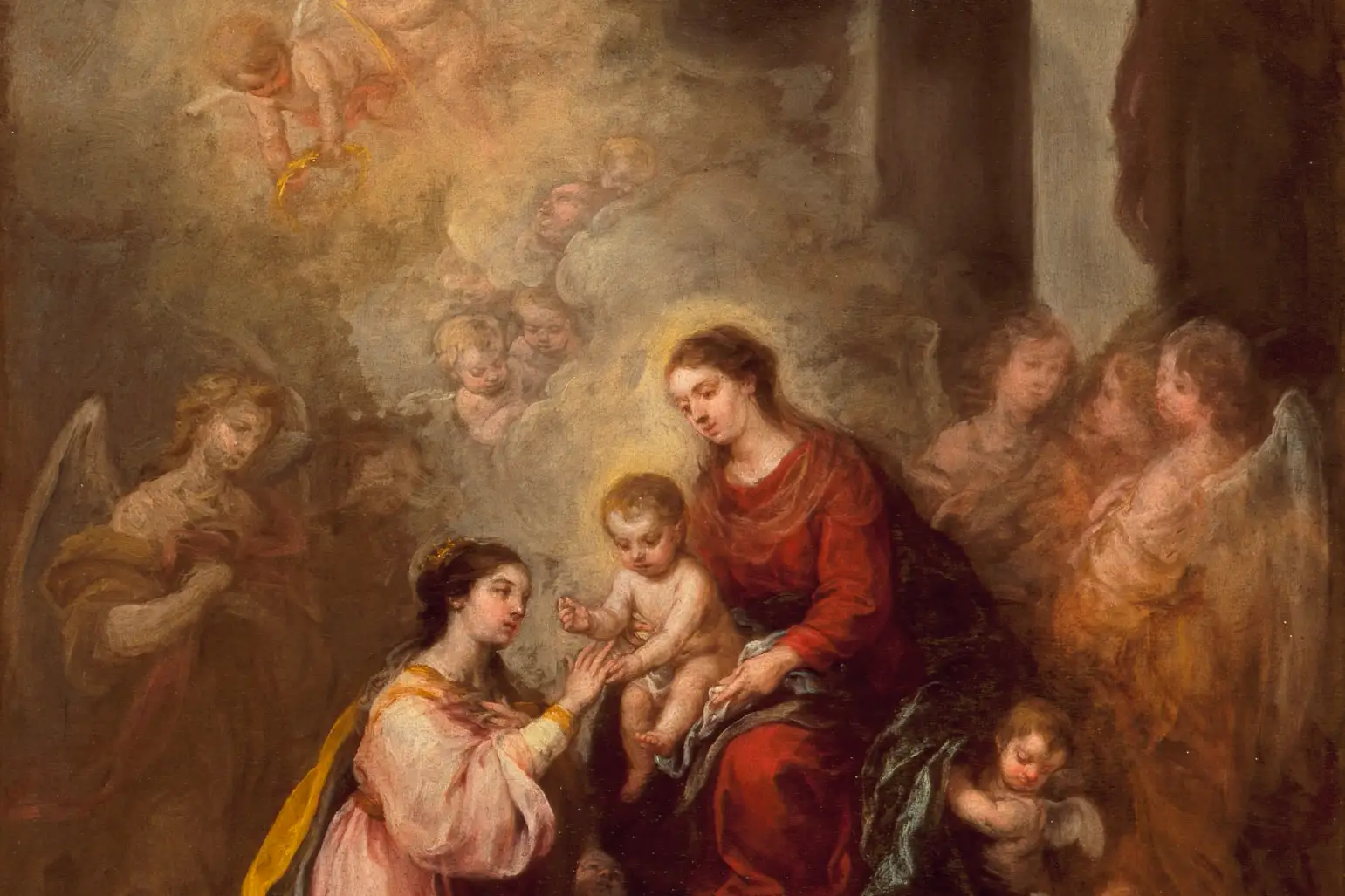
After completing the decoration of the Capuchin convent in Seville, Bartolomé Esteban Murillo departed for Cadiz. This journey took place at the beginning of the year 1680. Murillo was to paint a large altarpiece, The Mystic Marriage of Saint Catherine of Siena, and several other less important subjects, in fulfillment of a long-standing promise to the Capuchins of that city.
The Final Commission and Mortal Injury
A sum of nine hundred piastres fuertes was allocated for this work, originating from a bequest made to the convent by a wealthy merchant named Juan Violato, a Genoese national established in Cadiz. Murillo set to work immediately, and within a few weeks, he had already prepared and begun to paint the beautiful group of the saint receiving the ring of mystical betrothal from the hands of the infant Jesus, who sat on his mother's lap.
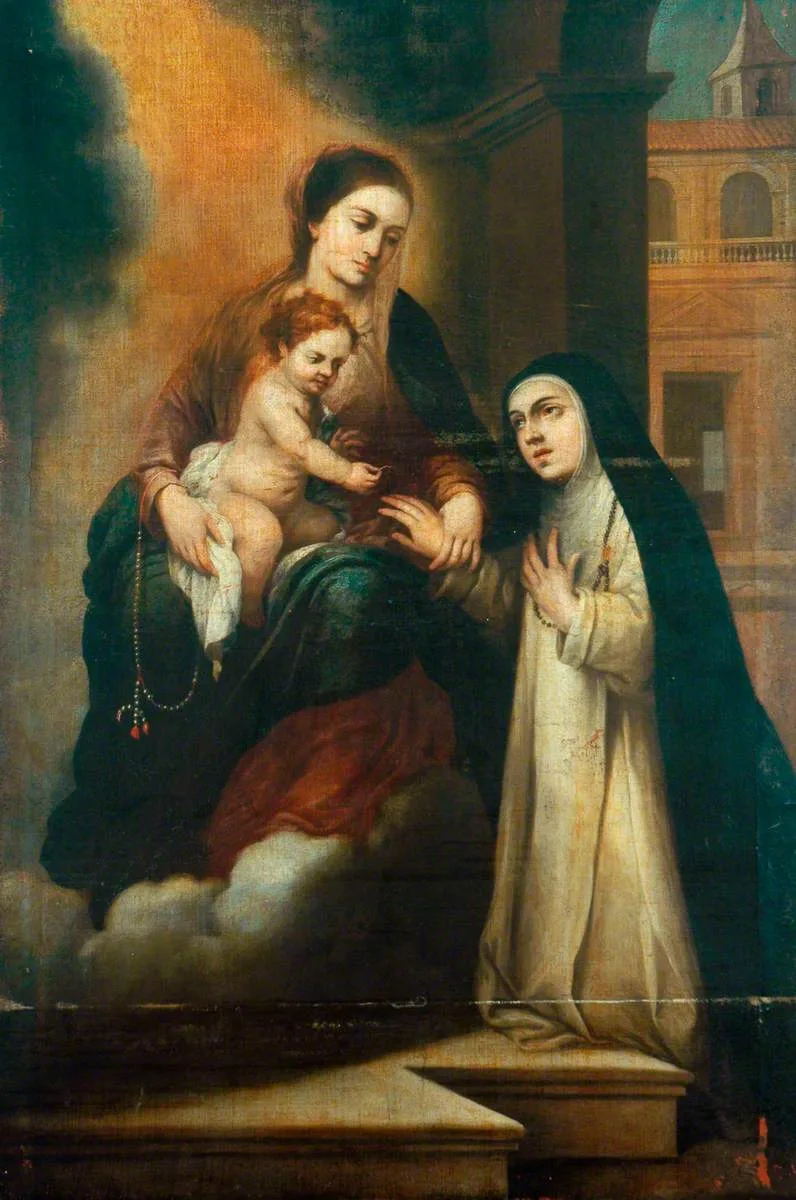
However, a serious illness, or perhaps a fall from his scaffolding—for tradition is not unanimous on this point—forced him to leave his painting unfinished. It was Menesès Osorio, his favorite student, who completed the Saint Catherine. Murillo had felt himself mortally wounded. He returned immediately to Seville, where his life became a period of languor and suffering.
At that time, he lived in the parish of Santa-Cruz, and every day he would go to the church to meditate for a few hours before the famous painting by Pedro Campana, the Descent from the Cross, for which he held a kind of reverence. "One can understand," remarks M. A. de Latour, "this admiration in the leader of a school that was at once naturalistic and Catholic; for, alongside the religious sentiment revealed in the overall composition of this painting and in the choice of the moment, with an ideal majesty, there is a reality in the details that engages the eye."
A saying attributed to Murillo wonderfully conveys the dual interest that constantly drew him back and held him for so long before the august scene. One evening, as he lingered longer than usual, the sacristan in charge of closing the doors approached him and said, "What are you waiting for to leave? The Angelus has rung."
"I am waiting," replied Murillo, "for these holy men to finish taking our Lord down from the cross."