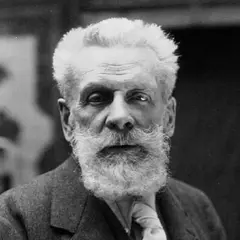
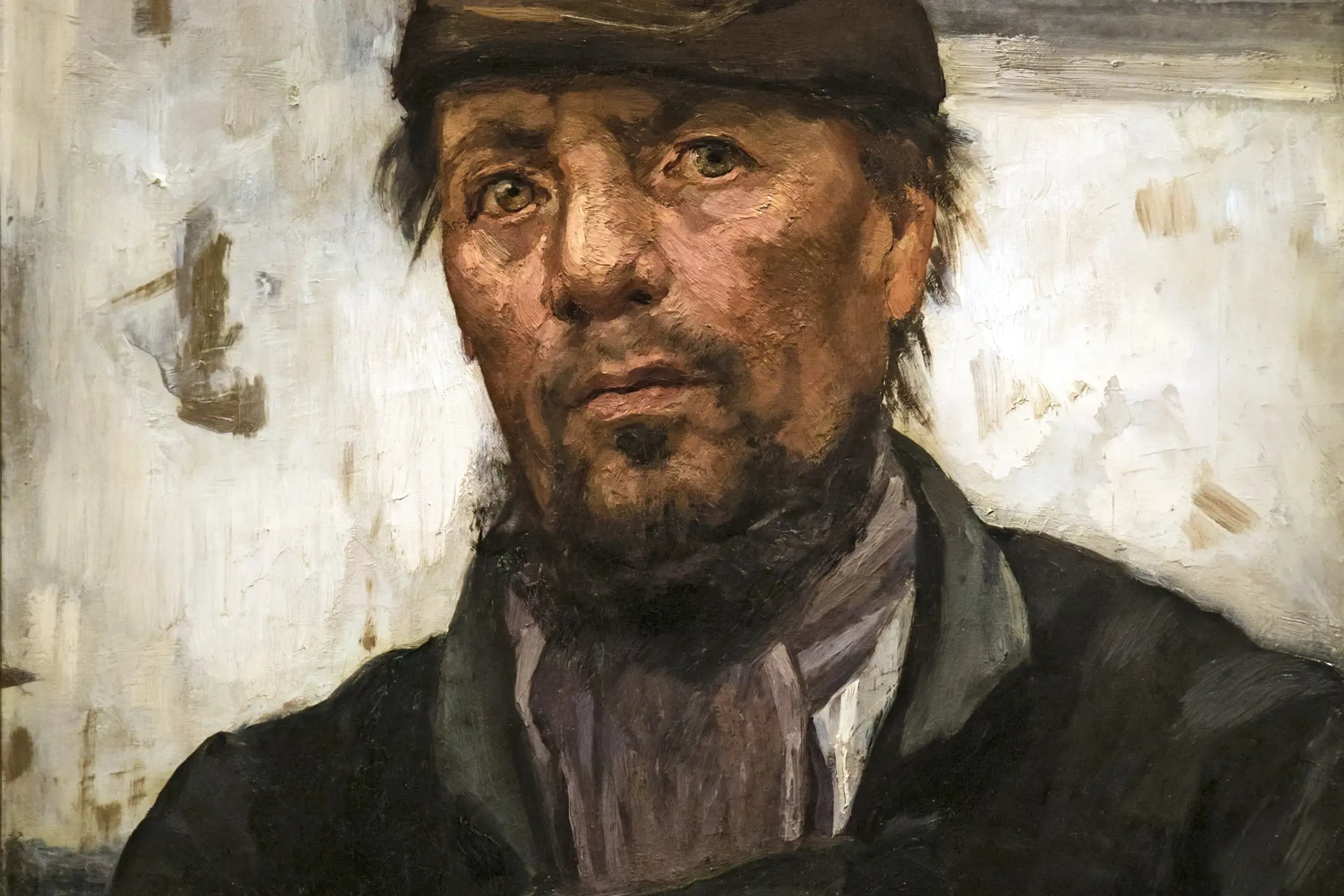
Our last meeting dates back to the first days of last summer. I can still see him in his invalid's chair, near the door of his studio, a volume of the "Grands Écrivains" edition of Saint-Simon on his lap. He was certainly older, his thinned face bearing the marks of age and illness, but he retained in the carriage of his head, in his gaze, and in his smile that charming expression of moral nobility, ardor, and kindness that, until his final days, lingered as a reflection of the best years of his youth.
Our conversation first turned to our mutual friend, Louis de Fourcaud, who had died in the first months of the war. Then, as the conversation drifted, memories arose, and in less than an hour, we passed in a kind of retrospective and melancholy review of the three decades that had elapsed since we first met, a relationship that soon turned into friendship. We recalled the names and faces of departed friends: Duez, Cazin, Frits Thaulow, Constantin Meunier, Dalou. We reminisced about the monthly dinners under the smiling chairmanship of Puvis de Chavannes, who willingly let the robust, and occasionally ribald, Burgundian show through the evocator of Saint Genevieve's heroic eclogues. These were very lively dinners where musicians, painters, and writers met, which a maker of bad puns had nicknamed the "pris de rhum" (drunk on rum)—however strict the wine and liquor menu might have been—under the fallacious pretext that no winner of the Grand Prix de Rome had ever been seen there, a claim, moreover, disproven by the presence of Vaudremer, André Messager, and Besnard.
We also recalled the trip of a group of French artists, guests of the brewer Jacobsen at the Copenhagen Exhibition of 1888, a journey fertile in picturesque incidents. Roll reminded me of one that drew great laughter: Falguière, wrapped in a large cloak on the deck of the ship as we rolled in sight of Elsinore, performing the great scene from Hamlet. We spoke of the stormy beginnings of the Société Nationale des Beaux-Arts at the old Champ-de-Mars, and of so many recent bereavements. We also spoke of death, which had already brushed past him, whose approach he had felt more than once, and for which he was preparing, without vain bravado, a grave and smiling welcome of stoic courtesy.
Before we parted, he wanted to show me the last fragment of the great decoration for the Petit-Palais in his studio, which he had just finished. He had worked on it with passion, despite the increasingly frequent failures of his strength and health.
And now the book is closed. I must summarize and characterize his life and work for the readers of this Gazette, where he was so often discussed during the Salons, and where I myself was more than once called upon to speak of some of his most important works—not without a few reservations here and there. But he was one of those who neither ask for nor offer their friends insincere compliments. His integrity as an artist, like his dignity as a man, was exemplary in a time when showmanship, carnival-barker advertising, and the degrading intervention of dealers in the relationship between art and criticism have contributed so much to the decline of professional ethics.
Early Life and Artistic Formation
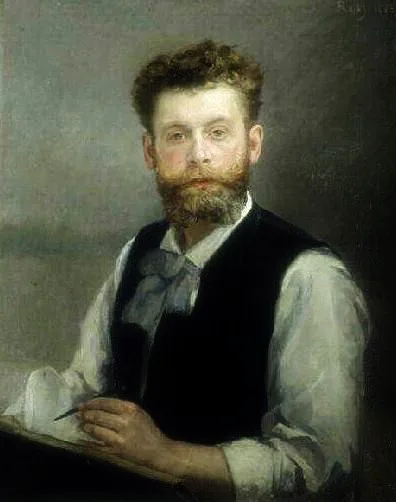
What of his life? It was simple and straightforward; the society columnists he avoided never found much material for their copy. Let us recall in a few words what may be of interest to his artistic development. He was the son of a furniture manufacturer of Norman descent, who had moved to Saverne in Alsace before settling in Paris. Alfred Roll, born on March 1, 1846, was initially destined to continue the family business. His studies, from the Collège Chaptal to his apprenticeship, were oriented toward this technical preparation. He was taught all the elements of the trade, and more than one piece of furniture was made by the father from the son's designs.