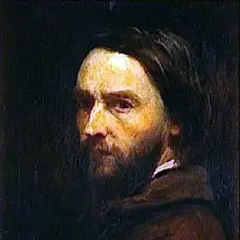
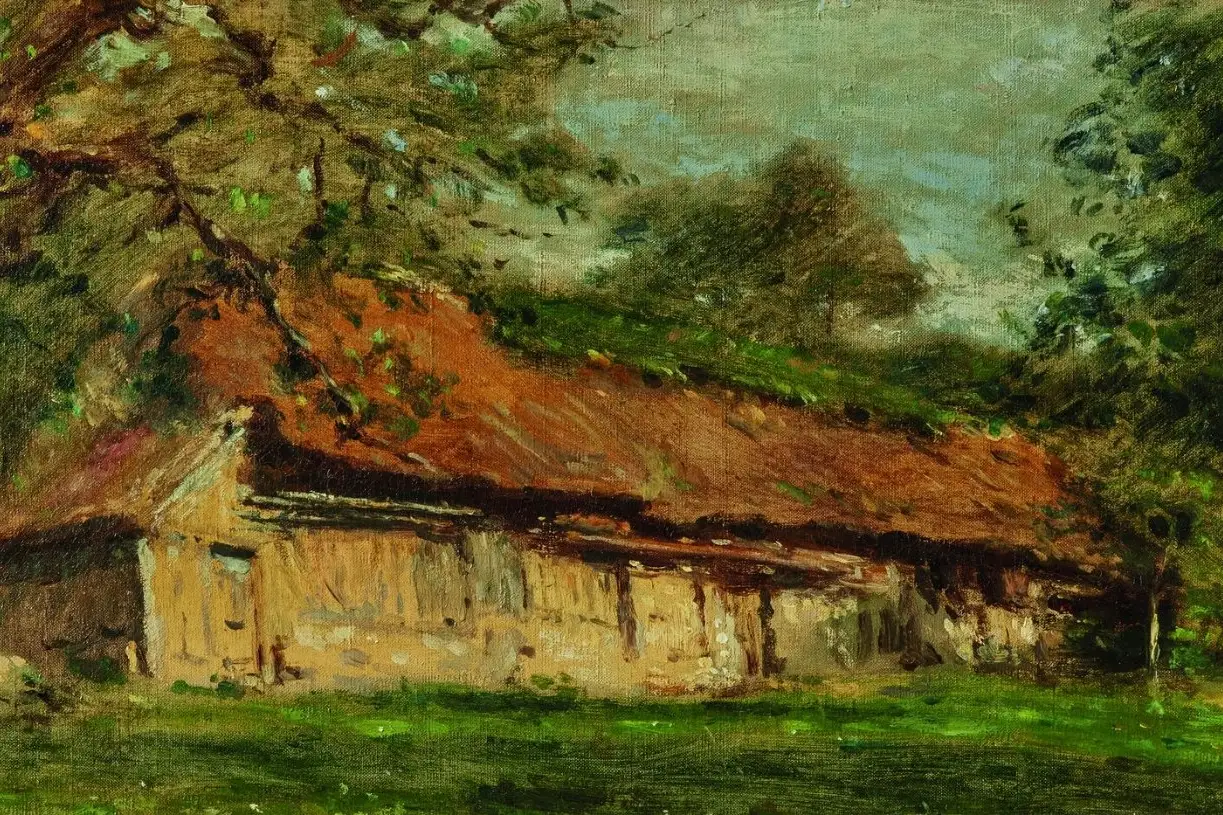
The painter we propose to study here, without undue enthusiasm or a preconceived admiration, is almost an unknown figure. His reputation has not extended beyond a very restricted circle of enthusiasts and friends. He was, nonetheless, an artist of real value, sincere and convicted, whose rare qualities deserve to be brought to light. He found, moreover, in the esteem of his most respected colleagues, a just compensation for the indifference of the crowd.
An Artist of Sincere Conviction
Adolphe-Félix Cals was a highly personal artist who voluntarily distanced himself from the beaten path and resolutely walked toward solitude. Proud and modest at the same time, he waited for others to seek him out in his isolation. If for a moment he harbored the ambition of becoming a famous painter and achieving renown, he was quickly disillusioned, as evidenced by this passage from his correspondence: "I would like, I, a poor and weak worker, but wholly devoted, I swear it, I would like to leave a small trace of my passage in this world of the arts that I love with all my soul..."
This burst of vanity was short-lived, a momentary error. Never was a painter less ambitious, more modest, more completely disinterested, all while being conscious of his own worth. Cals painted for the pleasure of painting. "One must work," we read in one of his letters, "without worrying about anything other than the happiness of possessing nature. One must go at it with passion, with fury, thinking only of the joy of possession, which does not preclude a calmer, more reflective work into which one also brings that passionate feeling that the artist must always possess."
His greatest preoccupation, throughout his life, was to do better, to progress, to move forward. "I do not want," he wrote, "to concern myself with what may or may not please the public, which, besides, is such a fickle flock that one risks being greatly mistaken by chasing after it. I find myself so happy to make my paintings in complete freedom that I will continue, without caring what may be said of them, while seeking, of course, to do my best, with my own means..."
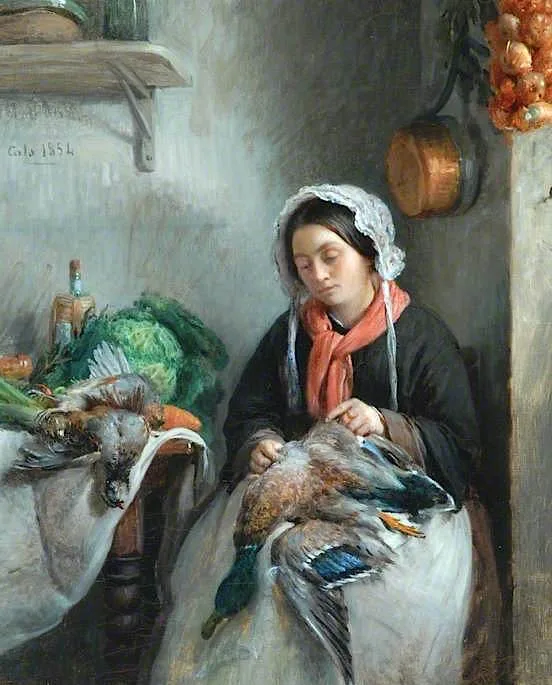
Cals aspired to nothing beyond the possibility of studying and producing, sheltered from need. Sheltered from need, for alas, he spent two-thirds of his life in poverty. His faith in art must have been immense, absorbing him so completely, to have given him the courage and strength to endure the bitterness of life. Yet, he never abandoned his work; even on the darkest days, he carried out his task, and his numerous canvases piled up in a corner of his miserable lodging without finding a buyer.
Cals was truly the kind of artist to whom, perhaps better than any other, this phrase from George Sand to Fromentin can be applied: "Whether one is appreciated or not, one can always feel like a true artist when one has precisely these joys and anguishes of production, and, whether one is triumphant or desperate, that is how one must live, since one was born for it." Ah, yes, he was indeed born for it, he who wrote: "I have a sort of passion that troubles me, that exalts me, that makes me see all things in their vague and, if I dare say, poetic whole; but I have the greatest difficulty in specifying anything, in formulating; it is for me an incredible labor, where the details are revealed only little by little, in the most painful way and at the same time with an infinite happiness...