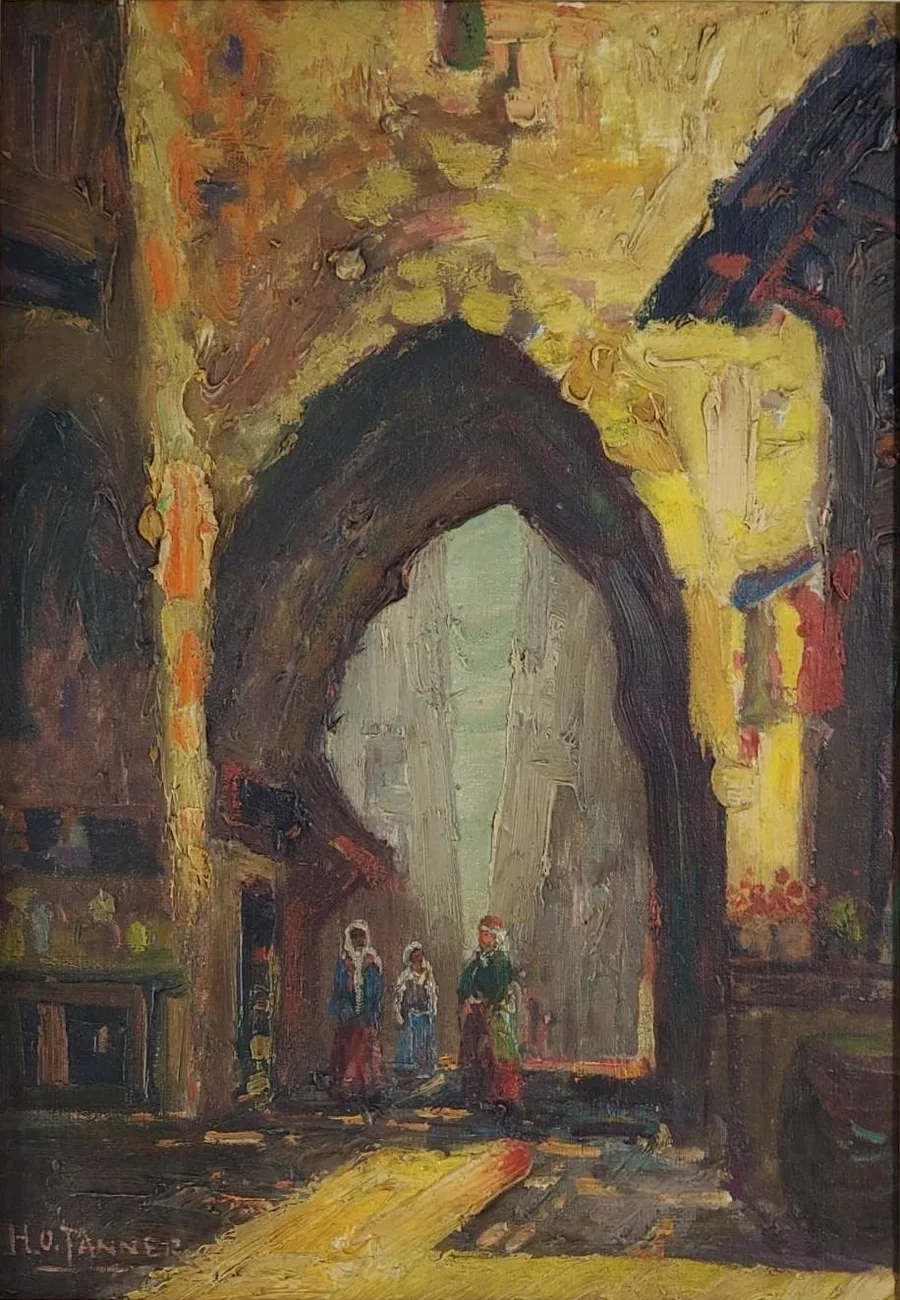
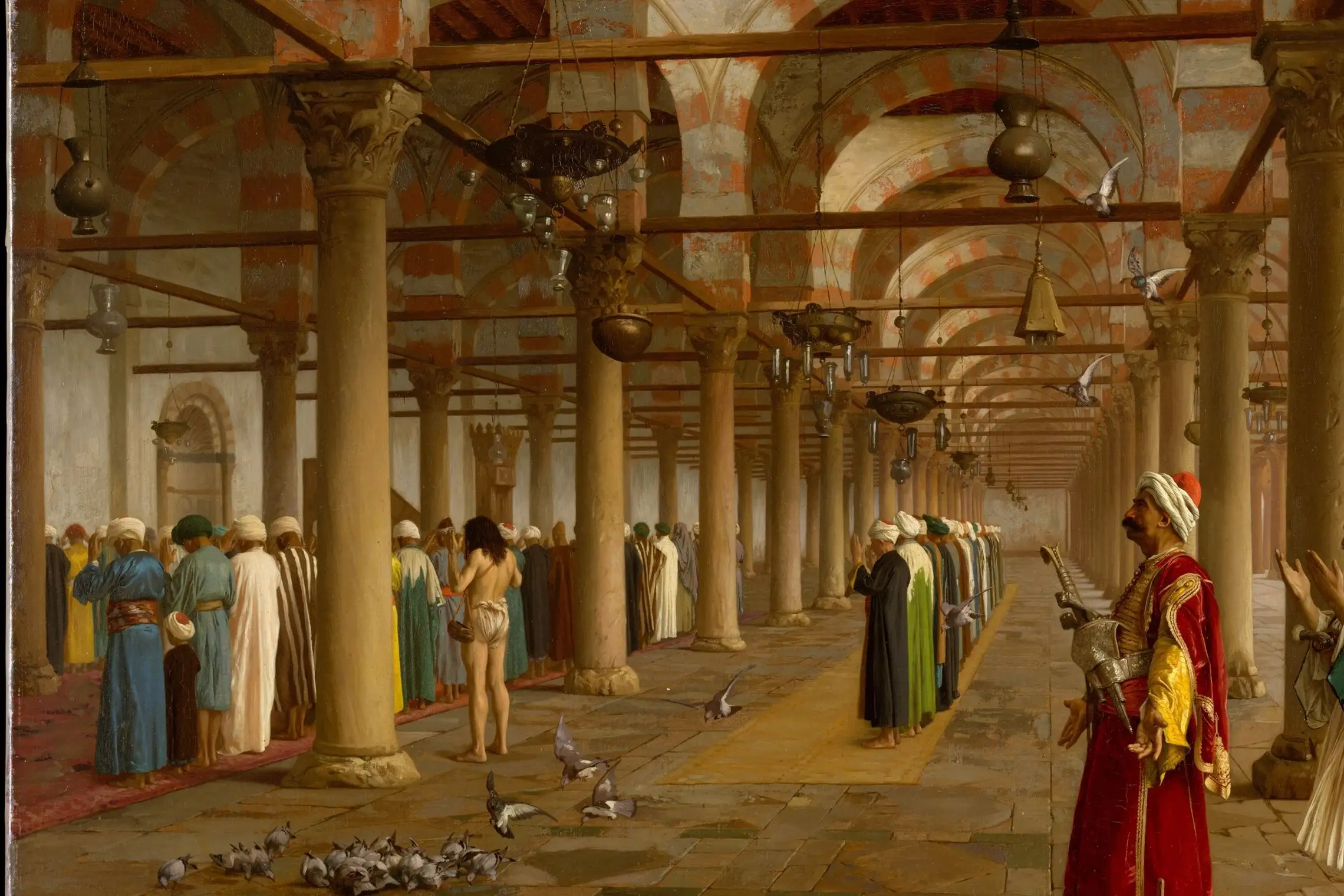
In conversation, we use the general term "Orient" to refer to the most diverse lands—a large part of Asia and the entire northern coast of Africa, which Arab writers, in an apt reversal, called the Setting Sun, the Maghreb. We describe as "oriental" any landscape from the lands of the sun, for which Provence and Italy prepare us; we call "oriental" any object manufactured in the lands converted by Islam. By extension, even India and the Caucasus fall within the Orient of the painters—the only one that concerns us here—and so this vague word finds a fairly clear definition at the frontiers of the old Muslim conquests.
The artistic geography of this great domain is becoming better and more widely known by the day; beneath its apparent monotony, it is extremely varied. The natural configuration and ethnography of the Mediterranean coasts, for example, offer samples of highly contrasting sites and races. In one sense, the Muslim shore of Africa forms a homogeneous whole; Tunisia, Algeria, and Morocco share the greatest similarities. Egypt is a kind of enclave, a separate territory inundated with a special light. Tripolitania still keeps its secrets; it has remained difficult to access and, alone among all the states formerly called Barbary, it is almost closed to observers.
Palestine and Syria bear no resemblance to the Moorish countries of Africa; both will soon be crisscrossed by railways, while Asia Minor, which could be attached to the same group, is rarely explored by artists. There lies the Turkish Orient, noticeably different from the Arab Orient and less easily penetrable. Finally, in Europe, Greece and the Archipelago constitute an annex, a preparation for the spectacles of the Asian world.
The Western Gaze on a Distant World
One might even say that the edges of Europe are, in a way, fringed and illuminated by an oriental reflection. I have said in these very pages, long ago, that the island of Ischia, in the Gulf of Naples, has a premonition of the Orient; the same is true of Sicily and Corfu. The confines of Russia cross territories subject to oriental customs and civilization. Our readers have seen in the work of M. Georges Marye that the Retrospective Exhibition of Muslim Art included, under this vast heading, objects of art and industry manufactured from Turkestan to Senegal and from the Bay of Bengal to the Black Sea. Even the Sudan can be cited as a country that, since the latest political events, is connected to the oriental type. We Westerners border the Orient through imperceptible gradations, just as the Orient borders the yellow and black races.
The organizers of the recent exhibition thought it would be instructive from two perspectives to place a selection of French school paintings related to the Orient alongside the museum of oriental arts they were assembling. The halls of the Palais de l'Industrie would not have sufficed if, reaching further into the past and going beyond national art, they had wanted to present us with a review of the artistic documents that elucidate the Orient of yesterday and today. Artists of our time willingly emigrate toward the Levant, toward the desert and the oases. The taste for positive exactitude that dominates among connoisseurs currently forbids the painter, to whatever country he may belong, from imagining the Orient as it should be, and instead urges him to study it as it is, in its smallest details. Exoticism is in fashion; communications are easy; travel is safe. The painting of unknown landscapes and unusual customs has seen great development everywhere, perhaps to the detriment of creative and concentrated art.
A History of Distance and Fear