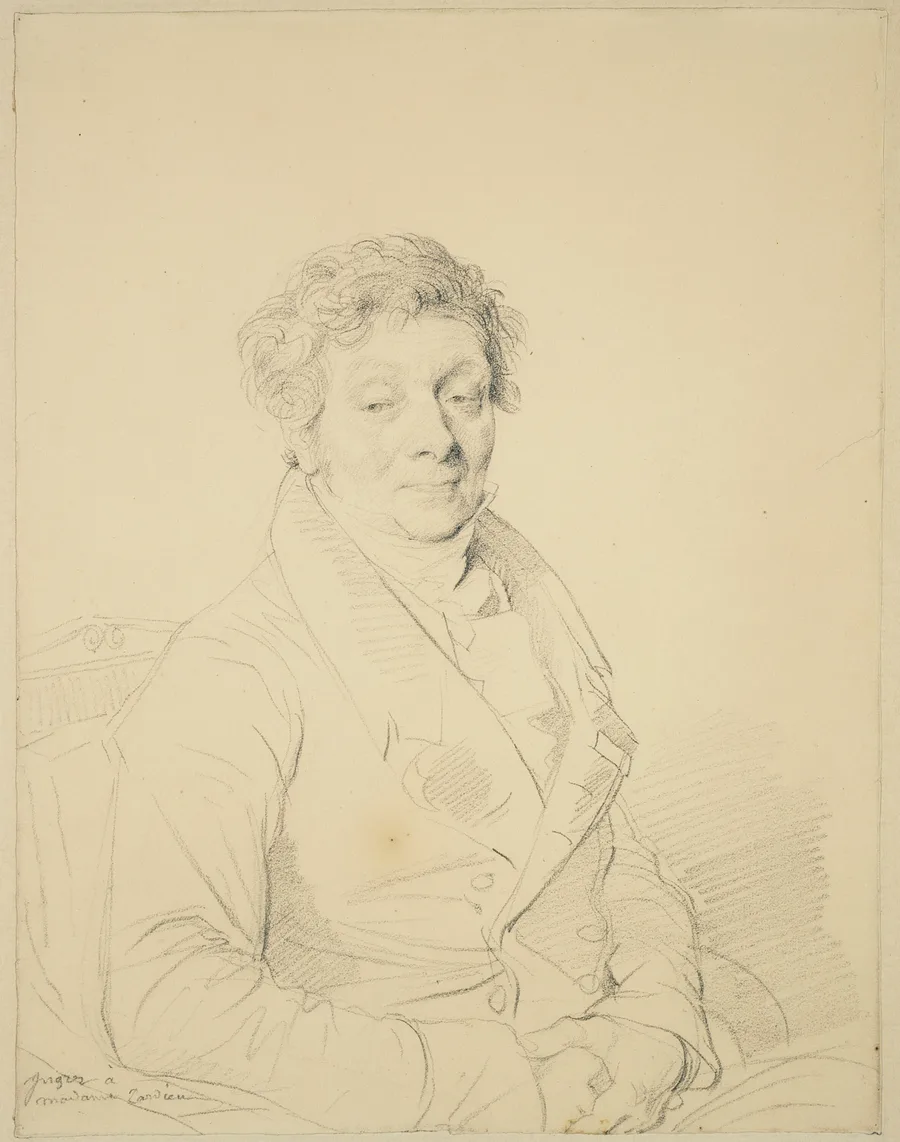
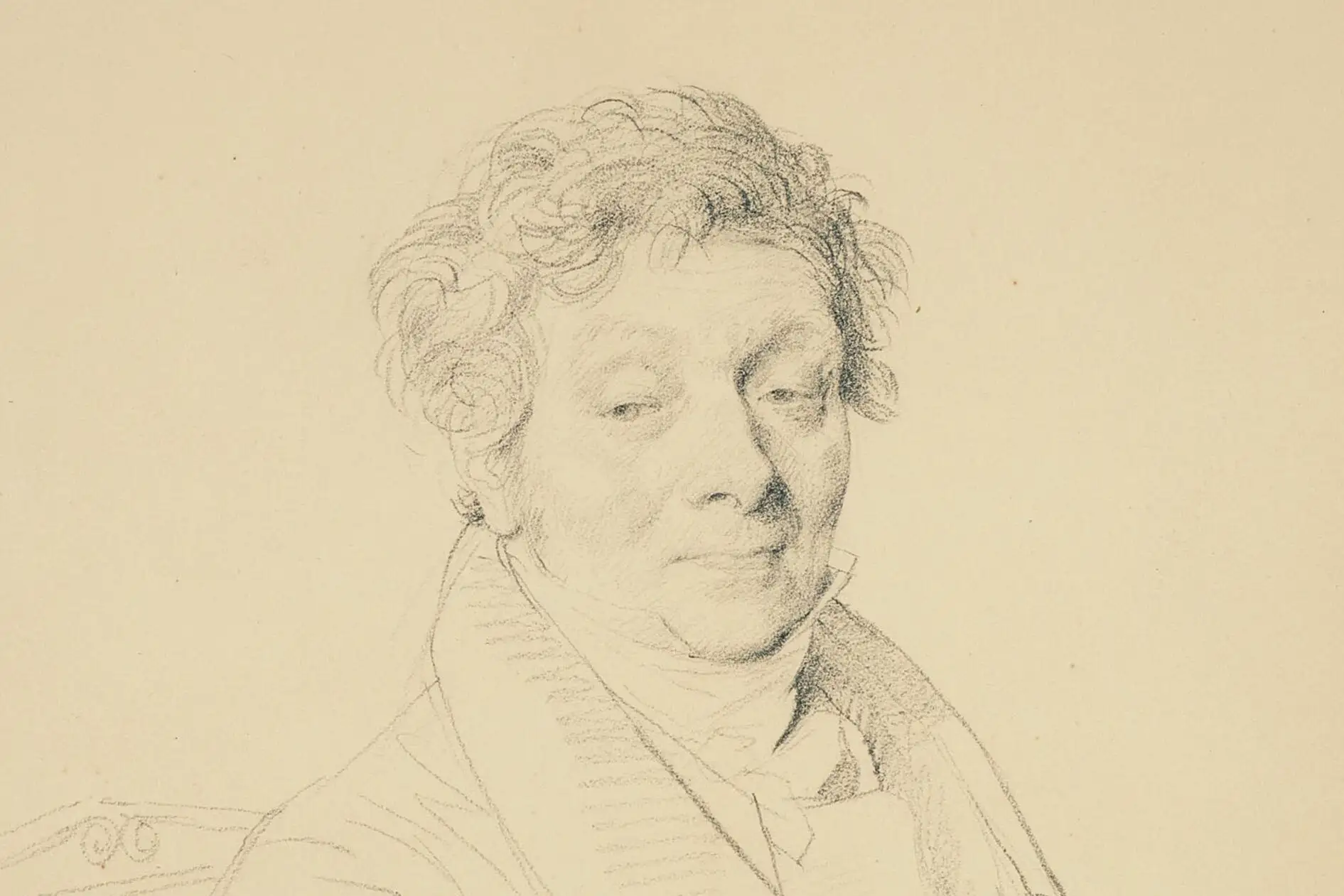

In certain families, by a rare privilege, a taste for the arts is perpetuated for several generations; foremost among these is the Tardieu family. The first to bring renown to this name was Nicolas-Henri Tardieu. The creator of a great number of esteemed engravings—among them the Portrait of the Duc d'Antin, after Rigaud, and the Embarkation for Cythera, after Watteau—he obtained the title of Engraver to the King and, in 1720, entered the Academy, where his son, Jacques-Nicolas, succeeded him in 1749. We would have cause to speak with praise of several other members of this family, who were allied with the Cochins and the Belles, if our intention were to write a history of the Tardieus. Today, however, we wish only to retrace some of the most salient features in the life of an artist whom many of us knew, and who not only continued but augmented the glory bequeathed to him by his ancestors.
An Artistic Lineage and Early Career
Pierre-Alexandre Tardieu was born in Paris on March 2, 1756. His father, who had to raise twenty-six children, was the most excellent copper-plate polisher in the capital. Through his profession, he was connected with the most celebrated engravers of the era and became friends with Johann Georg Wille. This renowned artist wished to be the godfather of the man who is our subject. Everything thus conspired to draw the young Tardieu toward a career that had brought distinction to several of his relatives. From the age of ten, he dreamed of one day taking a seat at the Academy beside his uncle. Consequently, when one of his brothers, the geographical engraver Antoine-François Tardieu, spoke of taking him to Belgium, where fortune called, he refused to follow, fearing he would see the dream of his childhood vanish.
His first master was his uncle, Jacques-Nicolas Tardieu. Then, in 1773, he entered the studio of Wille, who at that time enjoyed great public favor. It was there that he became intimately acquainted with Charles-Clément Bervic, who, in the competition for the Grand Prix for engraving, surpassed him by only a single vote. Tardieu's first attempts were copies he made after prints by Nanteuil and Goltzius, in order to make his hand more flexible while giving it all the desired crispness and firmness.
He was still young when his portraits of the Duke de Montmorency and a bust of Henry IV earned him the most flattering praise, particularly from Beaumarchais, who commissioned him to engrave the Portrait of a Young Voltaire, after a painting by Largillière. The considerable talent he demonstrated in rendering the philosopher's lively and witty physiognomy, as well as the perfection with which he indicated the texture of the fabrics, drew great praise from Beaumarchais, who was surprised at the knowledge he showed, so young, in an art whose practice is so difficult to acquire. The following year, in 1784, Tardieu finished a Bust of Voltaire, after Houdon, which attests to the engraver's uncommon intelligence combined with great manual skill.
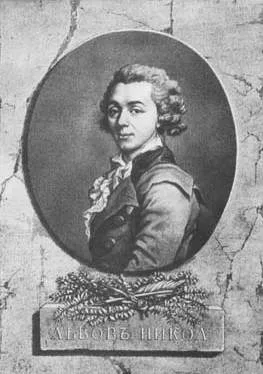
A few years later, he released a full-length Henry IV, after Pourbus. Alexandre Tardieu felt that he had finally produced a masterwork, and the delicacy of his soul made it his duty to credit the man who had once guided him with his counsel. On June 23, 1788, the eve of the feast of Saint John, he went to offer Wille his print of Henry IV for his name day, which was found to be "prettily engraved."