
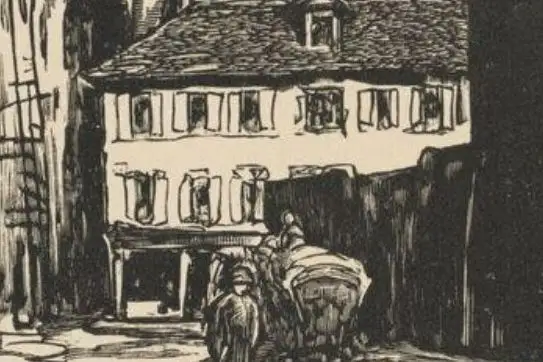
On a large white page, a checkerboard with, thank God, many squares yet to be filled, the life of M. Paul Baudier can be told in a few initial images. By their simplicity, character, and style, these scenes could already feature excellently among the most touching and charming productions from the old printing presses of Épinal, the famous center for popular French prints. The entire story is engraved on wood, as is fitting. The cut is sure, the tool is docile, and the work is a pleasure to behold in detail.
A Country Childhood
Paul Baudier came into the world in Paris on November 18, 1881. For the good of his health, he was sent to the countryside to live with relatives in the Beauce region, in a village called Auxy, not far from Montargis. He had never liked the city. The infinite plains and fields stretching as far as the eye could see revealed to him the kind of nature his instincts sought, the kind toward which a peasant atavism drew him.
He delighted and felt at ease in the center of these calm, monotonous horizons, where the silhouette of a tree or a plow sometimes provides the eye its only anchor to keep from getting lost. For him, there was no sadness in these neutral settings. On the contrary, he found a constantly changing, though still unexplained, pleasure in following the slow course of clouds across the vast sky. He discovered a whole play of harmonious lines on the perspectives of the bare earth, in the mosaic of plots and furrows reaching to the furthest frontiers of the expanse.
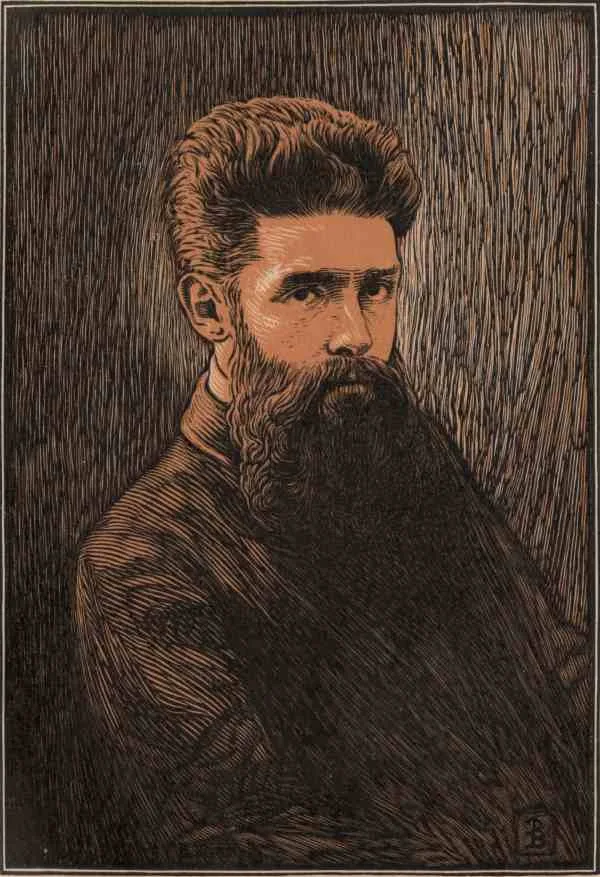
When he first had to return to the capital at the age of eight, the child suffered as if in exile, so much so that he had to be sent back to the village. Yet, the time came when the return had to be permanent. By then, Baudier was fourteen. His eyes had opened more widely to the world, and this time they wept—not the tears of an adolescent deprived of what he cherishes, but those of an artist separated from what he has come to understand.
With nostalgia in his heart, he entered the workshop of his brother, the engraver Edmond Duplessis, to learn the craft of wood engraving. There was no shortage of work; they engraved for the publisher Helzel and others. The workshop, the secrets of the trade, the good humor of his comrades, the ingenious labor, and the smell of inks might have immediately persuaded the little country boy to become an artisan. But it seems another idea was deeply ingrained in him. To become a farmer, he ran away one evening, returning to his cousins in Beauce. It was not without difficulty that he was torn away again. Finally consenting to the most bitter disappointment, he accepted life as a city dweller and put the apron back on, since he had to definitively abandon his dream of hoes, plowshares, and ripe wheat.