
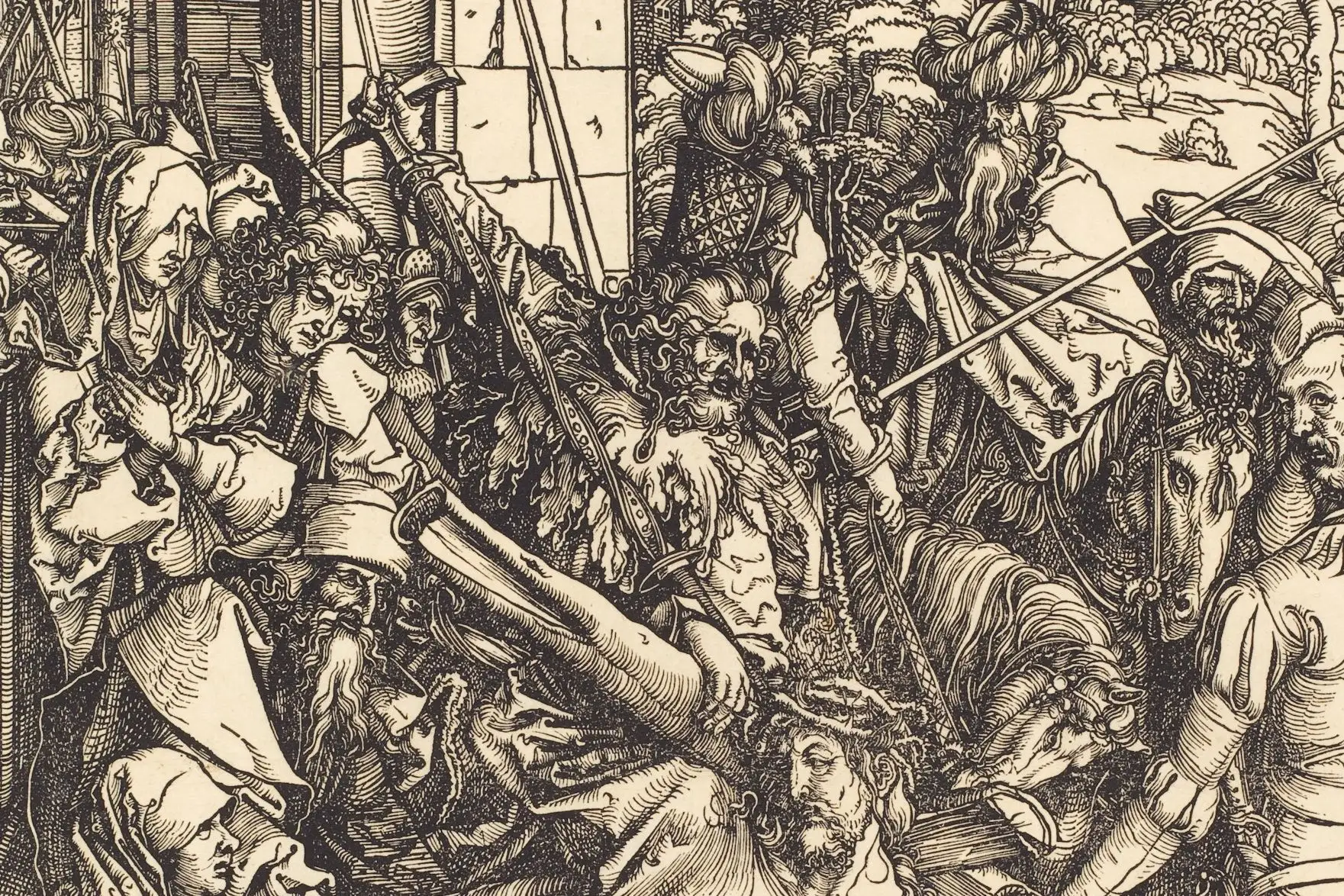
The origins of engraving have been the subject of so many in-depth discussions and fruitful investigations since the second half of the last century that it seems almost impossible to add anything to the sum of knowledge we possess. And yet, not everything has been said; not all questions have been clarified, nor have all the monuments been rediscovered. In publishing the results of a recent discovery today, we do not—need it be said?—claim to close the debate or produce definitive arguments. Our sole intention is to contribute one more element, an authentic one, to the body of acquired information. We wish to present the fact that the Imperial Library now possesses two prints that are not only nearly half a century older than the first proofs of Florentine nielli, but are also several years older than the most ancient dated woodcuts known until now: the Virgin of 1418, held at the Royal Library of Belgium; the celebrated Saint Christopher of 1423, belonging to Lord Spencer; and the Saint Sebastian of 1437, owned by the Imperial Library of Vienna, among others.
How did these two precious prints become the property of France? And what evidence demonstrates the authenticity of their origin? It is necessary, above all, to explain this.
A Landmark Discovery at the Imperial Library
A few weeks ago, the Imperial Library was offered the opportunity to acquire a 15th-century Latin manuscript. It was a collection of German provenance, of no apparent importance regarding its text, but containing, toward the middle of the volume, two of those pieces known as being "en criblé"—in the dotted manner. These works are recommended, in the absence of other merits, by their rarity, the singularity of their execution, and their very particular character among the engraved monuments belonging to the era of incunabula (early printed books).
The curator of the Department of Prints, to whom the proposal was made because of the presence of these two engravings in the manuscript, initially saw it as merely an opportunity to expand the series of works of the same genre, but of uncertain date, already held in our rich national collection. However, a few numbers he had noticed here and there while leafing through the manuscript, along with some semblance of chronological indications, allowed him to hope for a more significant result—perhaps even reliable information as to the age of the prints themselves.
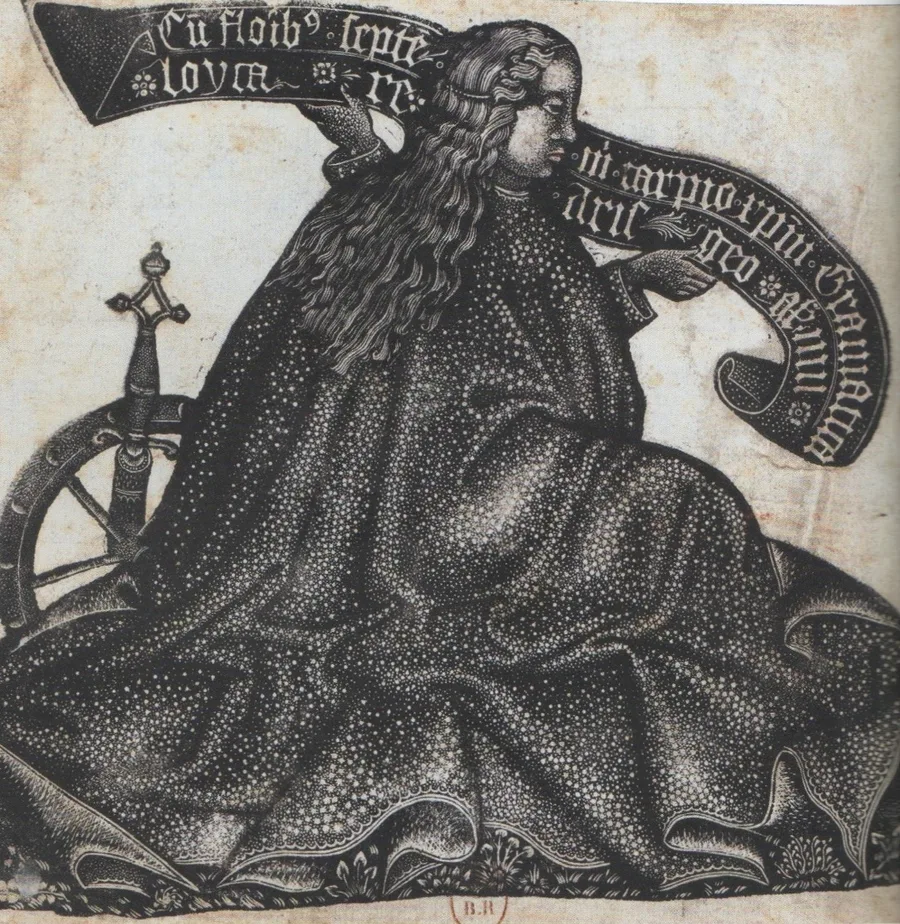
These prints offered a remarkable feature: instead of being, as is usual, glued onto the pages of the collection as isolated ornaments that could have been added to the text later, they had been printed directly onto the leaves before any work by the copyist's hand. This is proven with indisputable evidence by the lines of script written on the recto around the engravings, and by other lines on the verso, spaced so as to impinge as little as possible on the printed area. Therefore, if one could succeed in determining the precise date of the manuscript, the date of the prints would, in turn, become positive, since the execution of these two pieces had infallibly preceded the transcription of the text that accompanies them.
Consequently, the curator of the Department of Prints hastened to acquire the collection for the collections entrusted to his care, reserving the right to seek, for the solution of paleographic difficulties, the insights and authority of the proper experts. And here is what, with the assistance, or rather under the direction, of his two learned colleagues from the Department of Manuscripts, Messrs. Natalis de Wailly and Léopold Delisle, he believes he has managed to unravel and establish.