
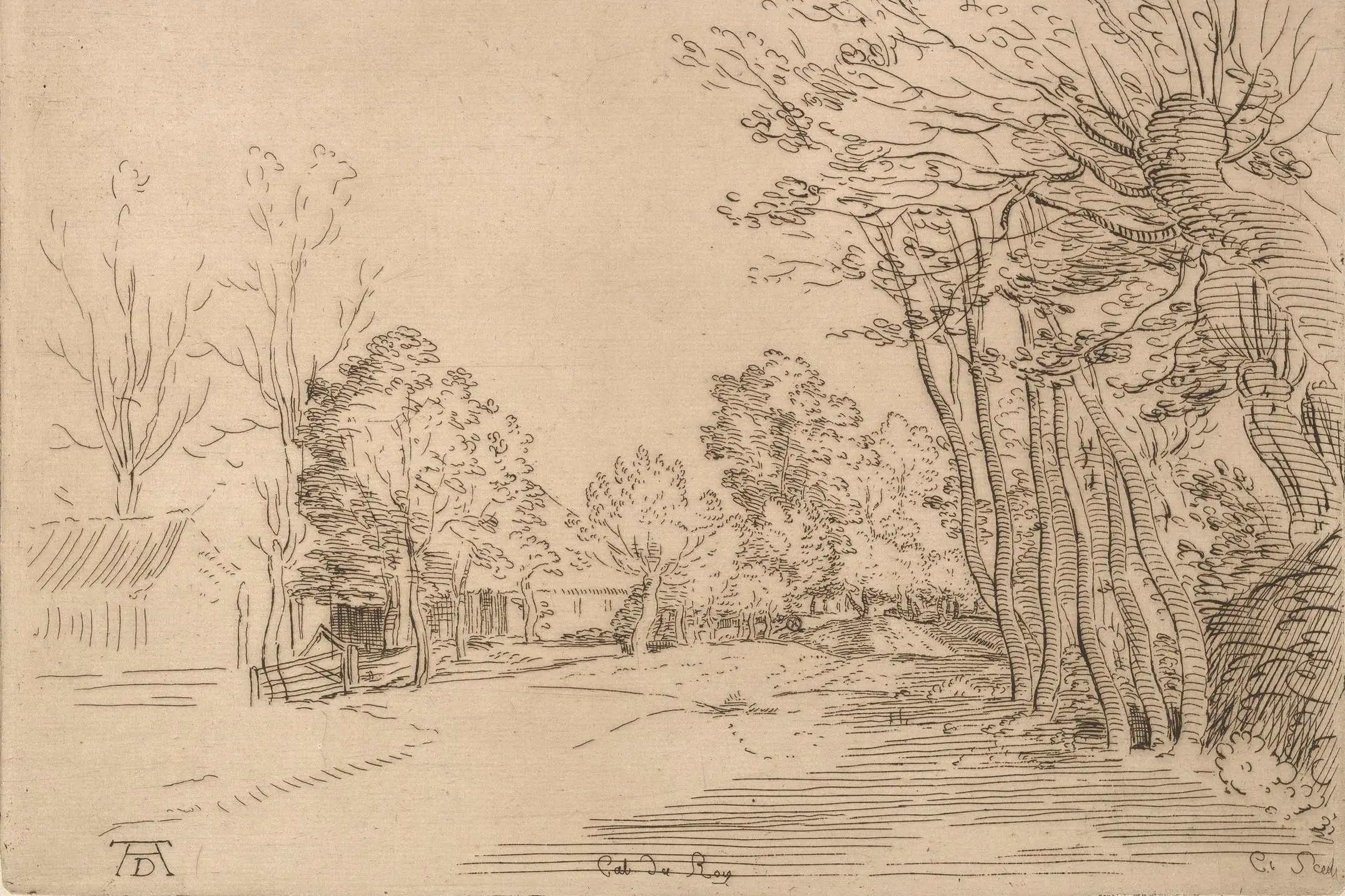
This article aims to present the elements of a reliable technique for artists wishing to practice etching. For those who wish to study the lives, works, and known methods of the masters, a bibliographic index in the Supplement of this issue will provide the means to delve deeper into this chapter of engraving history. Here, however, we will only offer a brief overview of the origins of etching and an explanation of the operations involved in the process.
The Origins of Etching
For a long time, etching was considered a discovery of Ramon Llull, who died in 1315. In reality, it is much older, as its properties were studied as early as the 9th century by Jabir ibn Hayyan, known as Geber, the mysterious Arab figure who is said to be to the history of chemistry what Hippocrates is to the history of medicine. Llull merely modified the method for producing what he called spiritus nitri, or spirit of niter. He prepared nitric acid by heating a mixture of saltpeter (potassium nitrate) and clay. Five hundred years earlier, Geber obtained it by heating saltpeter together with potassium and iron alums (sulfates).
It is possible that etching was discovered while studying the action of oxidizing agents used for pickling (dérochage) Damascus steel.1 From the moment its inertness in the presence of fatty or resinous substances and wax was observed, it was likely soon used for decorating weapons. In his Le Peintre-Graveur (Vol. I, p. 367), Johann David Passavant cites the inscription "APVLVS ET CALABER, SICVLVS MIHI SERVIT ET AFER" ("Apulian and Calabrian, Sicilian and African serve me"), which he believes was etched in 1150 on the sword of Roger I, the first king of Sicily.
Other interesting weapons from this perspective are undoubtedly housed in the Musée de l'Armée in Paris, the Royal Armoury of Madrid, the Royal Armouries in the United Kingdom, and the imperial collections of Germany and Austria. However, while we await a chronological list of weapons decorated with etchings, one point remains undisputed: this engraving process was first applied to printmaking in the early years of the 16th century. No etching has yet been found that predates those of Albrecht Dürer, traditionally said to be engraved on iron plates and dated from 1515 to 1518.
Since Dürer, countless great painters have been drawn to this charming art form, which eliminates the need for an interpreter, emphasizes the personality of the expression, and possesses the thrilling appeal of a game of chance, thanks to the uncertainties of its chemistry. The golden book of etching includes, in Italy: Parmigianino, Guido Reni, the Carracci, Castiglione (who was practicing the monotype2 in the 17th century), Salvator Rosa, Tiepolo, Canaletto, and Piranesi. In Spain, we find Ribera, Goya, and Fortuny. In the Low Countries, there are Rembrandt, Berchem, van Ostade, Jan Both, and Karel Dujardin.
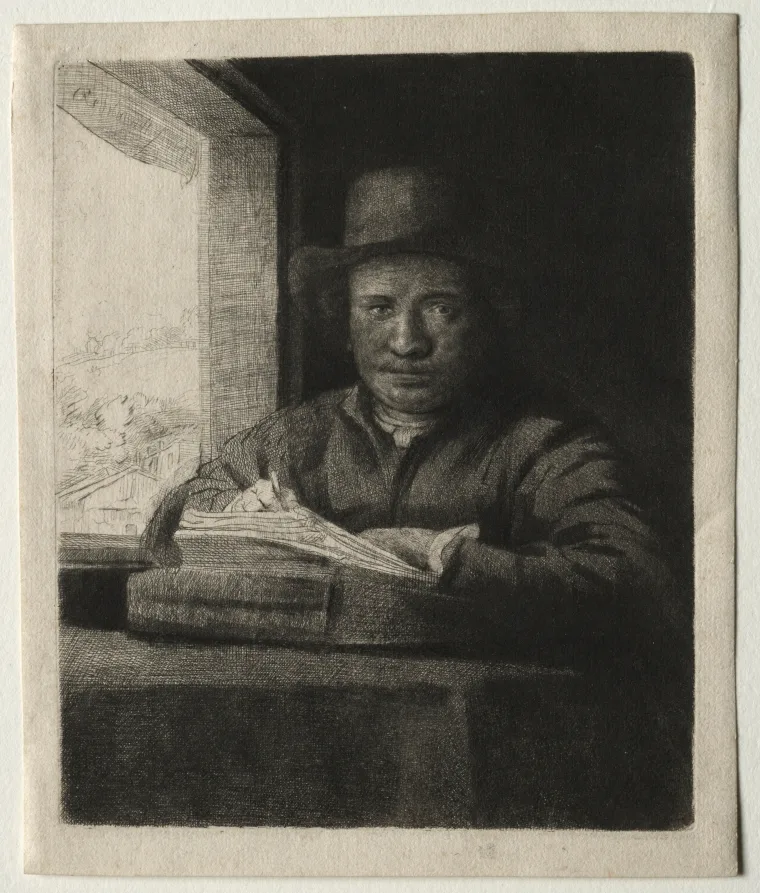
Other notable names include Paul Potter, van Dyck, and Ruysdael. In England, we have Hogarth, Rowlandson, Bonington, and Wilkie. In France, alongside great original engravers like Callot, Abraham Bosse, Cochin, Saint-Aubin, Moreau le Jeune, and Debucourt, there were the painters Claude Lorrain, Gillot, Watteau, Pierre, Boucher, Fragonard, Prud'hon, Ingres, Charlet, Raffet, Gavarni, Decamps, Delacroix, Corot, Daubigny, Meissonier, Rousseau, Charles Jacque, Millet, Rops, and Buhot, to mention only the deceased.