

"This will kill that," murmurs one of the poet's characters. In Victor Hugo's novel, the printed book was destined to kill the cathedral. We can say with no less certainty: photography will kill engraving. Yes, the day is near when burin engravers will be no more numerous than the scribes and manuscript illuminators were after the 15th century. In their own way, Niépce and Daguerre will have been the Faust and Gutenberg of modern times. Their invention, at once so marvelous and so imperfect, responds all too well to our era's demands for economy and speed. Let science, tomorrow, give heliography the means to reproduce tones—at least in their relationships of luminous intensity—and the last burinist, whatever his genius, will have nothing left to do but break his burin, an engraving tool judged useless and deceptive by a generation obsessed with literal exactitude.
Need we express the anxiety with which we feel the ranks of engravers thinning, or the regret with which we would see the disappearance of the art made illustrious by Marcantonio Raimondi, Étienne Delaune, the Bolswert brothers, and, to go no further, the entire French school of the 17th and 18th centuries? It takes a singular courage today to begin the first cut on a copper plate that will only be covered after five or six years of incessant labor. How many of those burin enthusiasts can be counted today who, as Wille recounts in his Mémoires, would rush to sign up for a proof before the dedication at the mere announcement that an artist was undertaking a new work? In the past, a framed engraving could break the monotony of a flat tone on walls or on panels painted with distemper; but today, does not wallpaper, with its triumphant arabesques and joyous colors, cruelly highlight the engraving's lack of decorative effect? What publisher, moreover, dares to commit considerable funds and commission a major plate when he knows that, the day after it goes on sale, the proof for which he must ask a hundred francs will be placed before a camera lens, and that, however dull and muted the reproduction, it can be delivered for a five-franc piece to unrefined amateurs or needy industrialists?
What we are saying at this moment, all who sincerely love art have noted before us, and the engraving exhibition at the Salon of 1863 has come to confirm our sad apprehensions. Despite the excellent measure taken by the Administration to devote an entire room to it, instead of banally consigning it to the corridor walls as in the past, the exhibition of engravings was empty and held no attraction for the crowd.
The Decline of an Art Form
To be frank, is the crowd truly to blame for not taking an interest in submissions from publishers' stock, in reproductions made for commercial purposes? Would we not have the right to reproach the serious engravers our school still possesses—the members of the Institut among others—for isolating themselves in this way and deserting the fight at the supreme moment? From 1830 to 1840, each Salon catalog contained a long list of submissions from Messieurs Forster, Richomme, and Henriquel-Dupont. Why do those academicians who are still working no longer offer themselves up to public judgment and allow young artists to benefit from their knowledge and their diverse qualities? There is no better teaching than that of example.
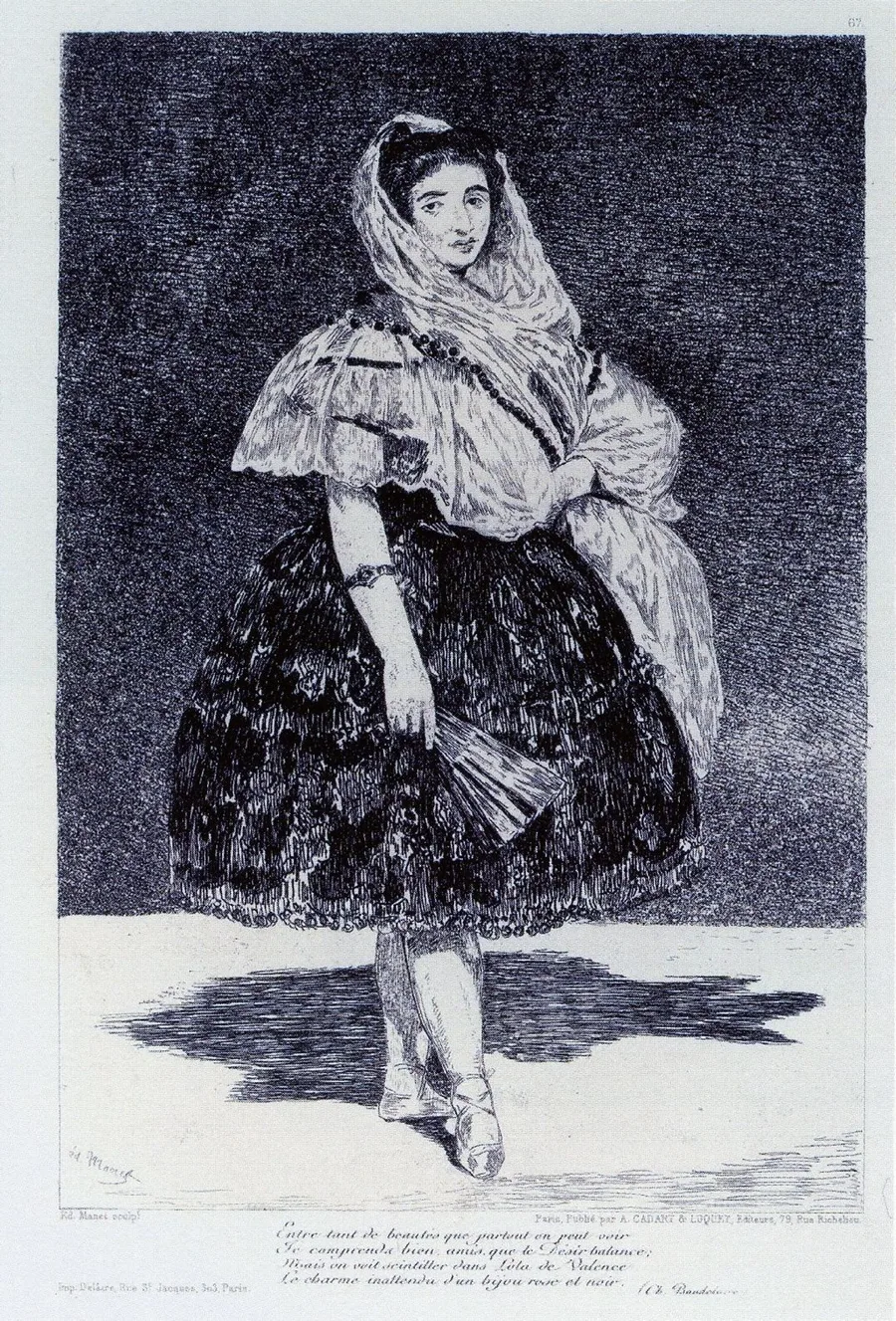
Perhaps, too, in its growing disaffection for engraving, the public has obeyed an instinctive feeling. For some years now, with illustrious and well-known exceptions, have not engravers sacrificed, under the pretext of correctness, to the most desolate coldness? Is wisdom, then, the negation of independence? To translate the masters, is it not above all to interrogate their thought, to be inspired by their will, and to follow them with passion in their particular search for the ideal? To invent a "system of lines" to render, I suppose, the modeling of da Vinci, the golden harmony of Correggio, the sovereign grace of Raphael—is this the true way to express the thought of the Mona Lisa, the seduction of the Antiope, the virginity of La Belle Jardinière? The excessive academicism of the Empire school violently broke the tradition of that 18th-century French school, without which we would only half-know Watteau and Chardin. I know that the reproach must be traced back to Wille and the engravers of the last years of his century; but the triumph of the tool over the spirit has been all too complete since then, and our school needs more than ever to be reinvigorated at the living springs of liberty.
We do not intend to insist too much at this moment on this observation, the development of which would only be suitable for a comprehensive study of the contemporary school. But it is certain that the living, colorful, unexpected, and varied aspect of 18th-century prints is due above all to the excellence of their etching preparations. Now, etching (eau-forte) is the link between painting and engraving. The initial sketch must be drawn by an artist's hand, and by "artist" I always mean one who obeys inspiration immediately, and who dares not approach the masters until a sincere and intelligent study of nature has already prepared him for their varied teachings.