
Everyone agrees that there is nothing more instructive than leafing through a master's drawings. One feels closer to the artist before the slightest scribble of their pencil than in front of their most finished works. It is as if, instead of reading a novel or a poem in a printed book, one had the good fortune to savor it in manuscript form. We love to relive the artist's dream with them from its very origin in their thoughts. We want to follow all their anxieties, share all their anguish, see ourselves halted by their difficulties, their uncertainties, their timidities, and then suddenly feel ourselves carried away by bursts of audacity whose spontaneity may never again be found as vivid, as impetuous, as unforeseen as on some scrap of paper, crumpled with impatience.
But among these treasures that enrich the portfolios of museums, there are two kinds of pieces. Some have been carefully established, either with a certain character of definitive works or with a flirtatious quality of craftsmanship enhanced by apparent negligence. In these pieces of bravura or virtuosity, the artist has not worked exclusively for themself. They draw as Madame de Sévigné wrote her letters, with the feeling and hope that they will be passed from hand to hand. They think a little of "the gallery." Whatever attraction we may find in drawings of this nature—and some, like the small pencil portraits by Ingres, are pure marvels—they do not inspire in us the direct interest we feel before the others.
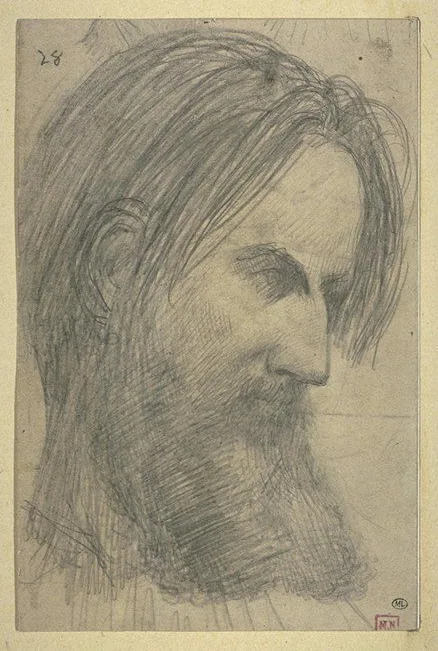
The latter are those that the artist has truly drawn for themself, without a thought for us, often with the vague intention of destroying them once they have used what they consider a simple note or a modest but useful document. It is here that we feel the artist in their entirety, without ulterior motives, without affectation, without a pose, without an attitude for the centuries to come. The first kind may elicit our admiration or astonishment, yet we feel they are of no use or benefit to us. The others—incomplete, unfinished, which must sometimes be half-guessed because they are written in an abbreviated language, in a sort of stenographic tracing to which the artist alone has, or believes they have, the key—are the true confidences of the masters. They are the daily and truthful journal, without development or amplification, of their intimate thought. For those who know how to read, penetrate, and understand them, they possess an eloquence that none of the masterpieces executed by the same masters will ever have to such a degree; they have a communicative power that puts us in immediate contact with these high intellects, and at the same time, they offer us incomparable lessons.
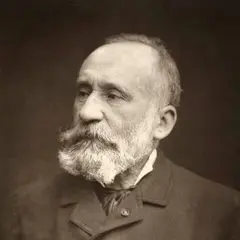
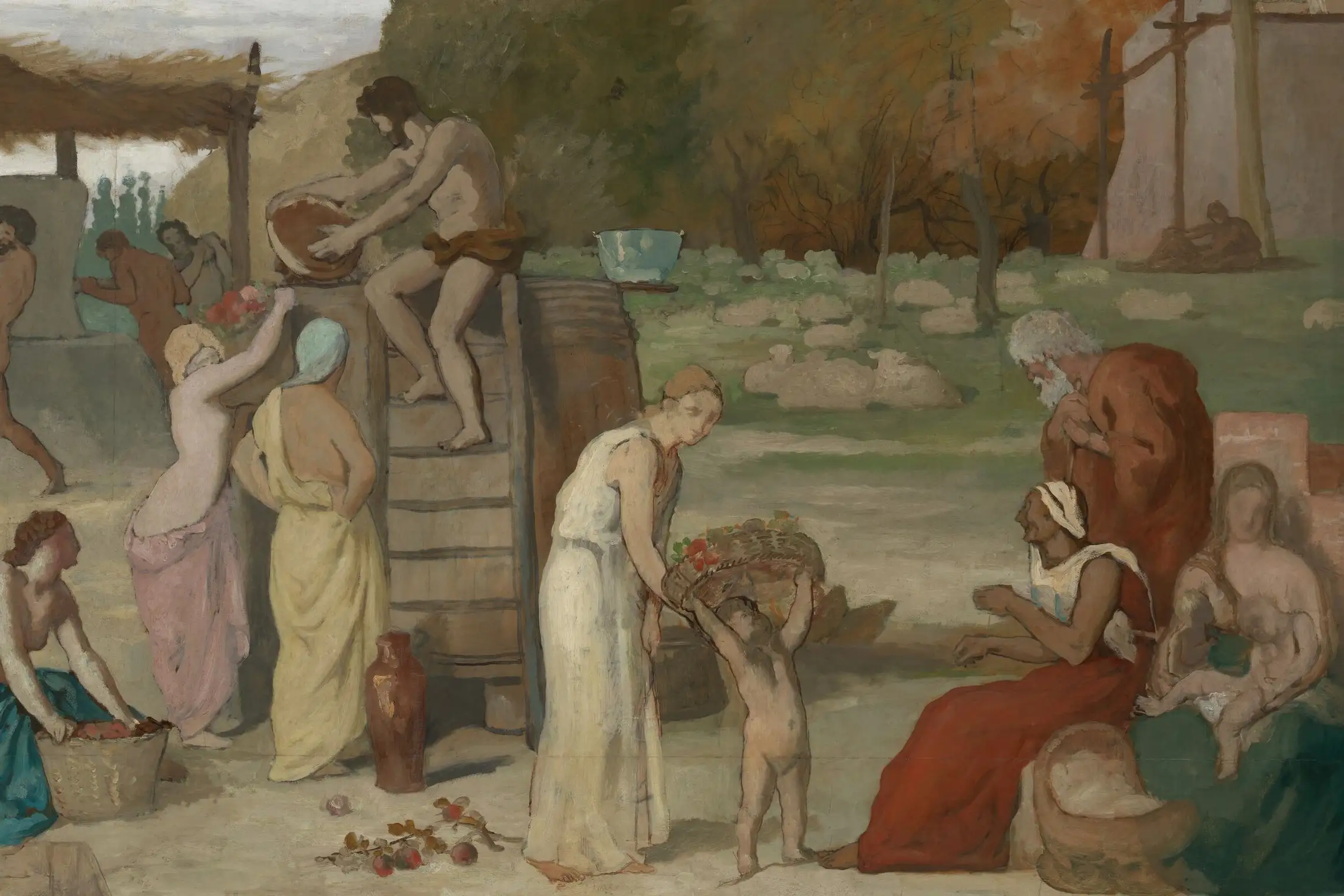
Such is certainly the case with the drawings of Puvis de Chavannes. This master, so long accused of not knowing how to draw, drew his entire life. The day that Delacroix's portfolios were opened for the first time after his death, people were stupefied by what this "dauber," who painted "with a drunken broom," had amassed in innumerable preparations for all those magnificent works that seemed the fruit of entirely spontaneous creation. Puvis de Chavannes, whom Edmond About in turn called a "charming improviser," caused no less astonishment when he one day decided to bring out his drawings to show them to the public.
One may recall that he held an exhibition of them at one of the Salons of the Société Nationale. In truth, they interested only the artists at the time, for in the hustle and bustle of the Salons, how could one find the necessary contemplation to hear confidants so profound, yet so discreet? Perhaps, too, their presentation lacked order and method. What is certain is the value that Puvis himself attached to them from then on; shortly before, he had them mounted in a kind of folding frame after having sorted through them. This sorting, it seems, was terrible, and he showed no mercy to heaps of studies and tracings, from which his friends or students painfully managed to save a few rare examples by requesting them as keepsakes. Nevertheless, more than nine hundred remained at his death. He felt that in these "scribbles" was contained the entire history of his work, his thought, and his life, and that from them emerged a kind of teaching and a doctrine.
A Doctrine of Common Sense
One can say that Puvis de Chavannes did indeed have a doctrine, and that he did not disdain to offer instruction. This is not to say, of course, that he posed as a pedagogue or that he believed in pedagogies. Quite the contrary, his advice consisted mainly of putting you on guard against the force-feeding of the academy. For him, the true lessons emerged not from traditions and principles alone, but from the intelligent and clear-sighted observation of the phenomena of nature and the acts of life. They came from the exercise of judgment, whose rectitude had to be carefully preserved, from the logical examination of ideas, and from the harmony of these ideas with the terms of the language employed.